
‘I lost my mum to cancer then learned I had cancer myself, all while parenting my one-year-old son – it was devastating’
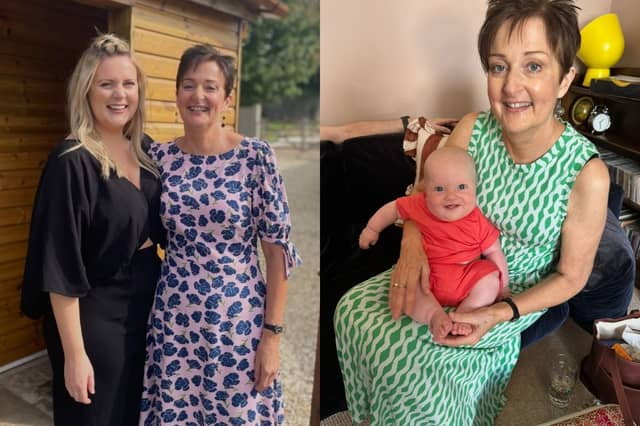

A midwife who lost her mum to cancer while caring for her first child before being diagnosed with cancer herself said the “worst thing” about her diagnosis “is the first person you want to call is your mum… (but) she’s not here anymore”.
Fiona Harris, 34, was eight months pregnant with her son Sidney when she learned that her mum, Anne, had terminal cancer. In January 2024, Anne, then 63, was diagnosed with small cell lung cancer, “which was pretty devastating”.
In March 2025, Anne died – leaving behind her three daughters, five grandchildren, and her “childhood sweetheart” husband who she had been with since she was 15 years old.
The day Anne died, her youngest daughter Fiona felt a “stabbing pain” in her neck, and shortly thereafter she was diagnosed with thyroid cancer, undergoing treatment while caring for her then-one-year-old son and grieving the loss of her mother.
“It was June 17, so three months to the day that mum passed, that they sat me down and said that I had cancer. That was pretty devastating,” Fiona, who lives in Worcester with her husband and their son, told PA Real Life.
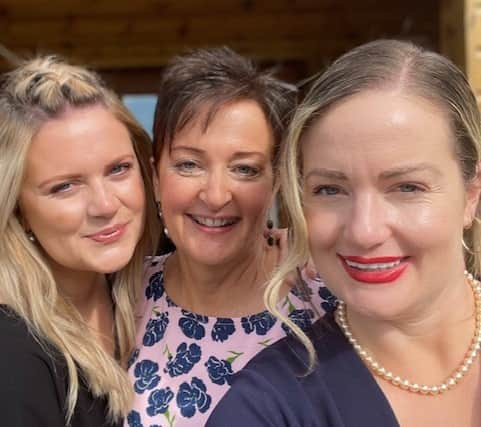
In September 2023, Fiona’s mum Anne began experiencing a sore throat and a hoarse voice, which doctors suspected to be laryngitis – inflammation of the voice box. However, it hadn’t improved by November, so she went back and asked for it to be investigated further.
In January 2024, Anne was diagnosed with small cell lung cancer, and was told that the tumour in her upper lung was pressing on her voice box. At the time, the ENT surgeon believed the cancer would be operable, but in mid-February further scans revealed that the cancer was stage four: it had spread to her lung, and from her lungs to her liver and spleen.
“That’s what made it terminal,” Fiona said.
“I will always remember that day. It gives me goosebumps,” she added of when she found out the news.
“It was just horrendous. But we all went and saw each other that day, and just spent the afternoon as a family… You don’t even know what to say. You just feel like you’re jumping out of a plane without a parachute.”
At the time, Fiona was eight months pregnant with her first child, her older sister had just had a baby, and her eldest sister was also pregnant. The news devastated the close and loving family, including Anne’s husband with whom she had been since they were 15 years old – Fiona described them as “real childhood sweethearts, completely and utterly in love”.
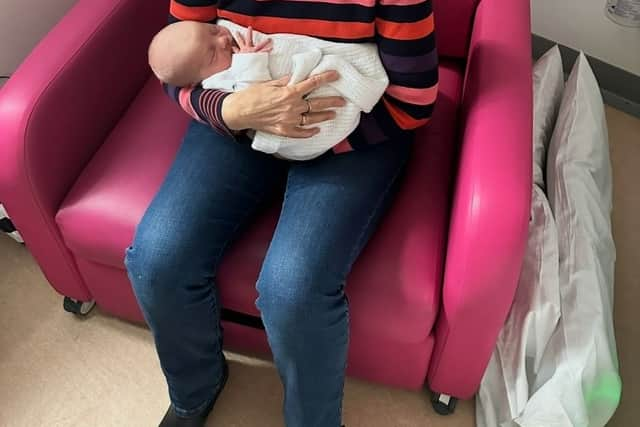
“She was a brilliant mum, she was a friend, she was a psychotherapy counsellor. She was really supportive, really kind… Had lots of friends, and a stickler for treating everyone fairly, and gave us all such a beautiful childhood.
“She was a calm person, and she had a really silly sense of humour, toilet humour was her thing – you couldn’t fart without her finding it absolutely hilarious!”
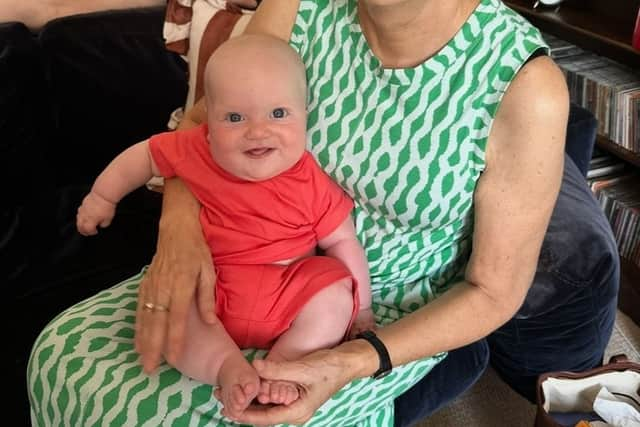
Fiona’s son Sidney was born in February 2024, and was able to spend the first year of his life with his grandmother before she died. Anne had chemotherapy and immunotherapy, which prolonged her life, and Fiona said “she was only ill right at the end, and I’m really grateful for that”.
In May, Anne began experiencing digestive issues as a side effect of her cancer treatment, leaving her in hospital for around 10 days. After this, she decided to stop her treatment to enjoy the time she had left free of side effects and hospital visits.
“She decided that she didn’t want any more treatment because it was just not a good quality of life,” Fiona explained.
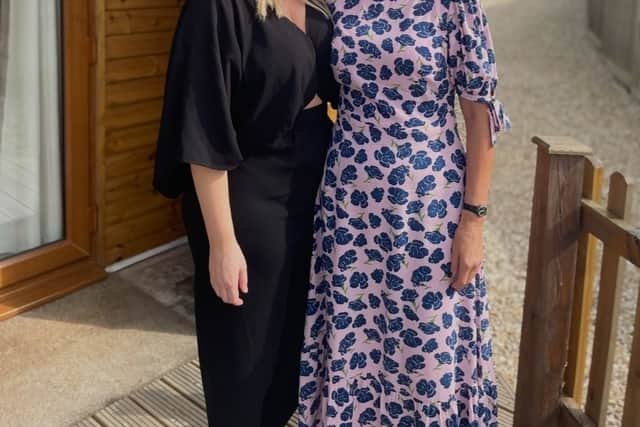
In the run-up to Christmas 2024, Anne began experiencing neurological symptoms such as shaking hands and slurred speech, and a scan on Christmas Eve revealed the cancer had spread to her brain.
“We all knew that was probably going to be our last Christmas before this had happened, because of the situation, and we were all mentally prepared for that to be the last Christmas,” Fiona said.
“But I don’t think we thought it would happen that rapidly.”
In March 2025, during the last 10 days of her life, Anne’s health “went rapidly downhill”. She went into St Richard’s Hospice in Worcester for her final 24 hours, and died on March 17 aged 65, surrounded by her daughters and husband.
“It was really, really peaceful,” said Fiona.
Fiona decided to postpone further investigation while she dealt with her mum’s illness.
“Up until that point, it had never caused me any pain,” she said.
The sharp pain prompted her to contact her ENT surgeon – the same surgeon who had cared for Anne – who advised her to have surgery to remove the section of the thyroid with the lump for biopsy.
On June 17 2025, Fiona was told she had thyroid cancer. All she wanted to do was to phone her mum, but grief hit her hard when she realised she wasn’t able to.
Six weeks later, Fiona had a second surgery – a total thyroidectomy and partial lymph node removal – to make sure no cancer remained. Thankfully, the cancer had not spread and was now eliminated.
This period of diagnosis and surgery was “really, really hard”, Fiona said, particularly without her mum.
“I haven’t really had time to grieve at that point, because I was just so worried about my health, and also not getting any sleep at all, because my baby was breastfeeding every three hours, basically, for two years.
“I was just exhausted and just completely mentally drained.”
Fiona was still on leave from her job as a midwife, having been due to return from maternity leave the day her mum died.
“I was crying all the time, every day I would cry, probably for the first 10 months,” she said.
Fiona sought counselling, which she said was “helpful” but perhaps “too soon” to be most effective – she was still in the throes of grief, new motherhood, and dealing with her own health battle.
By November 2025, Fiona felt able to return to work. She described being back in the delivery suite as “the best medicine to me – it’s been so good because, without sounding cheesy, I think when you’re a midwife, it’s more than a job”.
Being back at work could also be difficult, as Fiona said that seeing new parents come to the birthing room with their mums made her “heart sink” – “it just brings back all these memories of the fact that my mum wasn’t really able to support me in the way that she would have loved to”, she said.
“Me and my husband are desperate for another child, but I just don’t know if I can go through finding out I’m pregnant and then not being able to phone her,” Fiona added.
Fiona joined the group’s WhatsApp chat, where mothers can vent, ask advice, and share their experience, and said that she “just thought that’s so lovely, because one of the hardest things of any grief is loneliness”.
However, with The Motherless Mothers, she said: “You just feel heard.”
To find out more about The Motherless Mothers community, visit: http://themotherlessmothers.com.