
‘Hideous crime’ of stalking to be made standalone offence
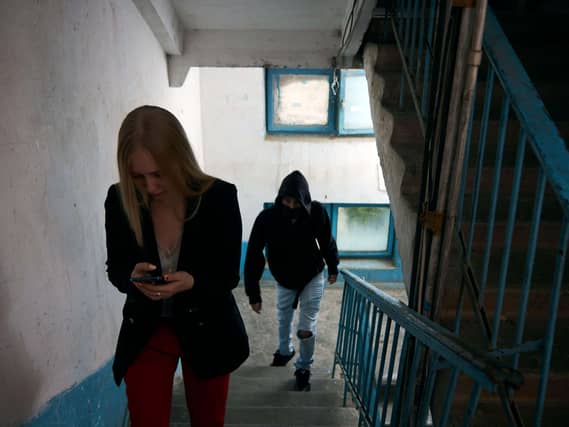

Around 1.9 million people are estimated to have experienced stalking in the year to March.
A new standalone offence of stalking is to be created after a review found the law around the crime “cluttered and confused”.
The parents of 24-year-old Alice Ruggles, who was murdered by her obsessed ex-partner, welcomed the findings and said they are “heartened” by the Government’s commitment to clarify and strengthen the law.
Clive Ruggles and Sue Hills, whose daughter was killed by her soldier ex-boyfriend in October 2016, said changes will “bring in due protection for stoic victims like Alice”.
While specific stalking offences were introduced in England and Wales in 2012, under the current law the underlying offence of harassment must be established and additional factors such as fear or distress proven for it to be considered stalking.

A review, commissioned last year by the Government and led by barrister Richard Wright who acted for the prosecution in Ms Ruggles’s case, said the offence of stalking “needs to be both uncoupled from harassment and redrawn in its ambit and scope”.
Around 1.9 million people are estimated to have experienced stalking in the year to March – the equivalent to 3.9% of people aged 16 and over, according to the latest statistics from the Crime Survey for England and Wales, up from an estimate of 1.4 million a year earlier.
Statistics published by the Office for National Statistics this week estimated 17.4% of females and 8.8% of males aged 16 and over in England and Wales had experienced stalking in their lifetime.
In his review, Mr Wright said that despite good intentions behind developing the law over the years “we have arrived at a position where there are dozens of offences, all with very similar foundations, all tackling similar behaviour, using slightly different terminology, and having an array of different maximum penalties.”
He added: “If we add to that landscape the minefield of protective orders, with so many varieties and initialisms, created and amended in so many different pieces of legislation, the legislative position as a whole across the realm of interpersonal abuse offences is cluttered and confused.”
Alongside pledging to change the law to make stalking a standalone offence, the Government has said it will strengthen sentencing so stalkers could face up to 10 years in prison as victims no longer need to demonstrate fear or distress.
Both of these will be legislated for when when parliamentary time allows, the Home Office said.
The Government said currently stalking can be harder to prosecute in cases where a victim does not show fear or is unaware they are being stalked, and said their reforms will aim to close that gap by ensuring the focus is on the perpetrator’s behaviour, rather than on how the victim reacts.
In an immediate change, the Home Office said courts can now directly impose stalking protection orders (SPOs) to protect victims by restricting the perpetrators’ behaviour, even if they have not yet been convicted.
In the case of Ms Ruggles, she had contacted police about Trimaan Dhillon’s stalking in the days before he broke into her Gateshead home and repeatedly cut her throat.
Dhillon, a lance corporal at the time who trained with the Special Reconnaissance Service, was jailed for life with a minimum term of 22 years following a trial at Newcastle Crown Court.
Ms Ruggles’ parents said: “We welcome Richard Wright KC’s report and its recommendations, and are heartened that the Government’s response endorses the need for a single stalking offence that focuses on the perpetrator’s behaviour and removes the onus on police and the CPS to prove the impact upon the victim.
“This will avoid victims having to admit how frightened they are and, in the process, further empowering the stalker. It will also bring in due protection for stoic victims like Alice.”
Safeguarding minister Satvir Kaur branded stalking a “hideous crime that can take over every aspect of a victim’s life” and insisted the reforms “will help us relentlessly pursue stalkers, keep victims safe and ensure offenders face the full force of the law”.
Attorney General Ellie Reeves said clarity in the law will give “police and prosecutors stronger tools to identify stalking, pursue perpetrators and help victims get the justice they deserve”.
While Victims’ Commissioner for England and Wales Claire Waxman welcomed the plan to create a standalone stalking offence, she said the Government had “missed a crucial opportunity by failing to address stalking that continues after conviction”.
She added: “Victims should not be left trapped in a cycle of abuse because the law fails to recognise continuing patterns of behaviour.”
A major joint report published in 2024 saw the Independent Office for Police Conduct (IOPC), the chief inspector of constabulary and the boss of the College of Policing make recommendations for improvement as they detailed the findings of an investigation launched in response to a so-called super-complaint raised two years previously by the Suzy Lamplugh Trust (SLT) on behalf of the National Stalking Consortium.
The complaint – made through a process which allows charities and other bodies to raise widespread problems which could affect public confidence in policing – set out concerns including how there had been flawed investigations, instances where stalking was not being properly identified, officers “minimising or trivialising” such behaviour and the risk of victims being seriously hurt or killed not being recognised.
Emma Lingley-Clark, interim chief executive of the Suzy Lamplugh Trust, said: “We fully support the Government’s commitment to introduce a standalone stalking law which we hope will reduce confusion and increase the shockingly low conviction rate for stalking, which is currently only 1.2% of stalking incidents recorded by police.”