
‘I was at a crisis with drug abuse during sex – winning the Mr Gay World pageant helped me save myself’


The reigning Mr Gay World said he wants to use his platform to talk about the “problematic” way some gay and bisexual men can use drugs during sex, after he experienced psychosis that led to paranoid thoughts of people trying to kill him during a period of sustained drug abuse.
Giulio Spatola, 41, who works in the cinema industry and is originally from Palermo in Italy but now lives in London, said he first tried taking both mephedrone and γ-hydroxybutyrate (GHB) recreationally in 2019.
At first, Giulio said his drug use during sex was “once in a while”, but by 2021 he was partaking in chemsex – defined as sex under the influence of psychoactive drugs by the British Medical Journal – “almost every weekend”.
As a result, he started to experience mental health complications, like psychosis and depersonalisation, a disassociative feeling of detachment of oneself.
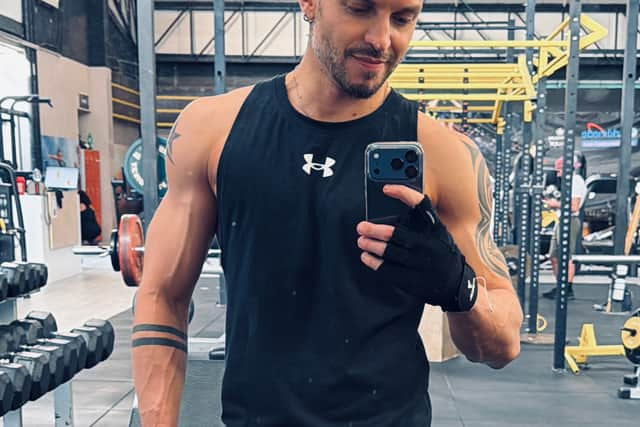
It was in the months before getting the call to compete in the annual Mr Gay World pageant on December 1 last year that Giulio started to take his sobriety seriously.
Giulio told PA Real Life: “Mr Gay World saved me and gave me one more reason to stay sober.
“To my surprise, I was the only one who mentioned chemsex (during the competition) because it’s a big thing to come out like this.
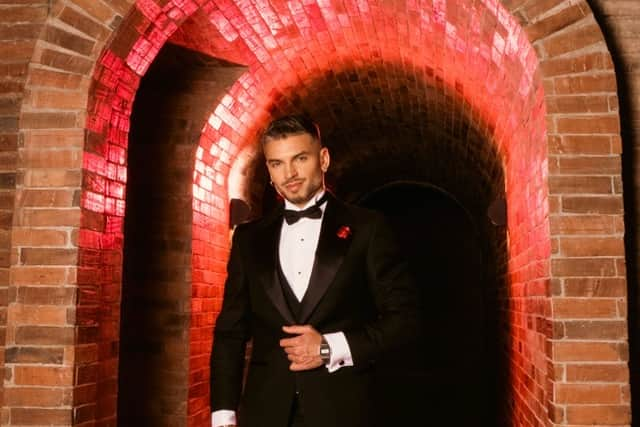
“But then when they later screamed, ‘Let’s welcome our new king’ and I found out I won, I felt a rush.

Giulio’s journey in pageants started in 2010 when he won a competition for Mr Gay Street and then Mr Gay Rome on the same day, later going on to win Mr Gay Italy and Mr Gay Europe.
Due to a clash in scheduling, Giulio said his production team decided for him to compete in Mr Gay Europe held in Romania over Mr Gay World in the Philippines in 2011, before he “stepped down” from competing in pageants in 2012.
By the summer of 2019, he was introduced to GHB and mephedrone “simply to fit in” and “because everyone was doing it” at a party he was at one night.
He added: “I just decided to let go, trust in the fact that most of the people that I knew there were all doing it, and they were fine.”
In 2020, Giulio said he had a “perfect life” with a partner, their own flat, and the career of his “dreams” in visual effects. Then the Covid-19 pandemic hit and Giulio said it “destroyed everything”, forcing him to move back to Italy for five months.
By March 2021, Giulio’s relationship broke down and, although he moved back to London, he had to move in with friends.
This is when he properly got into the chemsex scene – which is most common among men who have sex with men and where drugs are used in attempts to facilitate, enhance, and prolong sexual experiences.
“So I decided to suffocate all the pain by just going out and partying. That’s when (chemsex) started to become problematic.
“I started to use (drugs) way more and I was going to parties where I would have multiple partners – like in orgies and sex parties.
“I wanted to suffocate the part of me that wanted a partner.”
At the height of his drug-fuelled sex sessions from 2021, where they would often last a full weekend, Giulio’s mental health suffered with frequent psychosis and depersonalisation episodes, resulting in paranoid panic attacks.
On one occasion, he thought people in his friend’s house had stolen his keys from his jacket pocket, copied them, and could get into his home to kill him at any time.
He said: “I was at the Dean Street (sexual health clinic) twice a month for STIs.”
“To the point that I remember the nurse told me that if I continued at the rate I was going, the antibiotics that they injected me with were not going to do anything anymore,” he added.
Giulio said he started to cut down on chemsex before he found the organisation Controlling Chemsex, which offers free professional support to stop or reduce chemsex use, in July 2025.
Founder and CEO of Controlling Chemsex, Ignacio Labayen de Inza, told PA Real Life: “Our work is about providing practical information and strategies to reduce risks as much as possible.
“Of course we are all aware that the best way to avoid any negative consequences associated with chemsex is not to become involved in it, but we have to be realistic; this is not always the option that everyone chooses.

Giulio had an assessment and started an email programme that he said helped him see that he was “trapped in a loop” that he “couldn’t escape”.
He believes a later diagnosis of autism and ADHD at 40 helped him realise the connection between neurodivergence and addiction.

Giulio said: “The very same moment that I accepted, I knew I wanted to bring the word ‘chemsex’ on that stage.
“It was my way of making the years of bad experiences that I had meaningful,” he added.
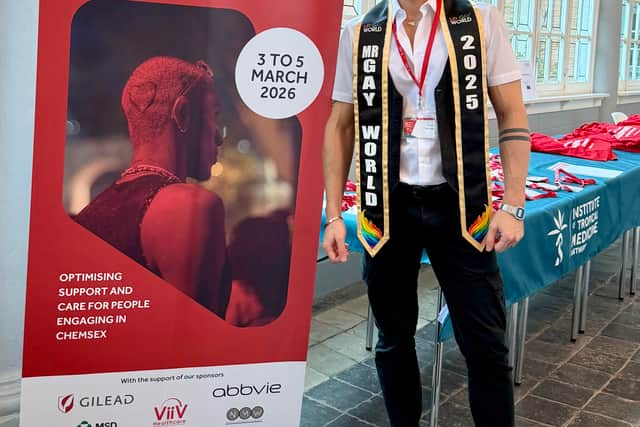
When Giulio found out he had won, he said he “felt a rush” before he held up a picture of David Stuart, who was a “pioneer of chemsex harm reduction” in London before his death in 2022, aged 54.
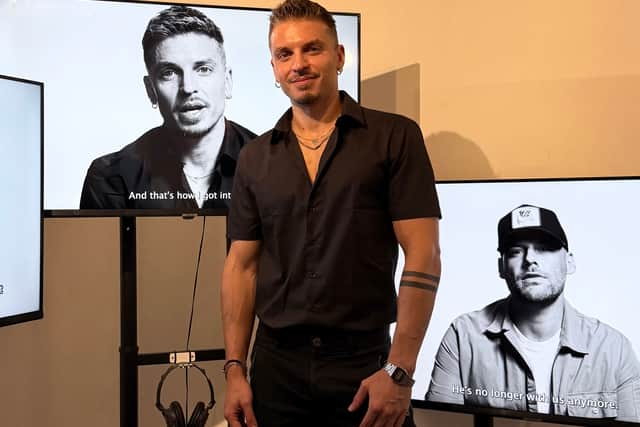
Since then, Giulio said he has been given a “bigger platform to talk about” chemsex, including being part of a campaign called Out In The Open – from the GBTQ+ dating app Grindr and the not-for-profit You Are Loved – that found 28% of LGBTQ+ people in the UK have had sex while using drugs in the past year.
Giulio said it is important for him to “respond directly” to people who reach out to him about their own struggles with chemsex to “offer that kind of empathic support” that he wished he had.
He added: “I was scared that I had completely broken myself and there was no going back – but there is.”
For more information about Out in the Open, visit the Grindr for Equality website: https://www.grindr.com/category/grindr-for-equality