
‘I’m allergic to the cold – I break out in hives like nettle stings and my skin is so itchy I want to rip it off’
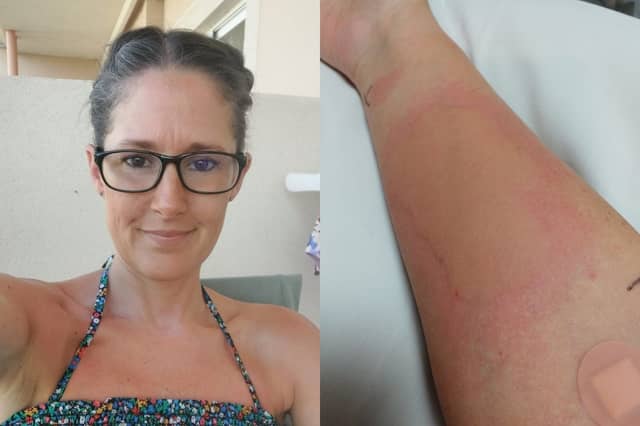

A mother who is allergic to the cold and breaks out in hives resembling nettle stings with skin so itchy she wants to “rip it off” says she “hates” the winter.
Jill Pearson, 46, from Rotherham, South Yorkshire, first noticed her skin turning red after exposure to the cold at age 13, when she would get to school and people would ask her “what’s wrong with your face?”
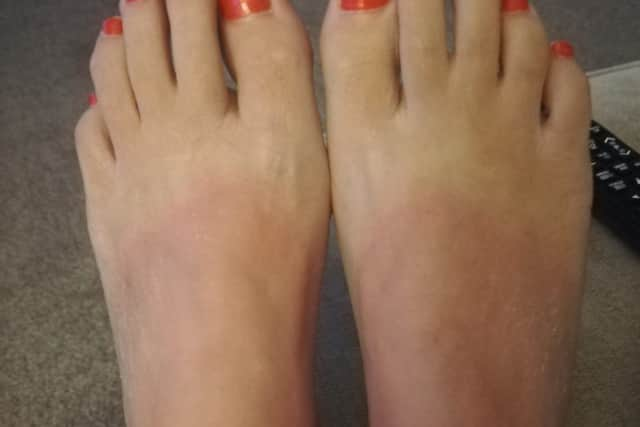
The married mother-of-two, who has worked as a palliative care nurse for 13 years, said going from cold to hot temperatures causes her skin to “burn”, and she breaks out in hives “that look like nettle stings” after simply touching a cold surface.
Jill was not tested for her symptoms until 2019 when, after swimming in “really cold” water with dolphins on a family trip to Disneyland in America, she suffered with a reaction resembling anaphylaxis – a life-threatening allergic reaction that happens quickly.

While Jill uses some medications to “dampen down” her reactions, she must now carry two EpiPens at all times as there is no cure for her condition and, while going abroad provides temporary respite, the winter season in the UK is something she has come to despise.
“I hate winter – I always wear a hat, a scarf, gloves, thermal vests and fleece-lined trousers,” Jill told PA Real Life.
“If I get something out the fridge that’s cold, my hand will swell up and itch.
“I just want to literally rip the skin off because it’s itching so much.
According to the NHS, hives (also called urticaria) is a raised, itchy rash that is usually caused by a reaction to things like food, pollen or insect bites.
Jill said she first remembers noticing the symptoms of cold urticaria at the age of 13.
“I remember going to school when it was cold and any skin that was showing, like my face, would go really red,” she said.
“I would get hives that look like nettle stings and going from the cold into heat would make my skin burn.
“I have to wait for my skin to settle down – which all depends on how long I’ve been exposed to the cold, so it could take half an hour.”
Jill said she would think to herself, ‘I’m having a reaction’, but said she never got checked or tested for her symptoms until later in life.
“I just always wrapped up for the winter,” she said.
Throughout her youth, Jill said her reactions “affected a lot of things”, especially while she was at university and going out with friends.
After grappling with her symptoms for decades, Jill said they reached a new peak in August 2019, when she and her family took a trip to Disneyland in America, where they swam with dolphins.
She recalled getting into the water, which was “really cold”, before she suffered with a reaction resembling anaphylaxis – a life-threatening allergic reaction that happens very quickly.
“I remember getting in the water which was only waist height, and I was saying to my husband, ‘oh it’s really cold’,” Jill recalled.
“All I kept thinking was, ‘I just need to do this, I just need to swim with the dolphin and then get out’.

Jill said her husband took her out of the water where she “just went straight to the floor” on the sand.
She said she suspected she was going into anaphylactic shock at the time – she could not lift her chin and she “knew” her blood pressure was “really low”.
Jill also said another family member pointed out that her lips were blue.
After being wrapped in towels to get warm, Jill recalled feeling “really exhausted” when she came to.
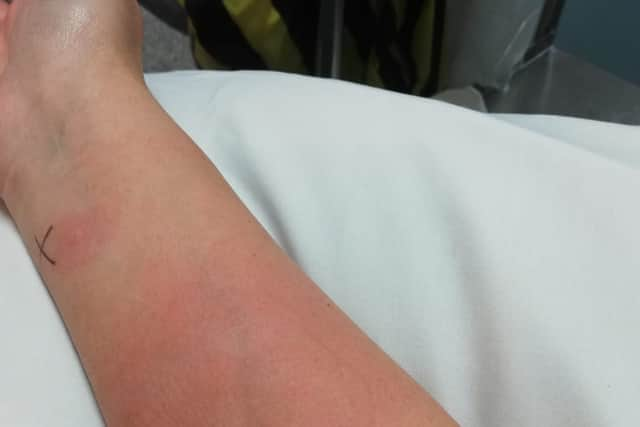
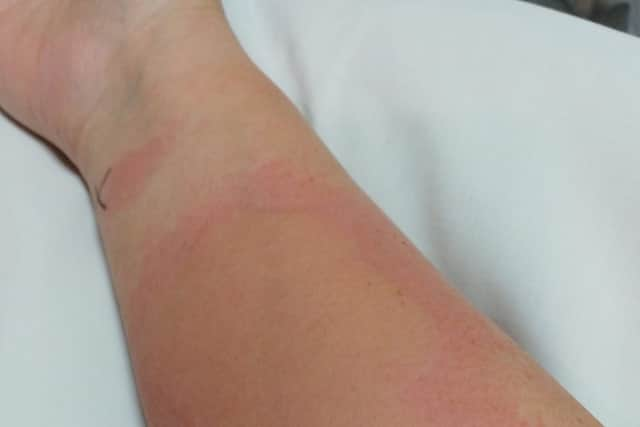
Jill said to diagnose cold urticaria, an ice cube test is performed – where she said ice cubes were inserted into a fabric casing and placed on the inside of her forearm for five minutes to gauge the reaction.
“It was really cold and I could feel it itching and burning,” Jill recalled.
“I wanted them to see how bad my rection gets – it looked like I had skin graft on my forearm, it came up with a massive welt.
“They actually went to get a consultant to show them because it was so bad.”

“They all came back fine, so they couldn’t really find a reason as to why I was having this reaction,” she said.
Jill was officially diagnosed with cold urticaria in August 2019.
She has since tried several antihistamines with the aim of preventing her reactions to the cold, but said “nothing works”.
Jill has now been advised to not go swimming, she carries two EpiPens at all times and she takes some medications to try and “dampen down” her symptoms.
“Even down to things like brushing my teeth, I don’t use really cold water,” she said.
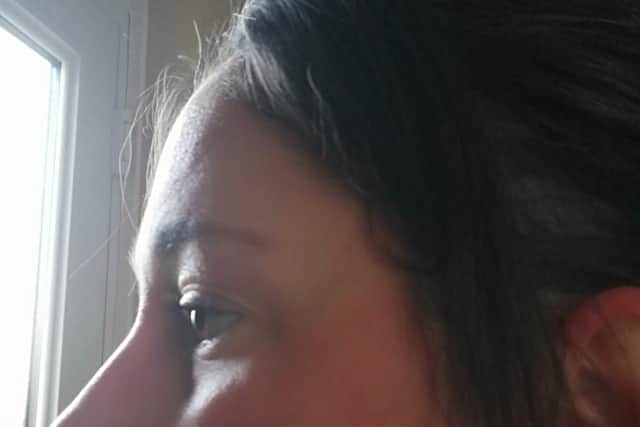
“When it’s really cold and I go out, usually it’s just my eyes that are showing.
“After I shower, I have to dry straight away – if I don’t dry fully, even the change in temperature makes my skin red, almost like I’ve been burnt.”
Jill also avoids ice cream or ice lollies because the roof of her mouth “swells” and “itches”, and she said she always keeps the heating on at home.

Going abroad to a hotter climate provides Jill with a temporary respite from her reactions – although even air conditioning in restaurants or hotel rooms can be too much for her.
Jill has joined a Facebook group to connect with others who suffer with cold urticaria, and she advised those in her position to do the same.
“Reach out to other people that are going through it,” she said.
“They are the ones who can give you advice and support, and not laugh at the way you have to adapt your life.
“They really do understand, and they might be able to give you some suggestions on how to make things more liveable.”