
Improvement in weekly accident and emergency waiting times performance
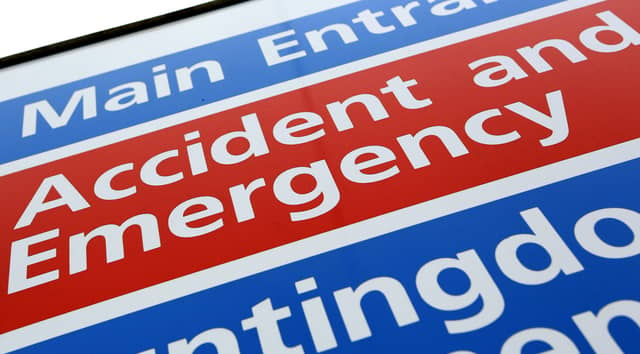

Accident and emergency waiting times performance improved slightly, the latest weekly figures have showed.
Data for the week ending August 20 showed that of the 26,764 people who went to A&E, 67.9% were seen and either admitted, transferred or discharged within four hours.
That is up from the 65.6% the previous week, although performance continues to be well below the Scottish Government target of having 95% of patients dealt with inside four hours.
- 26,764 people attended at accident and emergency
- 8,582 waited four hours or more to be admitted, transferred or discharged
- 2,472 waited eight hours or more to be admitted, transferred or discharged
- 961 waited 12 hours or more to be admitted, transferred or discharged
New data from Public Health Scotland showed that in the most recent week the four-hour target was missed for 8,582 patients.
That includes 2,472 people who spent eight hours or more in A&E and 961 who were there for 12 hours or longer.
In the NHS Forth Valley area, where there is only one accident and emergency department, just over half (52.6%) of patients were admitted, transferred or discharged within four hours.
Meanwhile flagship hospitals in both Glasgow and Edinburgh failed to deal with half of A&E patients within this target time.
At Edinburgh Royal Infirmary 47.7% of patients were admitted, transferred or discharged within four hours, while at the Queen Elizabeth University Hospital in Glasgow 48.9% were dealt with in this time.
Scottish Conservative health spokesman Dr Sandesh Gulhane said it was “completely unacceptable that almost a third of patients are still languishing for over four hours as they wait to be seen in Scotland’s A&E departments”.
The Tory MSP, who also works as a GP, added: “The continued lengthy A&E waiting times are a damning reflection of the SNP’s mismanagement of Scotland’s NHS.
“Ministers have failed to get a grip on this crisis during the height of summer, so yet again patients and my dedicated colleagues on the frontline are facing the prospect of a terrifying winter.”
A Scottish Government spokesperson accepted that “emergency department performance is still not where it needs to be”, adding that there is “continued disparity in performance both between health boards and individual sites”.
The spokesperson said: “We are determined to drive improvement and continue to work closely with NHS boards facing the greatest challenges in A&E performance, to reduce long waits and improve services for patients and staff.
“Hospital bed occupancy continues to have a significant impact on performance which is why we are working hard to reduce instances of delayed discharge and continue to expand our Hospital at Home capacity.”