
Iran and US harden positions as Tehran keeps its grip on Strait of Hormuz
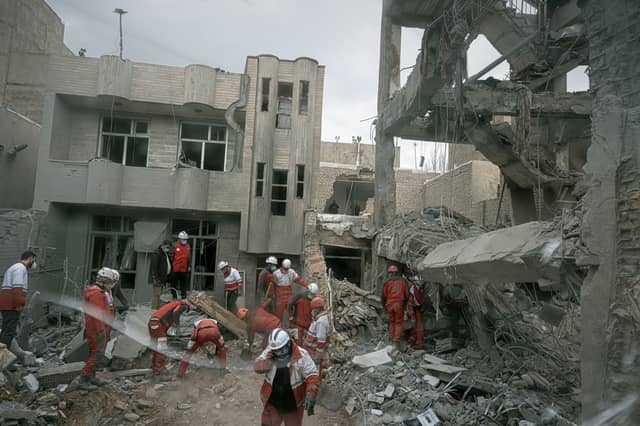

Iran and the United States hardened their positions as diplomacy aimed at reaching a ceasefire in the war in the Middle East appeared to be faltering on Thursday.
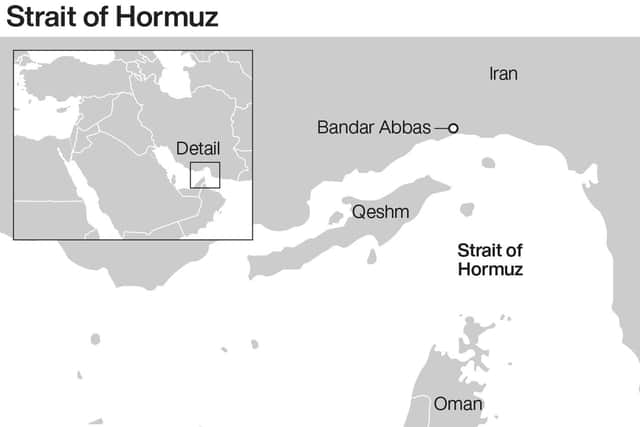
Tehran moved to formalise its control over the crucial Strait of Hormuz while Washington prepared for the arrival of US combat forces in the region that could be used on the ground in the Islamic Republic.
Iran is instituting a “de facto ‘toll booth’ regime”, industry experts say, with some ships paying in Chinese yuan to pass through the strait, where 20% of all traded oil and natural gas is transported in peacetime.
Israel said on Thursday it had killed Commodore Alireza Tangsiri, the head of Iranian Revolutionary Guard’s navy, the key official overseeing the closure of the strait.
Meanwhile, a strike group anchored by the amphibious assault ship USS Tripoli drew closer to the Middle East with some 2,500 Marines.
Also, at least 1,000 paratroopers from the 82nd Airborne have been ordered to the region.
The troop movements do not guarantee US President Donald Trump will try to use force to compel Iran to open the strait and halt its attacks on Gulf Arab states.
Mr Trump previously deployed a large force in the Caribbean before the American military captured former Venezuelan leader Nicolas Maduro in January.
In the current situation, the US is seen as focused on possibly seizing Iran’s oil terminal at Kharg Island or other sites near the strait.
US navy admiral Brad Cooper, who commands the American military in the region, said his forces have hit more than 10,000 targets since Israel and the US started the war on February 28, destroying 92% of Iran’s largest ships and more than two thirds of the country’s missile, drone and naval production facilities.
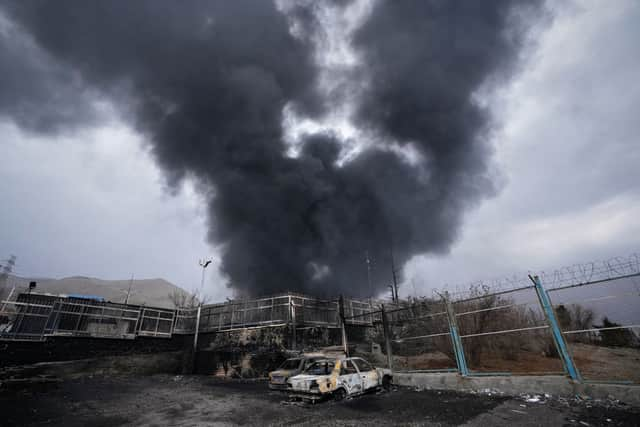
Jasem Mohamed al-Budaiwi, of the Gulf Co-operation Council, accused Iran of charging for safe passage through the strait – the first top official to do so.
Mr Al-Budaiwi oversees the GCC, a bloc of six Gulf Arab nations including Bahrain, Kuwait, Oman, Qatar, Saudi Arabia and the United Arab Emirates.
The Fars and Tasnim news agencies, both close to Iran’s paramilitary Revolutionary Guard, quoted lawmaker Mohammadreza Rezaei Kouchi as saying that parliament was working to formalise the process of charging fees to let ships pass.
“We provide its security, and it is natural that ships and oil tankers should pay such fees,” he was quoted as saying.
Lloyd’s List Intelligence called it a “de facto ‘toll booth’ regime”.
The shipping intelligence firm said vessels have to provide manifests, crew details and their destination to Iran’s Guard for sanctions screening, cargo alignment checks that currently prioritise oil over all other commodities, and for what is described as “geopolitical vetting”.
“While not all ships are paying a direct toll, at least two vessels have and the payment is settled in yuan,” Lloyd’s List said, referring to China’s currency.

Brent crude, the international standard, traded at 104 US dollars early on Thursday, up more than 40% from the day the war started.
“To make it crystal clear, this war is a catastrophe for the world’s economies,” German defence minister Boris Pistorius told reporters during a visit to Australia.
Mr Trump’s envoy Steve Witkoff confirmed the US has presented a 15-point “action list” to Iran, delivered through Pakistan as a framework for a possible peace deal, which includes the reopening of the Strait of Hormuz.
Mr Witkoff said: “If we can convince Iran that this is the inflection point, with no good alternatives for them other than more death and destruction … We have strong signs that this is a possibility, and if a deal happens, it will be great for the country, for Iran and the entire region and the world at large.”
Mr Trump, speaking at the start of a Thursday cabinet meeting, said he wanted to “set the record straight” that he isn’t the one pushing for a deal.
“They’re begging to make a deal, not me,” he said.
“They are negotiating, by the way, and they want to make a deal so badly, but they’re afraid to say it because they figure they’ll be killed by their own people,” Mr Trump said.
Mr Araghchi said the US had tried to send messages to Iran through other nations, “but that is not a conversation nor a negotiation”.
Press TV, the English-language broadcaster on Iranian state television, said Iran has its own five-point proposal, which includes “sovereignty over the Strait of Hormuz”.
But Ishaq Dar, Pakistan’s top diplomat, said on Thursday that indirect talks between the United States and Iran were ongoing. The comment marked the first time Islamabad has publicly acknowledged being the channel for negotiations.
“US-Iran indirect talks are taking place through messages being relayed by Pakistan,” Mr Dar wrote on X.
Israel said it carried out a wave of attacks early on Thursday targeting Iranian infrastructure, and air defences were heard in Tehran, while heavy strikes were also reported around Isfahan, a city some 205 miles south of the Iranian capital.
Isfahan is home to a major Iranian air base and other military sites, and one of the nuclear sites bombed by the US during the 12-day war between Israel and Iran in June.
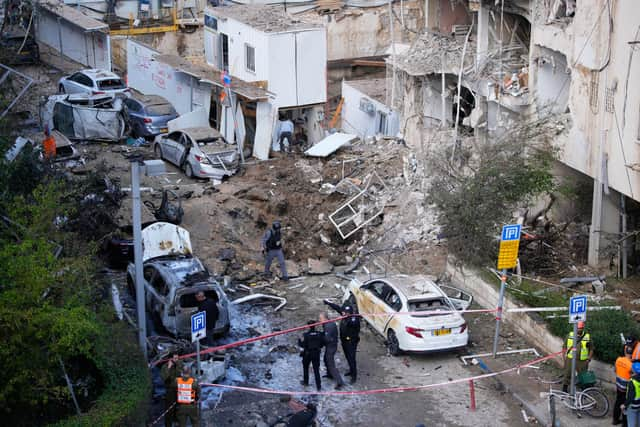
Sirens sounded very early on Thursday in parts of Tel Aviv and cities in central Israel. Rescue workers said two people were injured in a blast in Kfar Qasim.
Saudi Arabia’s defence ministry said it intercepted multiple drones over its oil-rich Eastern Province, the United Arab Emirates’ air defences also intercepted incoming fire, and Bahrain reported extinguishing a blaze in a neighbourhood that is home to the Bahrain International Airport.
Since the war began, more than 1,500 people have been killed in Iran, its health ministry says.
Twenty people have been killed in Israel; two Israeli soldiers have also been killed in Lebanon. At least 13 US military members have been killed. More than a dozen civilians in the occupied West Bank and Gulf Arab states have also died.
Nearly 1,100 people have died in Lebanon, authorities said. In Iraq, where Iranian-supported militant groups have entered the conflict, 80 members of the security forces have been killed.