
Iran targets ships, Dubai airport and oil facilities as economic concerns mount
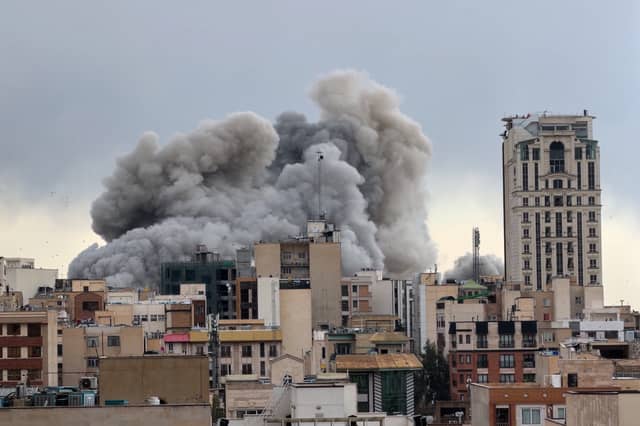

Iran has fired on commercial ships and targeted Dubai International Airport, escalating a campaign in the oil-rich Persian Gulf as global energy concerns mounted and American and Israeli air strikes pounded the Islamic Republic.
Iran’s response to the surprise Israeli and US bombardment that started 12 days ago has upended trade routes, choked supplies of fuel and fertiliser coming out of the Gulf and threatened air traffic through one of the world’s most-travelled regions.
Both sides have dug in, hoping to outlast the other.
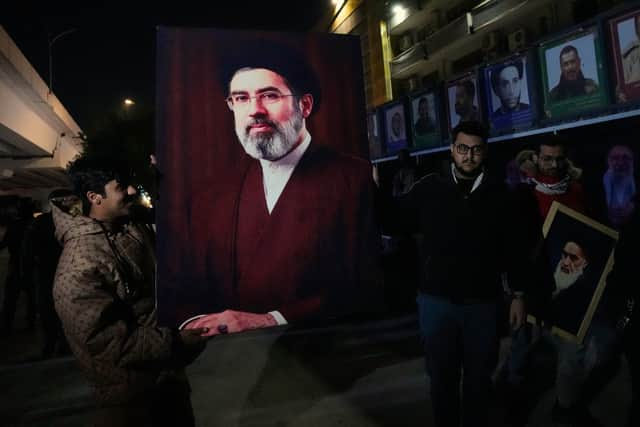
An Israeli intelligence assessment, meanwhile, found Iran’s new supreme leader, Ayatollah Mojtaba Khamenei, was wounded at the start of the war – on the day when his father and predecessor, Ayatollah Ali Khamenei, was killed in an Israeli air strike.
The 56-year-old, whose wife was also killed in the Israeli strike, has not been seen since becoming supreme leader on Monday. Yousef Pezeshkian, the son of Iranian President Masoud Pezeshkian, wrote on social media that he had heard the new supreme leader was wounded but that friends said “he is healthy and there is no problem”.
In Tehran late Wednesday, witnesses said they heard loud air strikes, explosions and heavy fire by anti-aircraft batteries. They could also hear the buzzing of drones overhead.
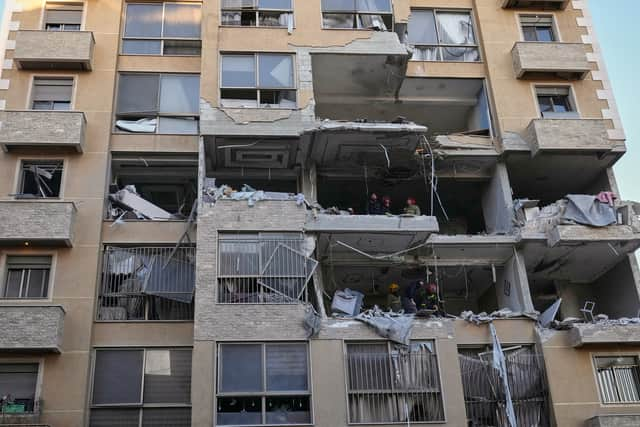
The fallout across the Middle East widened as Israel struck what it said were targets connected to Iran-backed Hezbollah militants in Lebanon. The UN refugee agency said at least 759,000 people have been internally displaced in Lebanon, while more than 92,000 others have crossed into neighbouring Syria.
The UN Security Council voted on Wednesday to approve a resolution demanding a halt to Iran’s “egregious attacks” on its Gulf neighbours.
“The international community is resolute in rejecting these Iranian attacks against sovereign countries that are threatening the stability of the peoples, especially in a region of strategic importance to global economy, energy, security, and security of global trade,” said Bahrain’s UN ambassador, Janal Alrowaiei.
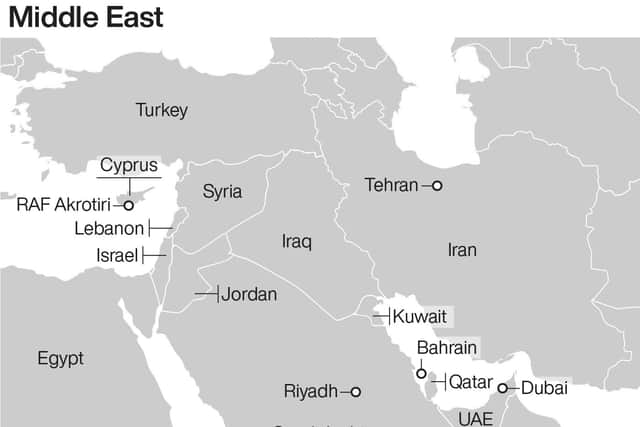
Iran has effectively stopped cargo traffic through the narrow Strait of Hormuz, through which a fifth of all traded oil passes.
It has also targeted oil fields and refineries in Gulf Arab nations, aiming at generating enough global economic pain to pressure the United States and Israel to end their strikes.
At least 12 incidents have been confirmed involving vessels in and around the strait since the war began, according to two global trackers. The International Maritime Organisation says at least seven mariners have been killed.
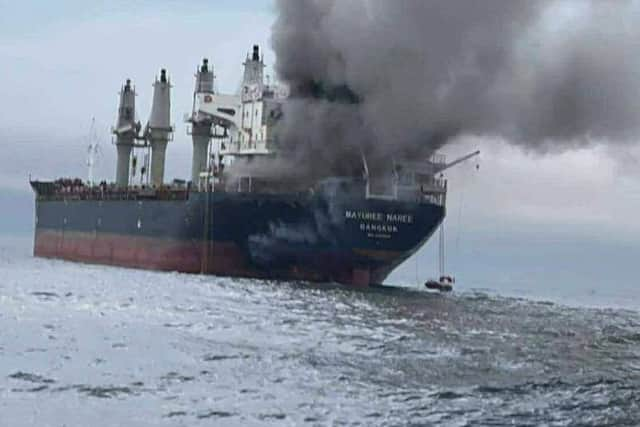
The United States has pledged to keep the strait open and has led intense air strikes targeting Iran’s navy and the port city of Bandar Abbas. The US military said on Tuesday it destroyed 16 Iranian mine-layers near the strait.
Some tankers, believed to be linked to Iran, continue to get through the strait, making so-called “dark” transits — meaning they are not turning on trackers that show where they are. Vessels carrying sanctioned Iranian crude often turn off their trackers.
The commodity-tracking firm Kpler said Iran has restarted crude exports through its Jask oil terminal on the Gulf of Oman. A tanker loaded roughly two million barrels at Jask on March 7, it said.
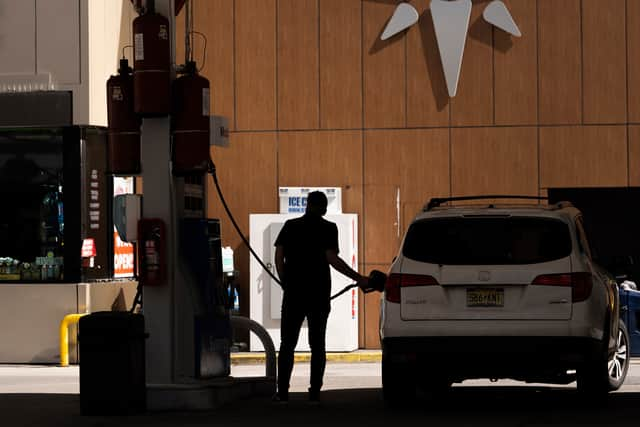
The International Energy Agency agreed on Wednesday to release the largest volume of emergency oil reserves in its history, in a bid to counter the war’s impact on energy markets.
The Paris-based organisation said it will make 400 million barrels of oil available from its member countries’ emergency reserves, more than twice the amount they released four years ago in response to Russia’s invasion of Ukraine.
While visiting Ohio on Wednesday, US President Donald Trump told Cincinnati television station WKRC that he will tap the US Strategic Petroleum Reserve to try to curtail rising prices. He did not specify how many barrels of oil the US would release.
Israeli strikes set a building ablaze in central Beirut. Lebanon’s Health Ministry said four people were wounded.
Hezbollah launched dozens of rockets at Israel on Wednesday night, the Israeli military said. One rocket hit a house near the town of Karmiel, lightly injuring two people, according to Israeli rescue services.
Israel responded with a large wave of strikes in Dahiya, a densely populated southern suburb of Beirut, the Israeli military said.
Iranian authorities say more than 1,300 people have been killed there, and Israel has reported 12 people dead. The US has lost seven soldiers while another eight have suffered severe injuries.
Iran’s joint military command said it would start targeting banks and financial institutions in the Middle East.
That would put at risk particularly Dubai, in the United Arab Emirates, which is home to many international financial institutions, as well as Saudi Arabia and the island kingdom of Bahrain.
The threat came after a Tehran location of Bank Sepah, a state-owned financial institution sanctioned by the US over funding Iranian armed forces, came under attack on Wednesday, killing staff there, according to the state-run IRNA news agency.
In a separate development, Iran’s sports minister, Ahmad Donyamali, told Iranian state TV that the country’s football team cannot take part in the upcoming World Cup in North America in June because of the “wicked acts” of the United States.
He said Iranian players would not be safe in the US.