
Israel’s Benjamin Netanyahu invited to visit Donald Trump at the White House
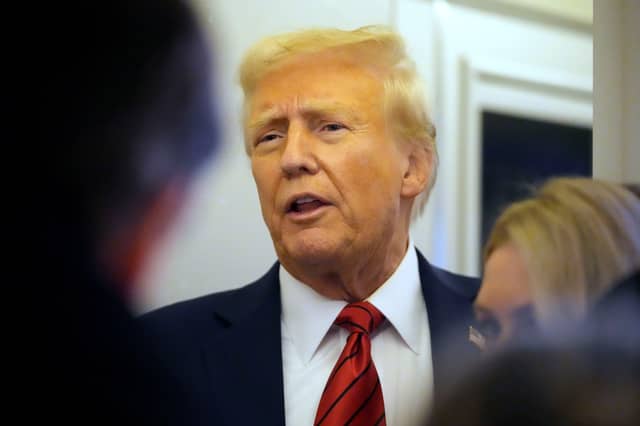

US President Donald Trump has invited Israeli Prime Minister Benjamin Netanyahu to the White House on February 4 as the first foreign leader to visit in Mr Trump’s second term, Mr Netanhayu and the White House said Tuesday.
The visit comes as the United States pressures Israel and Hamas to continue a ceasefire that has paused a devastating 15-month war in Gaza. Talks about the ceasefire’s second phase are set to begin on February 3.
The White House letter shared by Mr Netanyahu’s office, dated Tuesday, invited the prime minister to visit next week: “I look forward to discussing how we can bring peace to Israel and its neighbours, and efforts to counter our shared adversaries.”
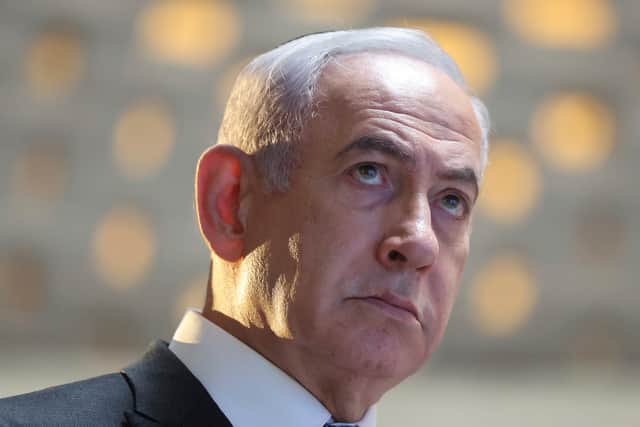
“I’m going to be speaking with Bibi Netanyahu in the not-too-distant future,” he said.
The meeting would be a chance for Mr Netanyahu, under pressure at home, to remind the world of the support he has received from Mr Trump over the years.
Mr Netanyahu is likely to encourage Mr Trump not to hold up some weapons deliveries the way the Biden administration did.
The administration continued other deliveries and overall military support to Israel, which is the largest recipient of US military aid.

Even before taking office this month, Mr Trump was sending his special Middle East envoy, Steve Witkoff, to the region to apply pressure, along with the Biden administration, to get the current ceasefire achieved.
But Mr Netanyahu has vowed to renew the war if Hamas doesn’t meet his demands in negotiations over the ceasefire’s second phase, which aims to end the war.
Under the ceasefire deal, more than 375,000 Palestinians have crossed into northern Gaza since Israel allowed their return, the United Nations said Tuesday. That represents more than a third of the million people who fled in the war’s opening days.

They were determined, if their homes were damaged or destroyed, to pitch makeshift shelters or sleep outdoors amid the vast piles of broken concrete or perilously leaning buildings. After months of crowding in squalid tent camps or former schools in Gaza’s south, they would finally be home.
“It’s still better for us to be on our land than to live on a land that’s not yours,” said Fayza al-Nahal as she prepared to leave the southern city of Khan Younis for the north.
Hani Al-Shanti, displaced from Gaza City, looked forward to feeling at peace in whatever he found, “even if it is a roof and walls without furniture, even if it is without a roof.”
Under the ceasefire, the next release of hostages held in Gaza and Palestinian prisoners from Israeli custody is set to occur on Thursday, followed by another exchange on Saturday.

Israel said a list provided by Hamas confirmed the fears that eight of the 33 hostages to be freed are dead, bringing fresh grief to Israeli families who have long pressed the government to reach a deal to bring everyone home before time runs out.
On Tuesday, one of the first hostages to be released under the current ceasefire – just the second in the war – shared a glimpse of life in captivity.
Naama Levy, 20, wrote on social media that she spent most of the first 50 days alone before being reunited with other soldiers kidnapped from her military base on October 7, as well as other civilian captives.
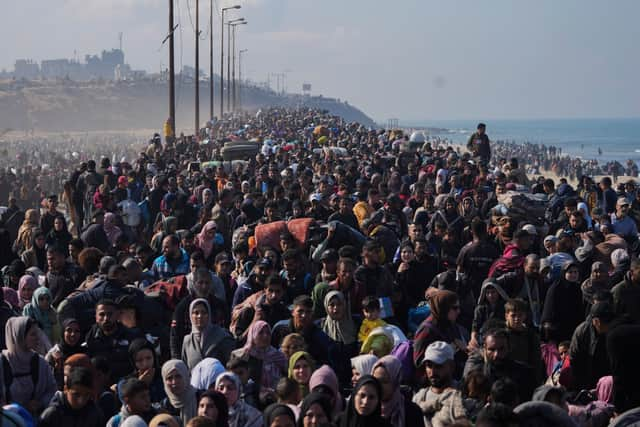
A surge in humanitarian aid into Gaza continued under the ceasefire.
“In this past week alone, approximately 4,200 trucks carrying aid have entered the Gaza Strip following inspections,” Israel’s deputy foreign minister Sharren Haskel said.
Under the deal, 600 trucks of aid are meant to enter per day.