
Kristallnacht survivors in warning about antisemitism and hate speech


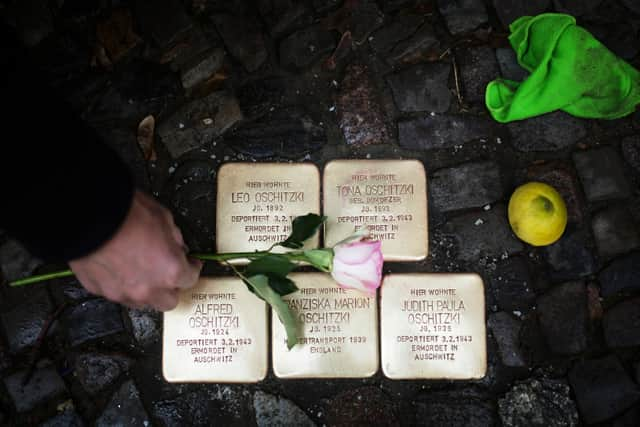
Holocaust survivors from around the world are warning about the re-emergence of antisemitism as they mark the 84th anniversary of Kristallnacht – the “Night of Broken Glass” – when Nazis terrorised Jews throughout Germany and Austria.
In the campaign #ItStartedWithWords by the organisation that handles claims on behalf of Jews who suffered under the Nazis, several Holocaust survivors have recounted on video how antisemitic speech led to actions that nearly saw the mass extermination of Jews in Europe in the last century.

“It started for me when I was eight years old, and I could not understand why my best friends were shouting bad names at me,” she said.
Ms Szepesi was shocked by the behaviour of her best friends, but the Jewish girl soon found herself fleeing from the Nazis before she was captured and deported to Auschwitz at age 12. Her parents and brother were murdered in the death camp.
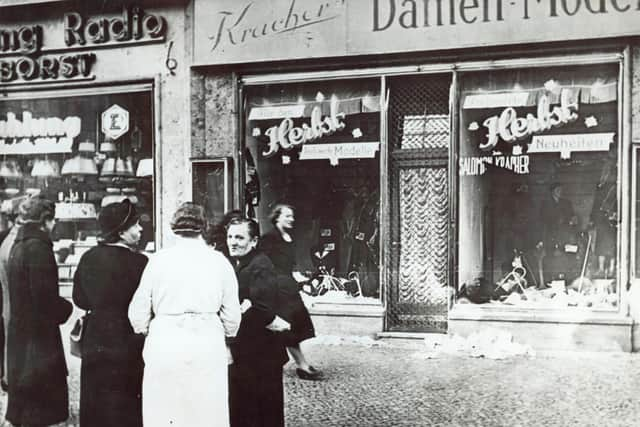
They also burned more than 1,400 synagogues, according to Israel’s Yad Vashem Holocaust memorial.
Up to 30,000 Jewish men were arrested, many taken to Nazi death camps such as Dachau or Buchenwald.
Hundreds more committed suicide or died as a result of the mistreatment in the camps years before the official mass deportations began.
By the end of the Second World War in 1945, the Nazis and their henchmen had murdered six million European Jews.
That was a period when they could not have predicted the ease with which their neighbours, teachers, classmates and colleagues would turn on them, transitioning from words of hate to acts of violence.
“Relaunching this campaign goes beyond commemorating Kristallnacht,” said Greg Schneider, the Claims Conference’s executive vice president.
“With the growing prevalence of Holocaust denial, distortion and hate speech on social platforms, the core message behind the #ItStartedWithWords campaign becomes even more important: The Holocaust did not start with camps, ghettos and deportations; it started with words of hate.”
In Germany, a group tracking antisemitism said it documented more than 2,700 incidents in the country last year, including 63 attacks and six cases of extreme violence.
In a report in June, the Department for Research and Information on Anti-Semitism said anti-Jewish conspiracy narratives related to the coronavirus pandemic and antisemitic criticism of Israel in the Middle East conflict were the main drivers of the 2,738 incidents it documented.
Incidents of bias and hate speech have also been rising in the US, including recent comments by the singer Ye, formerly known as Kanye West, and a social media post shared by NBA star Kyrie Irving.