
Lebanon’s parliament chooses army chief as president, ending two-year deadlock


Lebanon’s parliament has voted to elect the country’s army commander Joseph Aoun as head of state, filling a more than two-year-long presidential vacuum.
The session was the legislature’s 13th attempt to elect a successor to former president Michel Aoun — no relation to the army commander — whose term ended in October 2022.
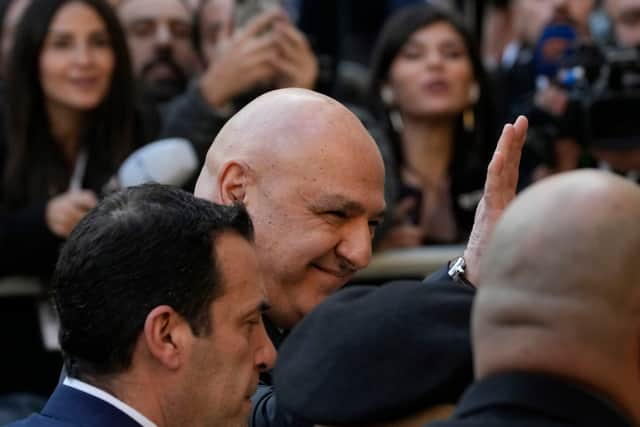
Mr Aoun was widely seen as the preferred candidate of the United States and Saudi Arabia, whose assistance Lebanon will need to ensure that Israel withdraws its forces from southern Lebanon as stipulated in the agreement and to fund the post-war rebuilding.
Hezbollah — which has been weakened politically and militarily by the war with Israel — previously backed another candidate, Suleiman Frangieh, the leader of a small Christian party in northern Lebanon with close ties to former Syrian president Bashar Assad.
But Mr Frangieh announced on Wednesday that he had withdrawn from the race and endorsed Mr Aoun, apparently clearing the way for the army chief.
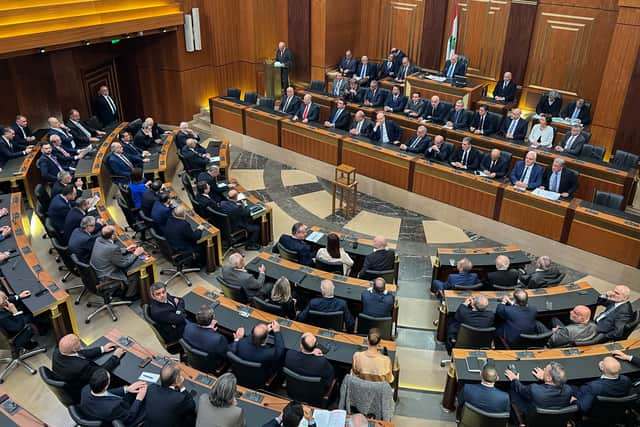
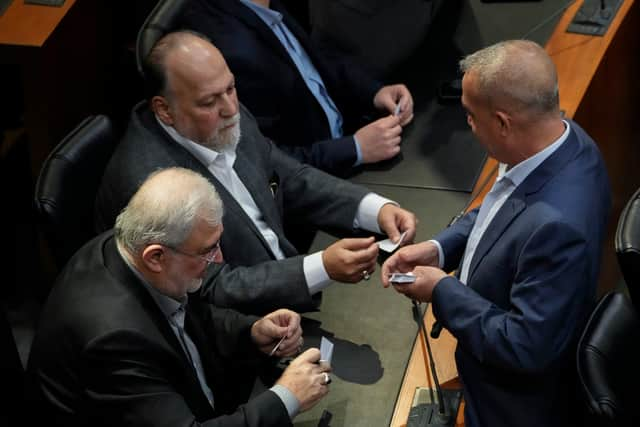
In a first round of voting on Thursday, Mr Aoun received 71 out of 128 votes but fell short of the two-thirds majority needed to win outright. Of the rest, 37 politicians cast blank ballots and 14 voted for “sovereignty and the constitution”.
In the second round, he received 99 votes.
Mr Aoun was escorted by a marching band into the parliament building in central Beirut where he took the oath of office.
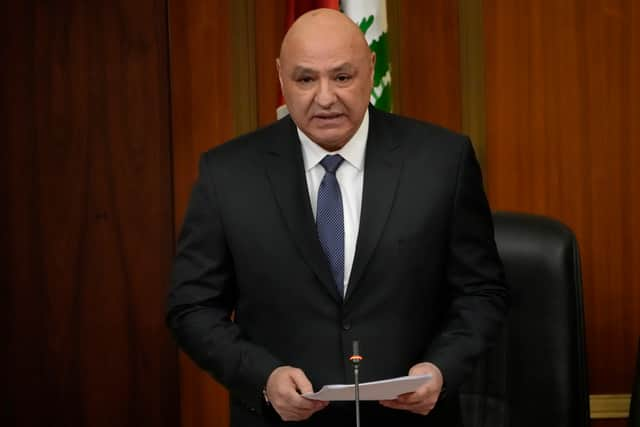
In a speech to parliament, Mr Aoun pledged to carry out reforms to the judicial system, fight corruption and work to consolidate the state’s right to “monopolise the carrying of weapons”, in an apparent allusion to the arms of Hezbollah.
He also promised to control the country’s borders and “ensure the activation of the security services and to discuss a strategic defence policy that will enable the Lebanese state to remove the Israeli occupation from all Lebanese territories” in southern Lebanon, where the Israeli military has not yet withdrawn from dozens of villages.
He also vowed to reconstruct “what the Israeli army destroyed in the south, east and (Beirut’s southern) suburbs”.
Lebanon’s fractious sectarian power-sharing system is prone to deadlock, both for political and procedural reasons.The small, crisis-battered Mediterranean country has been through several extended presidential vacancies, with the longest lasting nearly two-and-a-half years between May 2014 and October 2016. It ended when former president Michel Aoun was elected.
But only the president has the power to appoint or remove a prime minister and cabinet.
The caretaker government that has run Lebanon for the last two years has reduced powers because it was not appointed by a sitting president.
Mr Aoun becomes the fifth former army commander to ascend to Lebanon’s presidency, despite the fact that the country’s constitution prohibits high-ranking public servants, including army commanders, from assuming the presidency during their term or within two years of stepping down. This ban has been waived before.
Under normal circumstances, a presidential candidate in Lebanon can be elected by a two-thirds majority of the 128-member house in the first round of voting, or by a simple majority in a subsequent round.
But because of the constitutional issues surrounding his election, Mr Aoun needed a two-thirds majority in the second round to clinch the election.
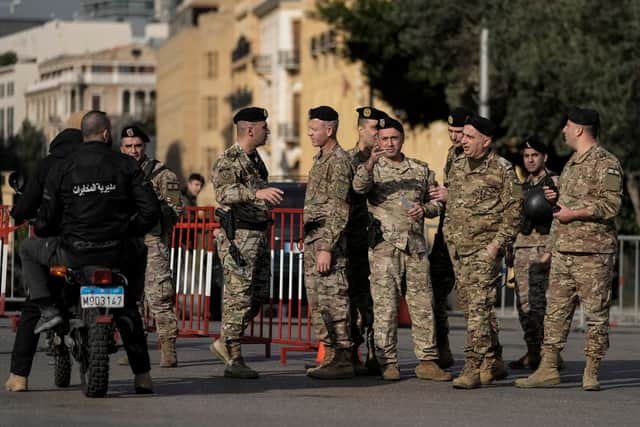
Other contenders included Jihad Azour, a former finance minister who is now the director of the Middle East and Central Asia Department at the International Monetary Fund (IMF); and Elias al-Baysari, the acting head of Lebanon’s General Security agency. Mr Al-Baisary announced on Thursday that he was pulling out of the race.
The next government will face daunting challenges apart from implementing the ceasefire agreement that ended the Israel-Hezbollah war and seeking funds for reconstruction.
Lebanon is in its sixth year of an economic and financial crisis that decimated the country’s currency and wiped out the savings of many Lebanese.
The cash-strapped state electricity company provides only a few hours of power a day.
The country’s leaders reached a preliminary agreement with the IMF for a bail-out package in 2022 but have made limited progress on reforms required to clinch the deal.