
Midwives having to use food banks as pay dispute continues, union says
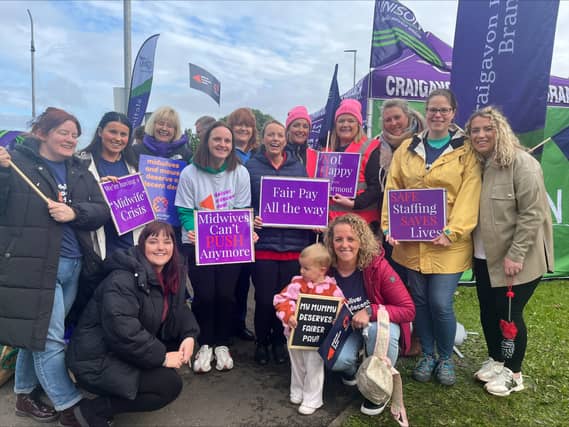

Midwives in Northern Ireland are having to use food banks to deal with the cost-of-living crisis amid a pay dispute, a union representative has said.
Thousands of healthcare workers have begun day two of a 48-hour strike to call for pay parity with health workers in other parts of the UK, as well as increased funding for health services.
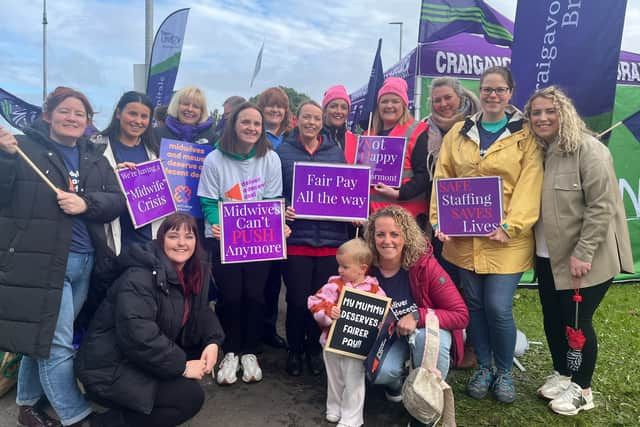
RCM representative Emma Creagh was with colleagues outside Craigavon Area hospital on Friday morning.
She said: “Unfortunately we’re not dealing very well.
“We have midwives that are having to use food banks, we have midwives that are working extra shifts, we are working shifts where we’re not getting a break, and at the minute we have no other thing but going on strike.”
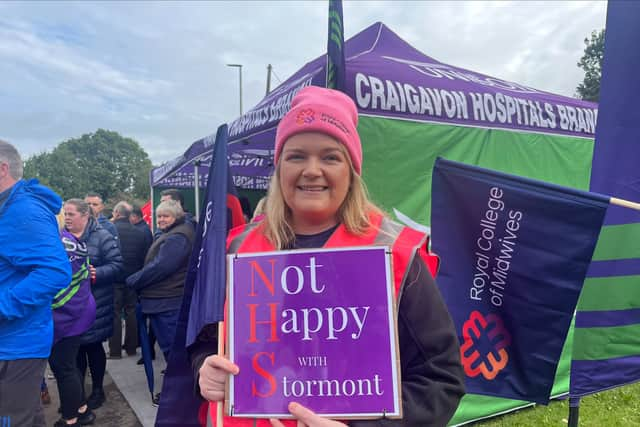
She said: “We are training staff to become midwives and then they’re going to other parts of the UK to earn their money.
“Why would they stay here if they’re earning less money than their counterparts in the likes of Scotland?”
There has not been a devolved government for more than a year as the DUP are boycotting Stormont in protest against post-Brexit trading agreements.
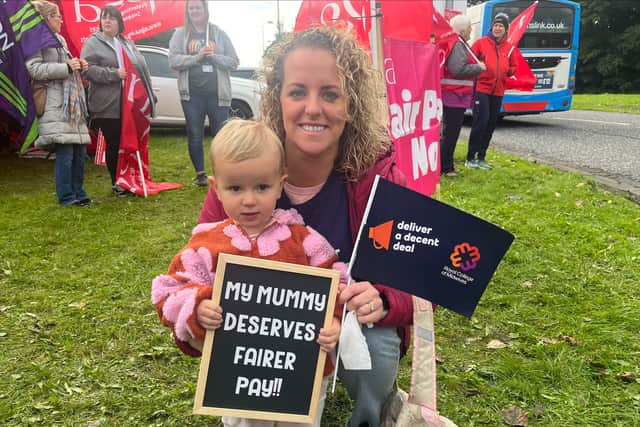
She said: “We need a maternity strategy, we need the politicians to get back into Stormont and get them the deal that we need.
“We need them to be working for us the same way that we’re working for all these people here.
“There’s not one woman that is going to be left in any way that they’re not going to have a midwife looking after them today, even though we are standing on the picket line, because we will make sure that woman has the care that she needs.”
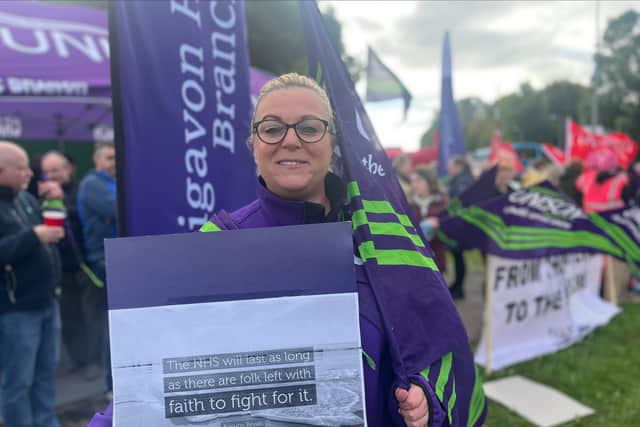
“We’re the lowest-paid within the UK. We were promised, we stood out here four years ago and we were promised then by our health minister that we would never be in this position again. Here we are, the lowest-paid in the UK.”
Ms Emerson said her message for Stormont politicians was “get back to work”.
She added: “At the end of the day, this is going to continue and we’re not backing down until this is sorted, and we want to be paid fairly along with our colleagues in the three nations.”
Karen Murray, director at RCM, addressed a rally outside Belfast City Hall attended by members from a range of unions.
She said midwives were facing “major issues” in the cost-of-living crisis.
“They’ve been severely impacted by the same things that everybody in the population has been,” she said.
“So to see that colleagues across the rest of the UK can get a pay award, even though it may not have been what they wanted, but they’ve got that pay award, and our midwives are sitting here up to £2,000 worse off than their colleagues in England and Wales.
“That’s a hard pill to swallow.”
Ms Murray said future strike action may be taken.
“We remain in dispute. As I’ve said before, we will talk to anybody that could help us settle this dispute, but we remain in dispute so we can’t rule out the fact that there will be further action as the year goes on,” she said.
The Department of Health said it understands the “deep-seated frustration” over ongoing pay issues but that it was not able to resolve these due to budgetary constraints.
A Northern Ireland Office spokesman said: “The Secretary of State recognises the important and often life-changing work that healthcare workers carry out.
“In recognition of the pressures on the health service over half the total budget, brought forward by the Secretary of State, is earmarked for health.
“The UK Government does not have any authority to negotiate pay in Northern Ireland, it will be for the Northern Ireland Department of Health to make final decisions on pay policies.
“In the absence of an Executive, the Secretary of State for Northern Ireland has written to the Permanent Secretaries of the Northern Ireland departments, directing them to launch public consultations on measures for supporting budget sustainability and raising additional revenue.
“Conducting these consultations will enable Northern Ireland departments to identify ways to improve the sustainability of public services and public finances, paving the way for long awaited improvement and transformation of these services that we all rely on and want to protect.
“It remains the Government’s top priority to restore the Executive and for locally accountable political leaders to take fundamental decisions on Northern Ireland’s public services and deliver better outcomes for the people of Northern Ireland.”