
Movement therapist with agonising connective tissue disorder undiagnosed for nearly 40 years coincidentally helped thousands of sufferers
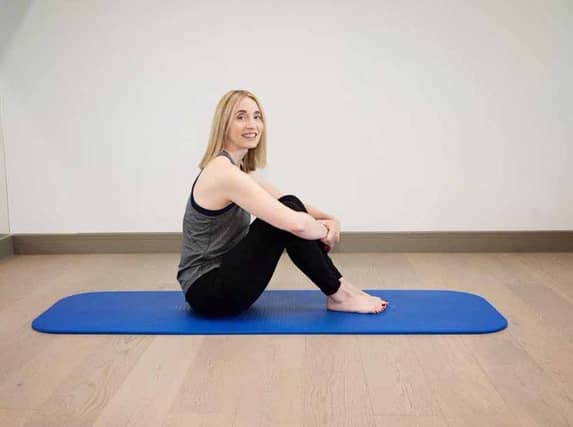

A movement therapist whose excruciating connective tissue disorder went undiagnosed for nearly 40 years and took her on a fascinating exploration of the human body which saw her studying cadavers has coincidentally helped thousands of fellow sufferers.
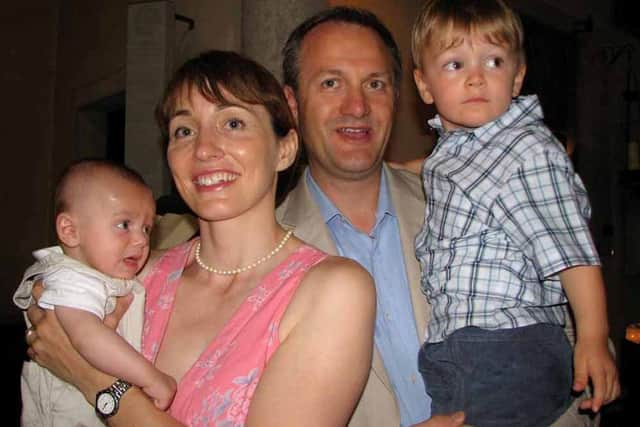
Mum-of-two Jeannie Di Bon, 51, was diagnosed with Ehlers-Danlos syndrome (EDS) – a group of rare inherited conditions that affect the body’s connective tissue – just three years ago, after decades of unexplained pain and medical issues which started when she was 12.

She added: “The pain was sometimes unbearable. I got sent to lots of different doctors, but none of them joined the dots.
“For years I was told there was nothing wrong with me. That’s a dangerous thing to grow up with, as I stopped trusting myself and I stopped trusting my body. When a doctor says there’s nothing wrong, you start to believe you’re a hypochondriac.”
For Jeannie, there were signs of mobility issues before she could even walk.
She said: “I was a typically hypermobile baby – meaning I had an increased range of joint movements – and didn’t crawl.
“But my first recognisable symptom was evident when I was 12 and I started to get pain in my back and shoulders. I was sent to different doctors and eventually diagnosed with the digestive condition irritable bowel syndrome (IBS).”
She added: “I went through my teenage years and thought everything was a separate issue. I suddenly got stretch marks all over my legs and, as I used to be a cross country runner, I thought that had caused it, so gave up the running.
“Only later did I realise it was EDS affecting my skin.”
According to the NHS, symptoms can include hypermobility, joint pain, loose, unstable joints, fatigue, problems with internal organs and stretchy, fragile skin.
Plagued by health problems, altogether Jeannie was diagnosed with a mitral valve prolapse – a form of heart valve disease – and she repeatedly had pneumonia. She had postural tachycardia syndrome, an abnormal increase in heart rate when sitting up or standing, and mast cell activation – which causes repeated allergic reactions and inflammations in her bladder.
She now knows that all these conditions are related to her EDS.
But it was only in 2018 when having investigations for the mast cell activation in her bladder, that a doctor was able to give Jeannie a diagnosis that she says “joined the dots at last.”
She explained: “I started having issues with my bladder and the doctor who looked at me for that diagnosed me with EDS.

Remarkably, Jeannie was not too concerned about the diagnosis as, coincidentally, she already knew so much about the condition from working with EDS sufferers in her occupation as a movement therapist.
She had gone into the career after taking up pilates on the recommendation of a physiotherapist who she saw following the birth of her second child in 2007, over a decade before her diagnosis, after experiencing extreme fatigue.
Instantly taken with the exercise, she soon trained to become a teacher, saying: “I became fascinated with learning about the body.”
She added: “I trained as a Pilates teacher, then I studied biomechanics, went to Harvard medical school in the USA, studied pain science and neuroscience. I even studied cadavers in a lab!”
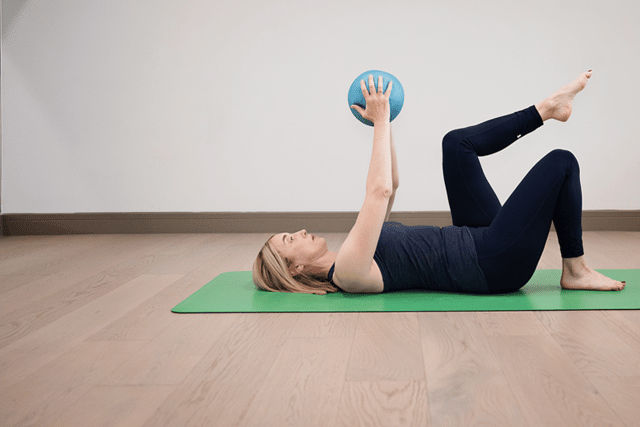
Jeannie then devised her own movement method to deal with her pain, which she describes as being akin to “modified pilates.”

She added: “Then we move on to stability, balance and improving posture.”
Jeannie asks her clients to use her customised method, which involves a short 15 to 30 minute workout, a minimum of three times a week, although she does light movement every day.
Alongside adopting her personal exercise method, which she says has completely cured her of physical pain, Jeannie began daily meditation to calm her nervous system.
Finding that this combined approach eased her symptoms, she launched her method to the public in 2013 for one-to-one clients and then online from 2017.
Now Jeannie says she sees 20 people with EDS a week face-to-face and trains many more through her online portal, The Zebra Club.

She explained: “My job is to help people look after their bodies and move without pain and fear.
“I teach people how to manage their bodies and tone them, so they are in less pain and experience less joint issues. The impact is remarkable.”
Jeannie’s clients include people who are bedbound and cannot walk because of EDS, as well as those on strong painkillers such as morphine.
She said: “I just want people to know that it doesn’t matter how debilitating your condition is today. There is always something that you can do. Please don’t give up hope.”
David Deyle, M.D., an internist and medical geneticist at the respected Mayo Clinic in Rochester, Minnesota, USA, explained the impact of exercise on EDS.

He added: “The hallmark of Ehlers-Danlos syndrome is joint laxity that can lead to joint instability. Exercises to strengthen the muscles and stabilise joints are the primary treatment for hypermobile Ehlers-Danlos syndrome.
“Exercise programmes should be developed with a physical therapist and in some instances bracing might be recommended to help prevent joint dislocations.

He added: “However, avoid contact sports, weightlifting and other activities that increase the risk of injury and can increase stress on joints.
“Wearing supportive shoes, to help prevent ankle sprains, and wearing laced boots with good arch support are also recommended. It is best to consult with a healthcare team before these exercises are started.”