
Mum who had postpartum psychosis twice and heard voices from taps earns one million views sharing experience on TikTok
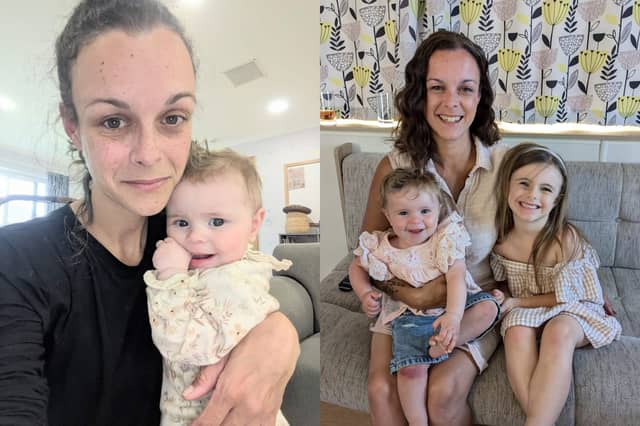

A mother who experienced postpartum psychosis twice, hearing whistling in the walls and voices from the taps, has bravely shared her experience on TikTok to show others “it’s OK to ask for help”.
Hollie Crawley, 36, from Lowestoft, Suffolk, first experienced postpartum psychosis in 2010 following the birth of her first child, Aidan, who is now 14, where she recalled having “bad dreams” she had “hurt” her son which she struggled to differentiate from reality.
She and her husband of 15 years, Sam, 40, who is a mechanic, originally put her symptoms down to “hormones” but following a routine six-week postpartum check-up from a health visitor, Hollie was referred to a mental health team via her GP, where she was later officially diagnosed with postpartum psychosis.
Hollie was treated with antipsychotic medication, therapy and eventually electroconvulsive therapy (ECT) before her symptoms subsided around a year after they first arose, and they did not appear again in 2019 following the birth of the couple’s second child, Millie, who is now five.

Hollie was discharged in June following a treatment of medication and therapy, and she started to share photos from her time on the ward on TikTok, where one video gained more than one million views and prompted others to hail her as an “inspiration”.
“The worst thing is not being in touch with reality, not knowing what’s real,” Hollie, who previously worked in a care home and is now unemployed, told PA Real Life.
“You don’t know who to trust, it’s a scary thought.”
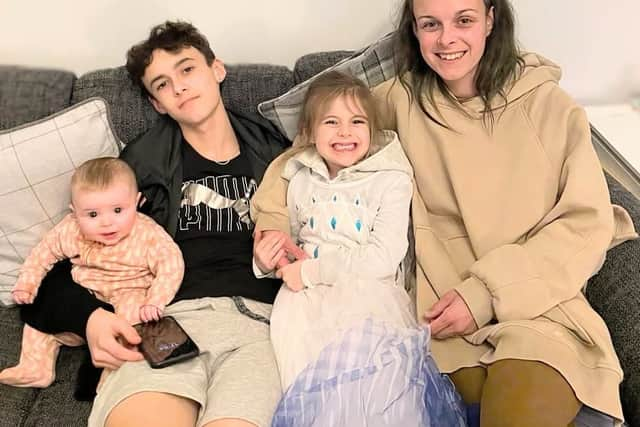
According to the NHS, postpartum psychosis is a serious mental health illness and symptoms usually begin within the first two weeks of giving birth.
These can include hallucinations, delusions, mania, a low mood and feeling very confused.
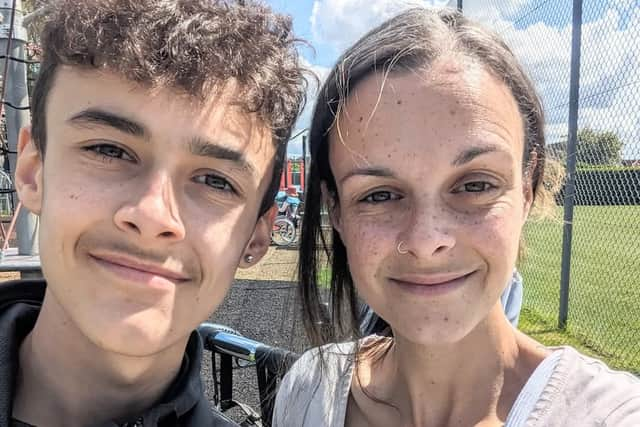
Hollie first experienced postpartum psychosis in 2010 following the birth of her son, Aidan, who is now 14, where she recalled having “bad dreams” and struggled to grasp reality.
“It happened pretty much straight away after he was born,” she said.
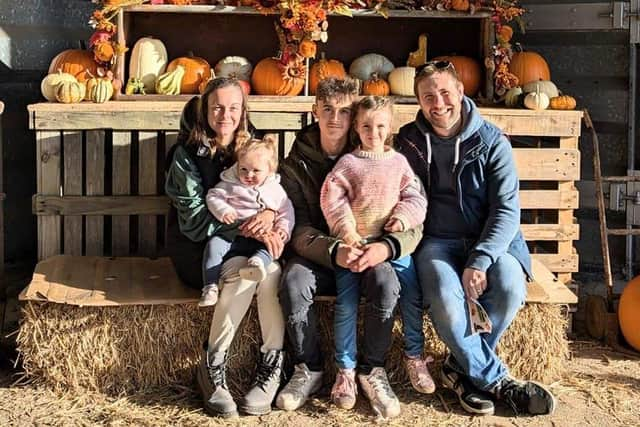
“I used to dream that I’d hurt him and then I’d wake up paranoid and I’d have to check on him – I couldn’t really tell what was real and what was not.”
Hollie said it was around six weeks later when she had a routine postpartum check-up with a health visitor who became concerned with her symptoms and referred her to a mental health team via her GP.
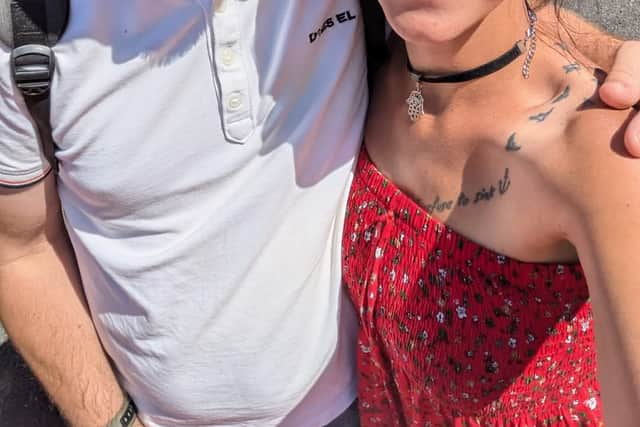
Hollie was diagnosed with postpartum psychosis and she was treated with antipsychotic medication, therapy and ECT – the latter of which involves sending an electric current through the brain.
According to the NHS, ECT is sometimes recommended if all other treatment options have failed or when the situation is thought to be life-threatening.

She made a full recovery and nine years later, she and Sam welcomed their second child, Millie, who is now five.
Hollie said she was “nervous” the illness would make a reappearance but was “relieved” when it did not.
When Hollie fell pregnant for the third time in January 2023, she said she felt “a little bit nervous” again.

After welcoming their third child, Imogen, in September 2023 Hollie started to experience visual and auditory hallucinations around three months after giving birth.
“I kept asking my mental health midwife to check Imogen because she didn’t look real, I kept thinking someone had replaced her with a doll,” she said.
“During the night I could hear people talking to me through the walls, like whistling noises.

Hollie also recalled seeing people’s faces change when she was out in public.
“I’d be looking at people and it was like their faces changed, almost like shape-shifting,” she said.
“It’s like an out-of-body experience, like when you’re waking up from a dream state.”
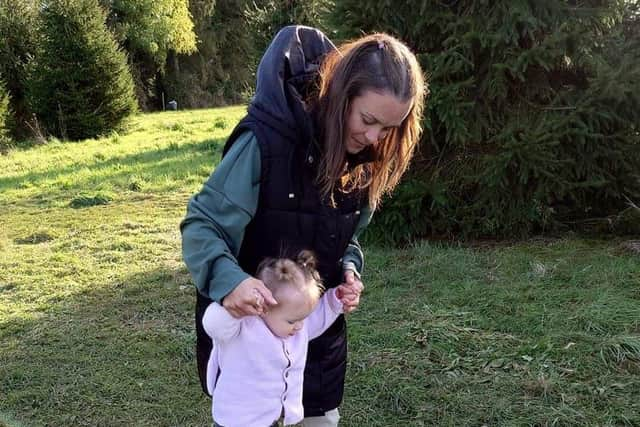
After taking medication but finding her symptoms were not improving, Hollie and Imogen were admitted onto a mother and baby unit in Norwich, Norfolk, in April this year – which provided her with round-the-clock care and support.
“I didn’t want to go at first because I didn’t want to leave my other children,” she said, but added the unit was very “family focused”.
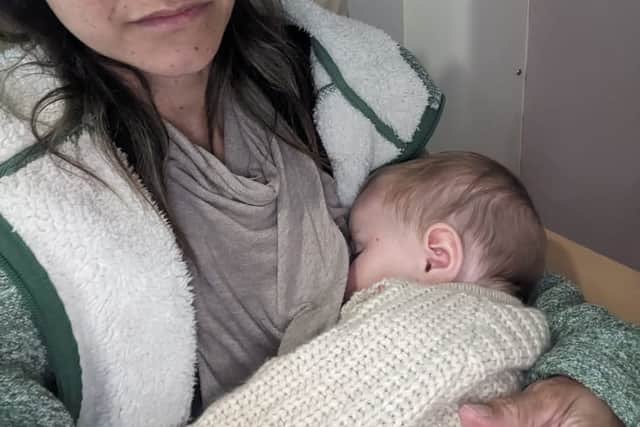
Hollie made a full recovery and was discharged in June.
During their stay, she took photos to document their time at the unit for a “virtual scrapbook”.
“It was a big part of mine and Imogen’s early days together,” she said.
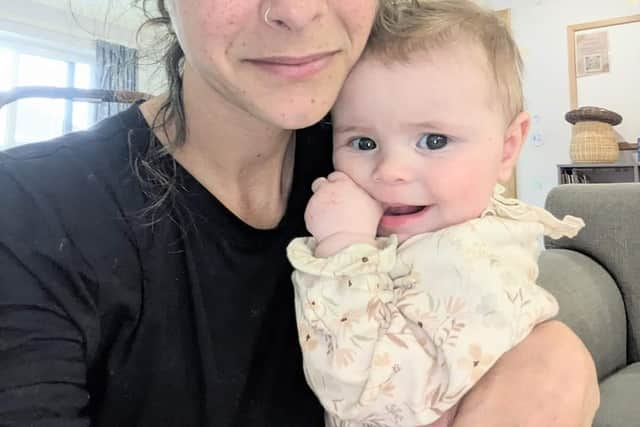
One video, which she captioned “our time on the mother and baby psych ward has been positive”, gained 1.3 million views, over 72,000 likes and more than 2,000 comments – which Hollie said was “overwhelming” at first.
The video shows several clips of Hollie and her daughter in the unit, some of which include Imogen playing with toys, Hollie lying in bed with her baby and the pair sitting outside in a garden.
“I didn’t expect to get those views, I thought it was something I would upload and show Imogen one day,” she said.
One comment under the video read: “This can change the world, I know so many mums who don’t get help because we don’t want to leave our babies.”
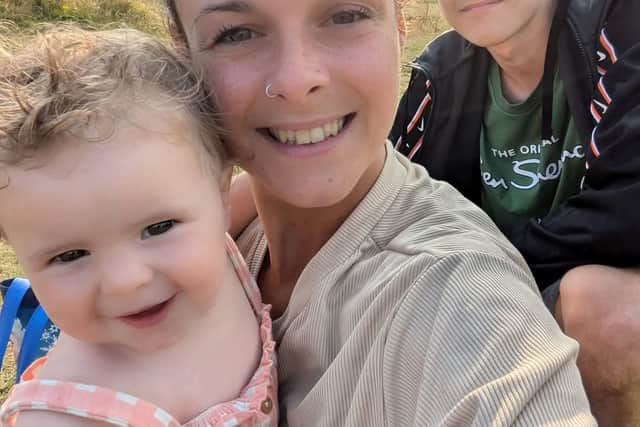
Hollie said: “People started thanking me for sharing what I’d gone through – it if helps someone then it’s worth it.
“The help is there and you’re not judged for it.
“Don’t struggle alone.”
For information on mental health support before, during or after pregnancy, visit the NHS website here: nhs.uk/nhs-services/mental-health-services/find-care-for-your-mental-health-before-during-and-after-pregnancy.