
Mum who lost son, 4, to cancer says creating artwork from cell images and his finger paintings ‘brings him back to life’
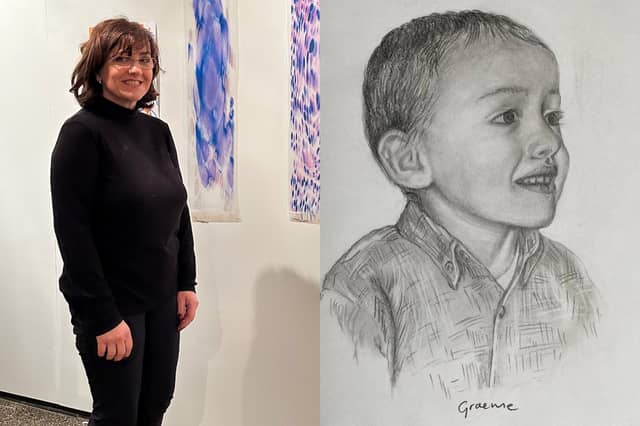

A mother who lost her four-year-old to cancer has said creating “beautiful” yet “sinister” artwork using cell images, his MRI scans and finger paintings helped to bring him “back to life” decades after his death.
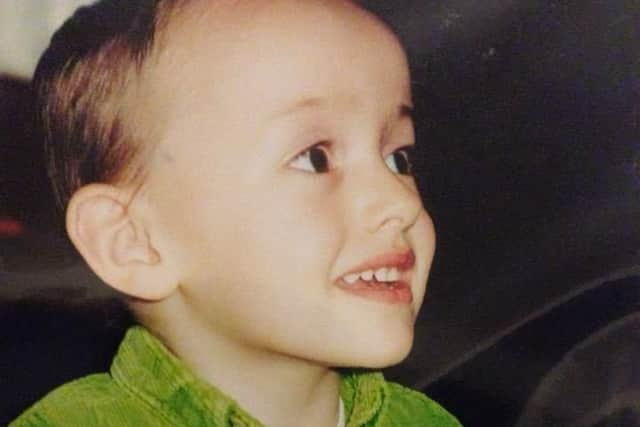
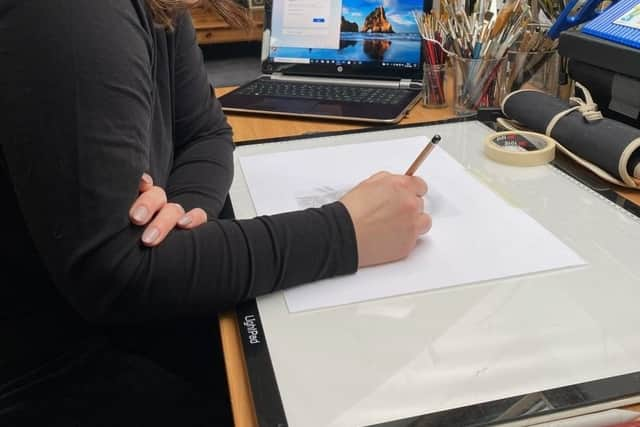
Joanne Humphreys, 60, a professional artist and art teacher who lives in Cheltenham, Gloucestershire, said her son Graeme was diagnosed with neuroblastoma – a rare cancer – in January 1998, aged two.
Graeme’s tumour was wrapped around his spine and one of his kidneys, and Joanne was told his chances of survival were between 5% and 15%.
Joanne looked into alternative treatments and was “fully prepared to sell everything” – including the house – to pay for gene therapy in New York, but after seeing one of his scans, she knew “that’s it”.
“I was looking at (the scan results) and I was thinking: ‘Now I can see the extent of the horror that’s going on inside your body,'” she told PA Real Life.
Graeme died on New Year’s Eve in 1999, aged four, and his funeral was held on January 9 2000, where Joanne read out a letter that she had written to him and played his favourite Winnie The Pooh music.
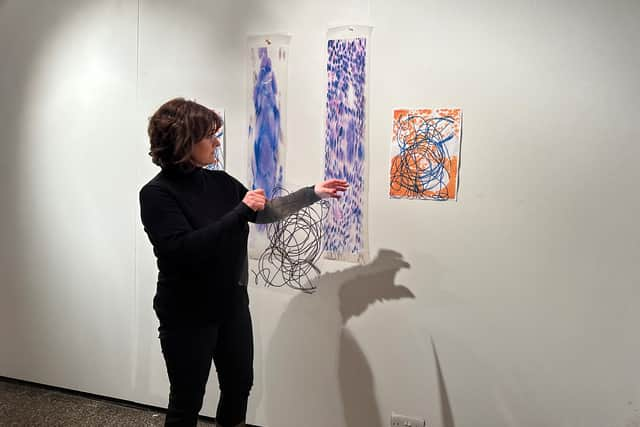
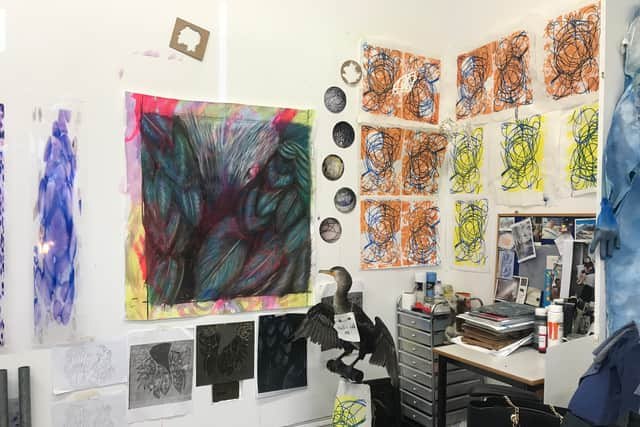
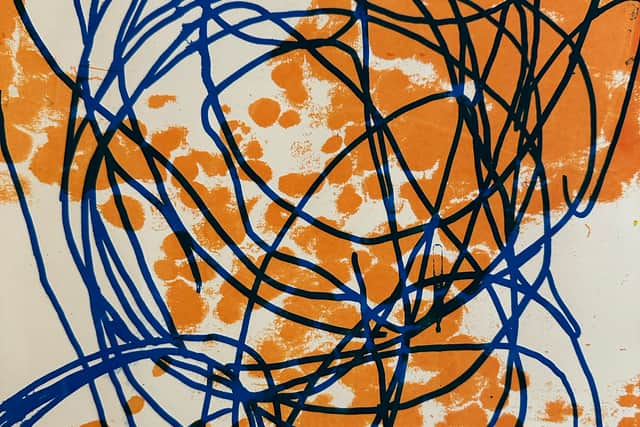
She experimented with Graeme’s childhood finger paintings and neuroblastoma cell images – scans of cancer cells seen under the microscope – which she enlarged to create unique artwork illustrating his illness.
She also created The Process in 2020, an award-winning short film based on her personal experience of grief and mourning.
The film features the ritualistic burning of objects associated with Graeme’s cancer, such as his MRI scans, an X-ray and photos of cancer cells.

“There needs to be some sort of good outcome from something that’s devastating and bad and tragic,” Joanne said.
“As human beings, we do dwell on the negative, and I think it’s just switching it and thinking, what can I do to make things better?
“I just wanted to get it out, get it out of my system, but then again, to be able to share with others and raise awareness of this awful cancer as well.
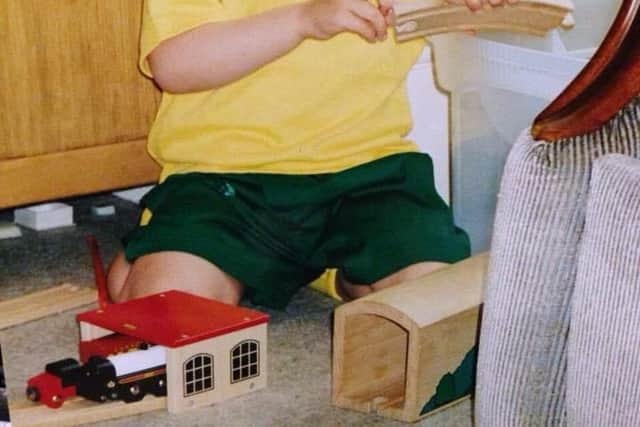
Graeme first became unwell just before his second birthday in October 1997, suffering frequent chest infections – and initially he was sent home with antibiotics by the GP.
During a haircut weeks later, a lump was discovered on his head and at Christmas Graeme developed a limp and cried “non-stop for four or five nights”.
Graeme was then transferred to Bristol Children’s Hospital, where it was confirmed he had stage 4 neuroblastoma in January 1998 – and Joanne felt she was living in “another world”.
Joanne was told he would need to undergo treatment straight away, as neuroblastoma “latches onto nerves”, but there were “no recognised treatments” at the time and only a couple of clinical trials available.
“It was hard to understand that, we are in this modern world and children are dying from this cancer and there are no recognised treatments for it,” she said.
Graeme then started seven rounds of chemotherapy at Gloucestershire Royal Hospital, which caused him to lose his hair and develop ulcers in his mouth.
Joanne wanted to “know everything” and insisted on seeing all of his scans, which showed her the cancer was “all over him” – but being a visual person, this helped her understand Graeme’s diagnosis.
While it was a “surreal, otherworldly situation”, she said: “I wanted to see what was killing my son.”
However, in March 1999, a routine scan revealed the cancer had returned.
Joanne said: “I remember saying to (the doctor), ‘So what you’re saying is, my son’s going to die’.”
Joanne did not want to “give up” and she started looking for alternative treatment options, talking to several experts in the field, including Jon Pritchard, a pioneering paediatric oncologist.
“The tumours were completely consuming all of his body,” she said.
“One was pushing one of his eyes out, the other eye was going in, and there was this row of tumours all along his throat area, choking him.”
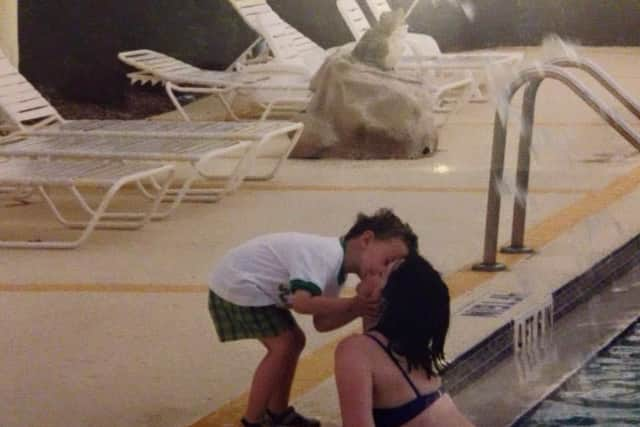
Joanne and Graeme’s father then decided to enjoy the time they had left with him and booked a few holidays, taking him and his older sister Rebeca, now 31, to Disneyland, in Florida, and Center Parcs.
Graeme then underwent localised radiotherapy at Cheltenham General Hospital, which helped to make him more “comfortable” before he died at home on December 31 1999.
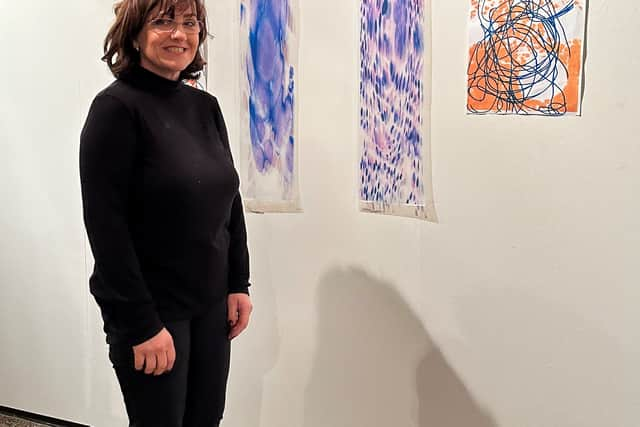
After his death, Joanne mapped out an art project for Graeme as a form of “release” and she requested some images of neuroblastoma cells on slides – but she did not complete the project until 2020.
She experimented with cell images and Graeme’s childhood finger paintings, and she created a 3D porcelain piece from one of his “scribble drawings”.
“It was disturbing to find the psychedelic patterns of these cells in pink dye so beautiful, while knowing how much destruction they could cause,” she said.

She has since created The Passing Of Time: 40 Portraits for Graeme and 39 other children affected by neuroblastoma – and she is seeking a permanent home for it in a public space or educational or medical environment.
As an artist, Joanne said she wants to ensure that children lost to neuroblastoma will live on through her art.
“Graeme was here, he left a stamp, I’ve got his finger marks, I’ve got his drawings that he’s done,” she said.
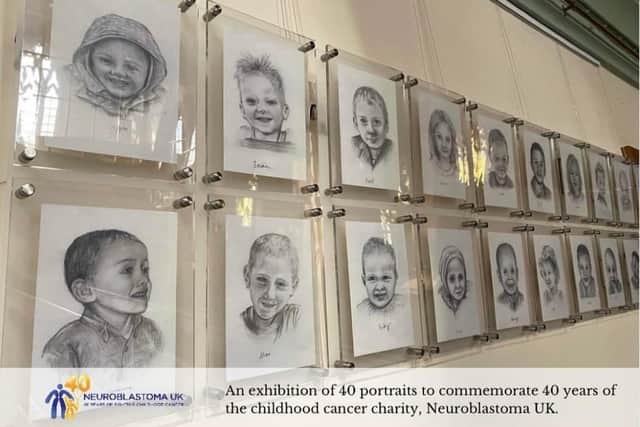
Speaking about the 40 portraits, she added: “I wanted them to be talking with each other and to (show) the strengths of the children – they’re in unity together to speak of their experiences of life and death.
“They need to be somewhere for people to see, and when people see the portraits, their reaction is, ‘They’re all so beautiful.'”
Neuroblastoma UK funds vital research into new, more effective, less toxic treatments for neuroblastoma.
To find out more, visit: neuroblastoma.org.uk.