
‘My husband died 10 months after brain cancer diagnosis – grief never leaves you but it’s the price we pay for love’
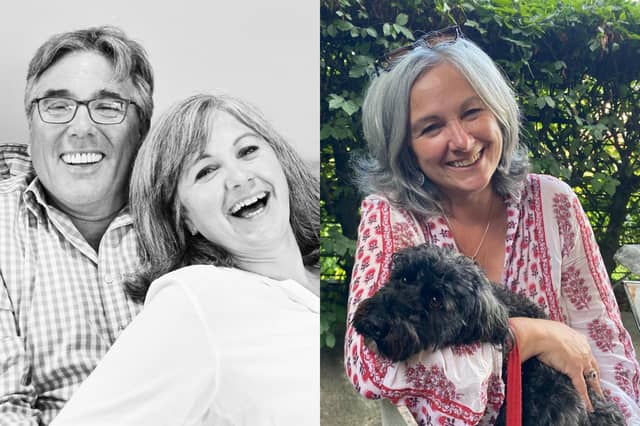

A lawyer whose husband died 10 months after an “out of the blue” brain cancer diagnosis has said “grief is the price we pay for love” as she credits counselling for helping her rebuild her life.
Helen Taylor, 57, a part-time solicitor who lives near Chichester, West Sussex, met her husband Nick Taylor, an estate agent, in her late 30s, and she said he had “the most wicked sense of humour”.
She said that Nick never went to the doctors, but after he started “suffering from deja vu”, he had a scan and was diagnosed with glioblastoma, a fast-growing type of brain tumour, in July 2018.
Helen said the prognosis was terminal from the outset and they were told the average life expectancy was approximately one year, leaving them both “utterly devastated”.
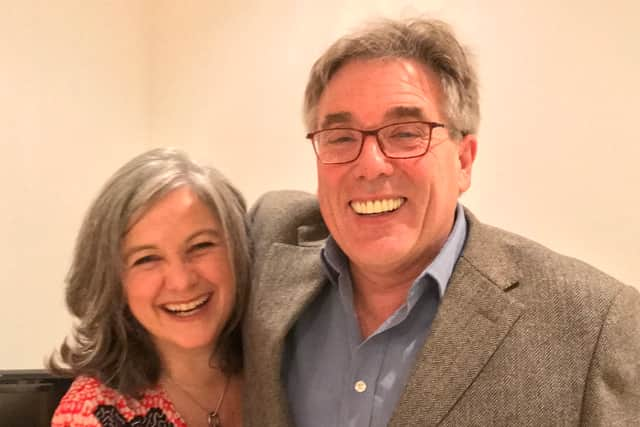
Helen said she experienced a “tsunami of emotions” while navigating grief, but through counselling she found the “freedom” to talk, laugh and cry – and she wants to encourage others to “get the help” they need.
“Grief isn’t something that ever leaves you, but grieving is a part of life,” Helen told PA Real Life.
“There’s a very moving saying that grief is the price we pay for love, which I think says it all.
“We grieve because we are alive and because we love… and it’s important to say that the person that you have lost is not lost to you.
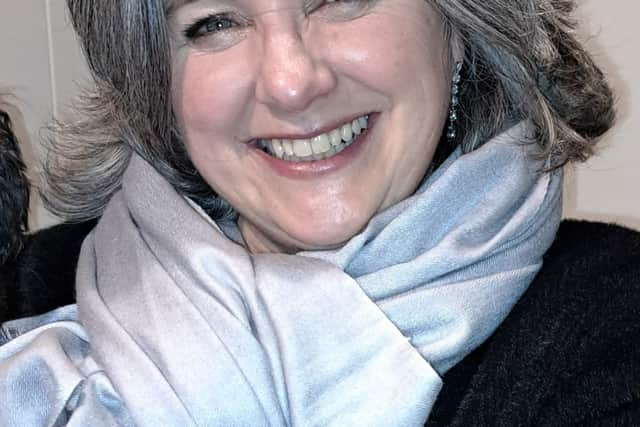
Helen, who has three children from a previous relationship, met Nick through the Royal Automobile Club, when she was 37.
They formed a friendship before it developed romantically, and Helen said they had “lots and lots of fun” together.
“Nick was one of those people who, when he went into a room, he would energise the whole room… he was a people magnet,” she explained.
“He was such fun, he had the most wicked sense of humour, and he had a real twinkle in his eye.”
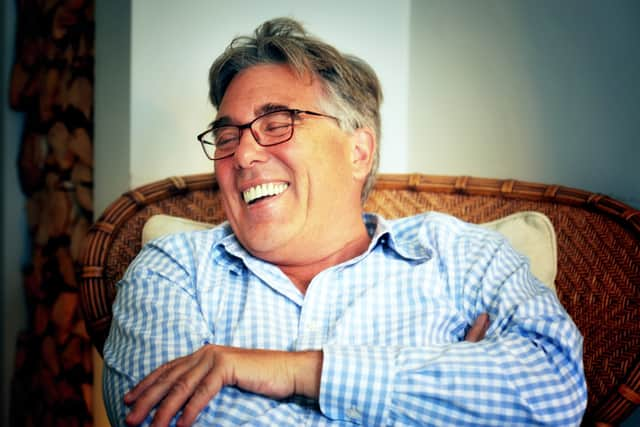
Helen initially thought “he was just stressed from work”, as they were “subtle” changes, but his symptoms progressively worsened.
Two days after a scan in July 2018, the couple were told Nick had glioblastoma and it was terminal – and when Helen asked whether he would be here for Christmas, she said the surgeon could not answer her.
“It was a particularly aggressive cancer, glioblastoma, so it was a devastating prognosis,” Helen explained.
“It came totally out of the blue… and the hardest thing, I think, for both of us was the lack of hope.
“We then, almost immediately, got tipped into surgery, radiotherapy, more surgery, more hospital stays, while also trying to live our best life.
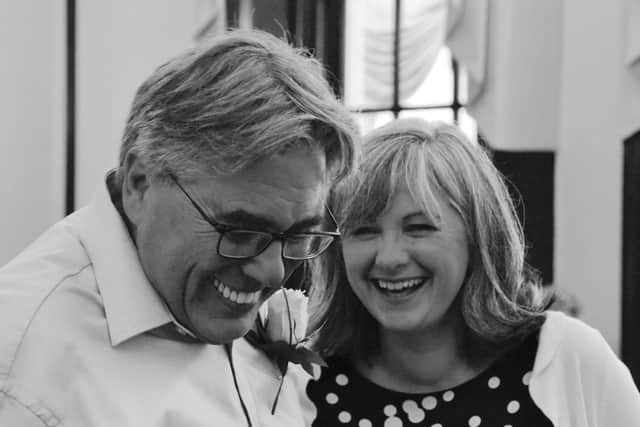
At this point, the couple had been looking to Nick’s retirement and Helen’s children leaving home, so with his diagnosis, he asked her, “Darling, look, what can I do for you?”
Helen replied, “Come on, let’s do it. We need to get married”, and they tied the knot on 24 hours’ notice in August 2018, surrounded by loved ones, and she said it was “completely joyous”.
While undergoing surgeries and radiotherapy, which caused side effects of drowsiness, sight loss and memory loss, Helen said Nick “remained himself” and his sense of humour was “undimmed”.
However, in May 2019, the couple were advised to seek support from St Wilfrid’s Hospice in Chichester, and after 10 days there, Nick died aged 62.
“Overnight, my world had fallen apart,” Helen said.
“Our lives together, over 13 years, had been a riot of love, friendship, laughter and fun.
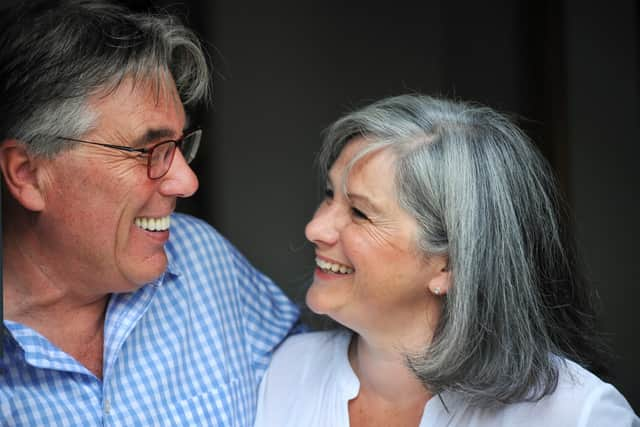
In the days and months afterwards, Helen said she experienced “overwhelming waves of emotion” and she felt as though she was “the ball in a pinball machine”.
She described it as “very exhausting and very isolating”, particularly as she had just turned 50 and she did not know anyone else who was “in the same boat” among her friendship group.
She explained: “One minute you could find yourself laughing, one minute you could find yourself crying. In the next minute, you could be feeling nothing at all.
“I think what was most peculiar about it was you could feel a whole gamut of emotions, a whole range of emotions, within a very short period of time.
Just before Nick died, Helen said she bumped into a hospice counsellor, who offered her support and the opportunity to talk.
Through weekly sessions with him over the following year, Helen said she was able to process her grief in a safe, non-judgmental space, which was a “complete privilege”.
Helen said she soon learned that every emotion she felt was valid and she did not need to feel guilty, and giving herself the freedom to “let (herself) be whatever (she) needed to be” was “comforting”.
“I had a very physical need to talk – it was so physical I felt I was literally going to pop,” she explained.
“People always say about grief being like a tsunami, like waves, and it is.
“Grief is not a civilised emotion, it’s primal, it’s hugely raw.
She added: “I will be grateful to him forever for being there for me during the very worst period of my life.”
Over time, Helen said this support helped her rebuild her life: she moved to a new home by the sea, returned to work, pursued creative interests and watched her children flourish.
Describing counselling as “one tool in the toolbox”, Helen also focused on her wellbeing by eating and sleeping well, walking the dog, reading, seeing friends and family and sticking to a routine.
Helen is now sharing her story as part of the British Association for Counselling and Psychotherapy’s (BACP) No More Stiff Upper Lip campaign, which aims to empower more women to access therapy in midlife.
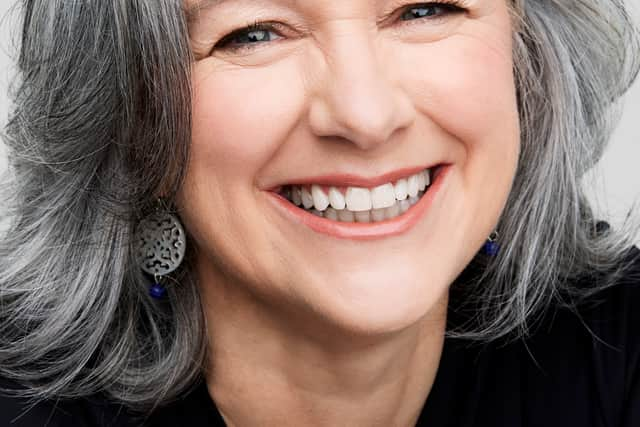
Helen is encouraging others to seek help and talk, as she said her counselling sessions offered her “freedom that wasn’t available elsewhere” and helped her find happiness again.
“A problem shared is a problem halved,” she said.
“I think withdrawal in difficult circumstances is often an attractive option, but it is important to understand that this may not necessarily be a healthy option for the long term.
“Nick lost his life, and it’s very important to me that I don’t waste the life that I have.
“I think one of the best ways of honouring what we had is by going out and living, whatever form that takes, because otherwise that’s two lives lost.”
To find out more about BACP’s campaign and its accredited therapist directory, visit: nomorestiffupperlip.co.uk.