
Narendra Modi to visit Russia for talks with Kremlin head Vladimir Putin


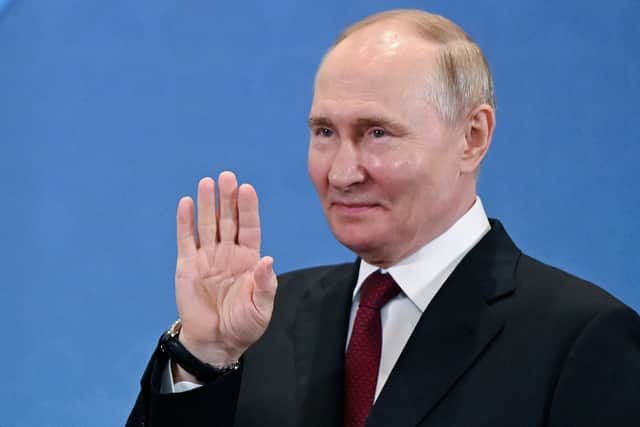
Indian Prime Minister Narendra Modi will visit Russia on a two-day visit starting Monday and will hold talks with Russian President Vladimir Putin, the Kremlin has said.
The visit was first announced by Russian officials last month, but the dates have not been previously disclosed.

China and India have become key buyers of Russian oil following sanctions imposed by the US and its allies that shut most Western markets for Russian exports.
Under Mr Modi’s leadership, India has avoided condemning Russia’s action in Ukraine while emphasising the need for a peaceful settlement.
The partnership between Moscow and New Delhi has become fraught, however, since Russia started developing closer ties with India’s main rival, China, because of the hostilities in Ukraine.
On Thursday, Mr Modi skipped the summit of a security grouping created by Moscow and Beijing to counter Western alliances.
He sent his foreign minister to the Shanghai Cooperation Organisation (SCO) at its annual meeting in Kazakhstan’s capital, Astana. The meeting is being attended by Mr Putin and Chinese President Xi Jinping.
Tensions between Beijing and New Delhi have continued since a confrontation in June 2020 along the disputed China-India border in which rival troops fought with rocks, clubs and fists. At least 20 Indian troops and four Chinese soldiers were killed.
After his re-election to a third straight term, Mr Modi attended the G7 meeting in Italy’s Apulia region last month and addressed artificial intelligence, energy and regional issues in Africa and the Mediterranean.
In the early 1990s, the Soviet Union was the source of about 70% of Indian army weapons, 80% of its air force systems and 85% of its navy platforms.
India bought its first aircraft carrier, INS Vikramaditya, from Russia in 2004. It had served in the former Soviet Union and later in the Russian navy.
With the Russian supply line hit by the fighting in Ukraine, India has been reducing its dependency on Russian arms and diversifying its defence procurements, buying more from the US, Israel, France and Italy.