
New dad hopes to treat his Crohn’s Disease and be pain-free with a pioneering treatment using stem cells donated by his baby son
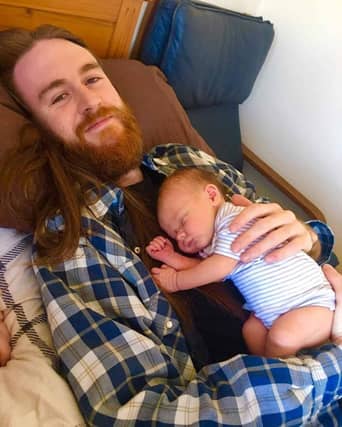

A new dad who has battled Crohn’s Disease since he was 11 is fundraising for a pioneering treatment that he hopes will let him live a pain-free life by using stem cells donated by his baby son.
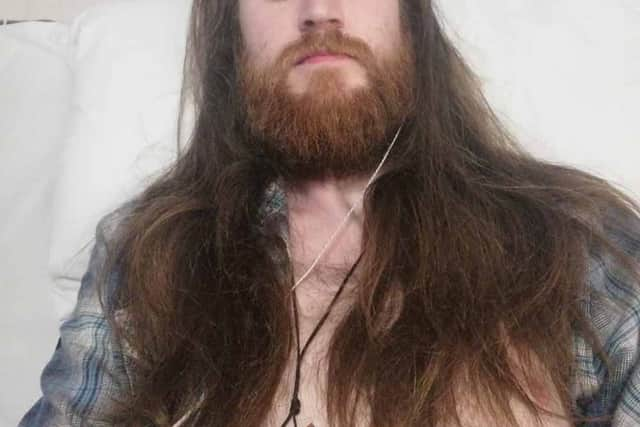
Ryan Clarke, 29, who is unable to work due to his ill health, battles with fatigue, joint and arthritic pain, as well as bowel inflammation and frequent infections.
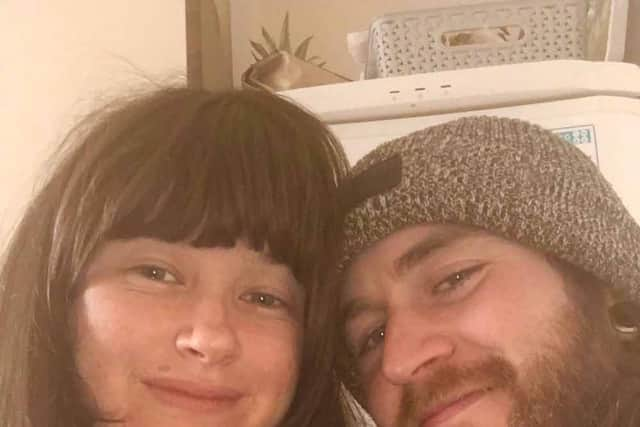
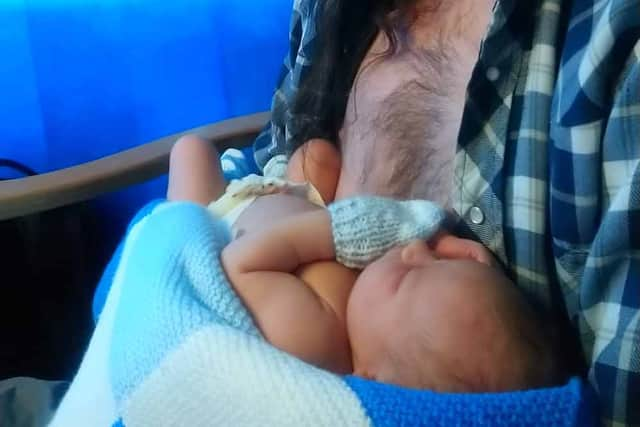
Ryan, who lives in Doncaster, Yorkshire, with Alice and their son, Rowan, six weeks old, said: “My condition has now got to the point where I’m very limited with what I can do.
“I had dreams of being a fireman when I was younger or pursuing my passion for music, but Crohn’s has wiped all of that away.
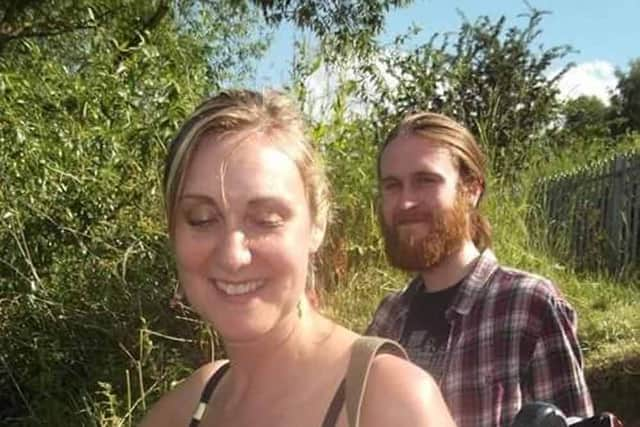
For Ryan, his health problems began when he was just 11 years old.
He said: “I started to experience symptoms, feeling ill and fatigued, for about eight months before I got a diagnosis.
He added: “On initial diagnosis, I couldn’t eat a thing for 12 weeks, just surviving on a liquid diet provided by the hospital before I was finally able to go home.
“Energy levels, fatigue, joint pains and stomach pains are the main symptoms that I experience but things were pretty manageable and I was pretty active up until about 21 years old, then the symptoms started to get worse.”

Ryan said: “It’s frustrating seeing my peers being active and enjoying their 20s. I feel very restricted.
“I’m in and out of hospital with infections from my now ruptured bowel and I am considered to be at high risk of sepsis.

Ryan says this has been detrimental to his confidence and mental health, but around 12 months ago, his life changed when he met Alice.
He said: “My mum had booked a treatment with her and subsequently suggested that I should go for a treatment.

And Ryan hopes that baby Rowan’s stem cells may provide the cure to the debilitating condition he has lived with for 18 years.
He said: “I love being Rowan’s dad and all I want is to be hands on with him so it gets me down when I struggle to do things like lift him out of his crib.
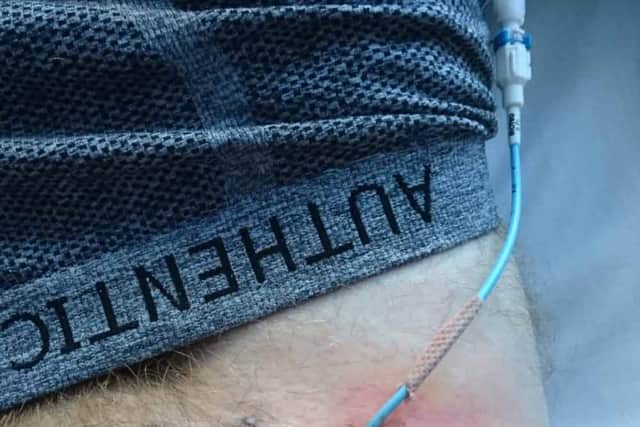
Pioneering stem cell treatment, which is not available to Ryan on the NHS, will enable him to use stem cells from his son’s umbilical cord blood and placenta which he hopes could reduce his symptoms and replace damaged or diseased tissue.
He also hopes it could reduce the inflammation in his bowel and enable him to live a normal life.

Ryan said: “We’re looking at either Mexico or Switzerland and, with flights, accommodation and the cost of the treatment, it will set us back between £30,000 to £40,000.
“I’m initially fundraising for £10,000 towards the cost of this.”
He said: “If I can raise enough money, then I’m hoping to fly out by the end of the year.
“I feel uncomfortable asking other people for money, I wish there was another way, but this is my only chance at improving my life.

He added: “My mum and girlfriend have both been there for me and are keeping me hopeful. They pushed for this fundraiser so that I can improve my quality of life.”
And Ryan says his little boy has also been a big factor in this push for finding a cure.

He added: “The stem cell treatment could dramatically change my health, give me a more pain-free future, the ability to finally thrive, have fun and more importantly, enjoy precious family moments with my son.
“I want to be able to run around with Rowan when he reaches the toddler stage, like other dads.
Asked how stem cell therapy could help treat Crohn’s disease, Paul Stroemer, cell and gene therapy expert at PA Consulting, said: “In the case of Crohn’s disease, it’s likely that stem cells called Mesenchymal Stem cells (MSCs) will be used, because of their efficacy in treating immune and inflammatory diseases.
“These stem cells can turn into many different types of cells, including bone, fat, connective tissue, and blood vessels.
He added: “Stem cells also respond to their environments and can interact with white blood cells to help alleviate immune responses during flare ups, potentially reducing the symptoms associated with this.
“They can be administered intravenously or via an injection at site, for example, in the intestines. It is viable that cell therapy of this kind could alleviate the symptoms associated with Crohn’s.”
To donate to Ryan’s fundraiser visit: gofundme.com/ryan-stemcells