
New IRA believed to be largest of dissident republican groups
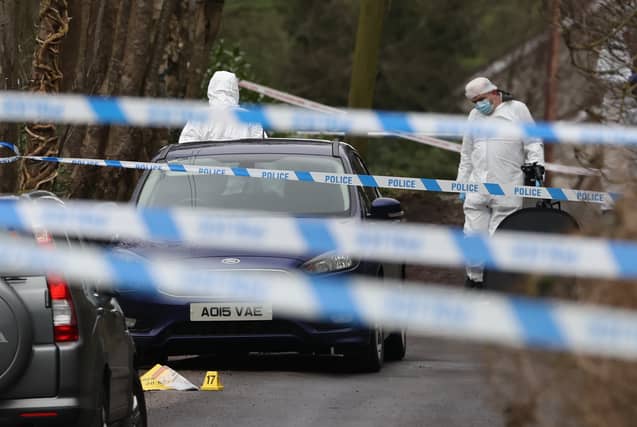

The New IRA are believed to be the largest and most active of the dissident republican terrorist groups in Northern Ireland.
The group claimed responsibility for the shooting of Detective Chief Inspector John Caldwell in February.
In March MI5 increased the terror threat level in Northern Ireland from “substantial” to “severe”, meaning an attack is highly likely.

It is believed to have been formed between 2011 and 2012 following the merger of a number of smaller groups, including the Real IRA, the group behind the 1998 Omagh bomb.
The group is strongest in Derry and Strabane, with a presence in Belfast, and other pockets in Co Tyrone and Lurgan in Co Armagh.
In August 2020 the alleged leadership of the New IRA suffered a major blow with a series of arrests prompted by an MI5 surveillance operation.
Less than a year before, in September 2019, a bomb in an “advanced state of readiness” was found in the Creggan area of Derry.

In June 2019 the group claimed responsibility for the failed attempted murder of a police officer after an unexploded bomb was found under the officer’s car parked at Shandon Park Golf Club in Belfast.
In April that year the New IRA claimed responsibility for shooting dead Ms McKee, who was observing rioting in the Creggan area.
A month before the murder of Ms McKee, the New IRA claimed responsibility for sending small explosive devices in the post to two airports and a train station in London and to the University of Glasgow.

Dissident republican terrorist activity has been at a lower level in Northern Ireland in recent years and security services have secured a number of successes disrupting the activities of terror groups.
Last March the level of terrorism threat from dissident republicans was lowered from severe to substantial for the first time in 12 years.
The level is subject to continuous review and judgments are based on a wide range of information.
This was the first time the threat level in Northern Ireland was reduced from severe since it was first published in 2010.