
‘Our twins were diagnosed with the same one-in-a-million condition eight years apart – doctors didn’t know what it was’
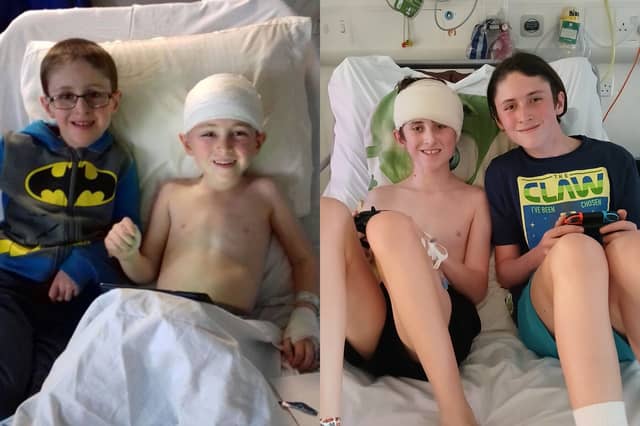

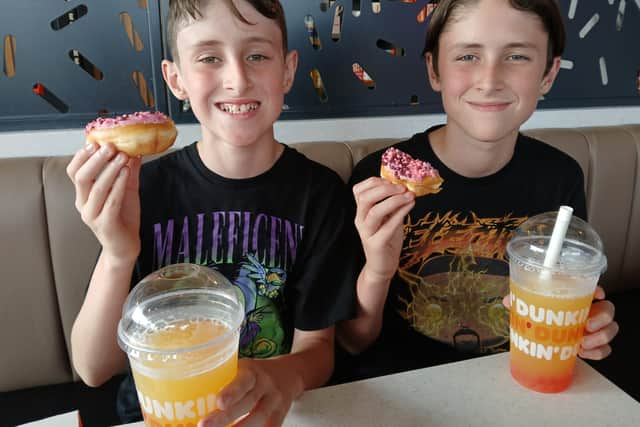
The parents of identical twins diagnosed with the same “one-in-a-million” condition eight years apart have said doctors “didn’t know what it was” at first.
Wendy Watkins and her husband Chris Watkins, from Cottingham, East Yorkshire, welcomed their twins, Riley and Noah, now 13, into the world in March 2012 – and both were “happy and healthy”.
However, in April 2017, while bathing the boys, Wendy, 43, a school administration manager, and Chris, 45, a trainee teacher, noticed Riley was displaying stroke-like symptoms, such as slurred speech and drooping on one side of his face.

In January 2025, Noah suddenly started displaying the same “textbook Riley” symptoms, leading to his own moyamoya disease diagnosis, and Wendy thought: “This can’t be happening.”
The boys have both undergone two surgeries by the same surgeon and are having regular check-ups, but Wendy and Chris still do not know why the twins were diagnosed eight years apart.
Speaking about the rarity of the condition, and the twins’ separate diagnoses, Wendy told PA Real Life: “When it happened to Noah as well, we just thought, ‘This can’t be happening’.
“I think they are detecting more cases here … but people just don’t know about it.
According to the National Institute of Neurological Disorders and Stroke, moyamoya disease is a rare, progressive cerebrovascular disorder caused by blocked arteries at the base of the brain.
In children, it says the first symptom is often stroke or recurrent transient ischemic attacks (TIAs), also known as mini-strokes, which are frequently accompanied by muscular weakness or paralysis affecting one side of the body.
Wendy said the identical twins were born via a planned C-section in March 2012 at 36 weeks and, other than Noah initially struggling with his breathing and having jaundice, the boys were healthy.
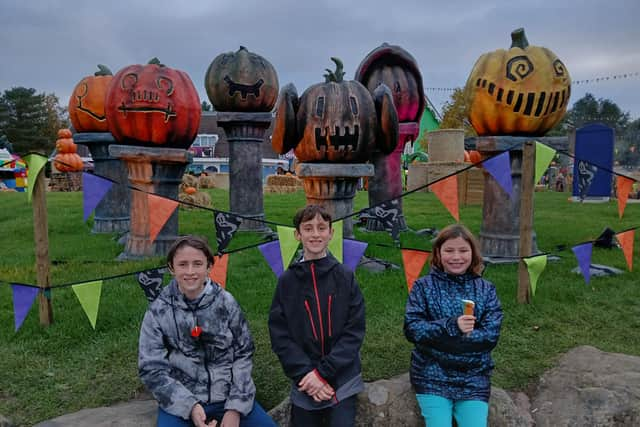
“The kids were all in the bath together and Riley just had a funny look on his face,” Wendy explained.
“We said, ‘Are you alright, Riley?’ And he didn’t say anything, so we took him out the bath and then realised that when we stood him up, he couldn’t lift his arms, he couldn’t lift his legs.
“Then his face looked like it was drooping on one side, so we rang the ambulance, panicking.”
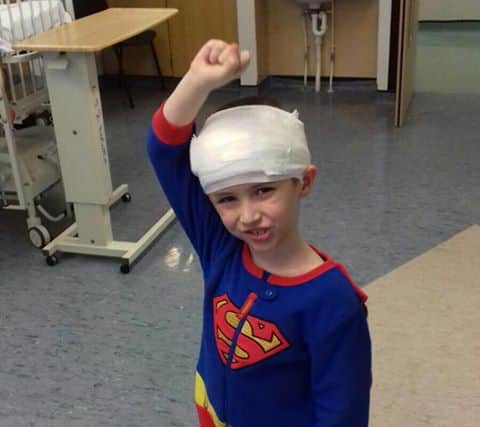
There were several other “strange episodes” in the following weeks, but one evening, while Riley was playing his great-grandfather’s harmonica, he displayed the same symptoms.
The couple took him back to HRI, where several tests took place, and in August 2017 they said they were told a mass had been found on Riley’s brain.
After a referral to specialists at Leeds General Infirmary (LGI), Wendy said they were told in September 2017 that Riley had moyamoya disease and the mass was confirmed as hypothalamic hamartoma, a rare, benign brain tumour.
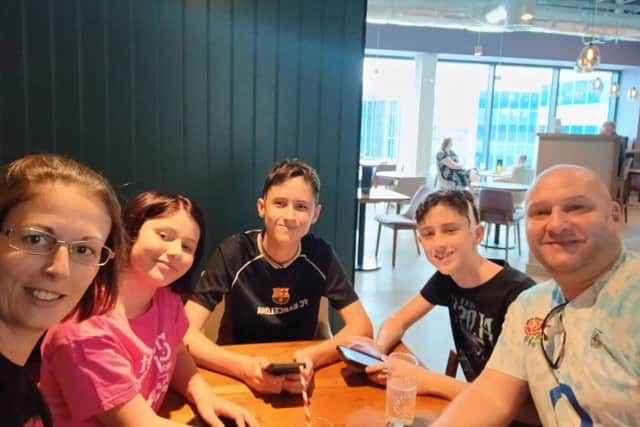
“I was terrified,” Wendy said.
“We found out, at that point, it was one-in-a-million (for moyamoya disease) in this country.
“There were no support groups in this country… and we just thought, ‘What is happening?'”
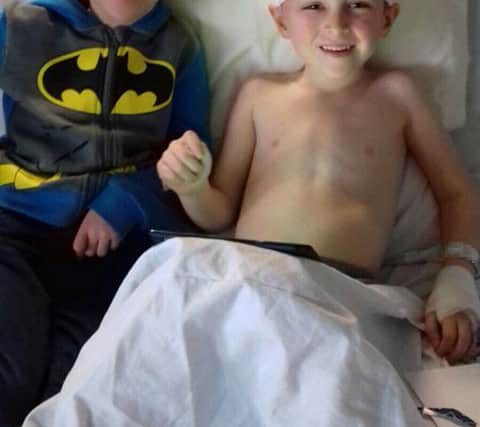
Wendy said his surgeon rerouted a blood vessel from the scalp and attached it directly to the brain to create new pathways for blood to flow.
She explained: “The surgery went well, but when Riley came around he was quiet, withdrawn, and so different from the bright, chatty little boy we knew.
“The turning point came when Noah came to visit. It was like someone had flicked a switch – Riley was instantly brighter, more like himself.”
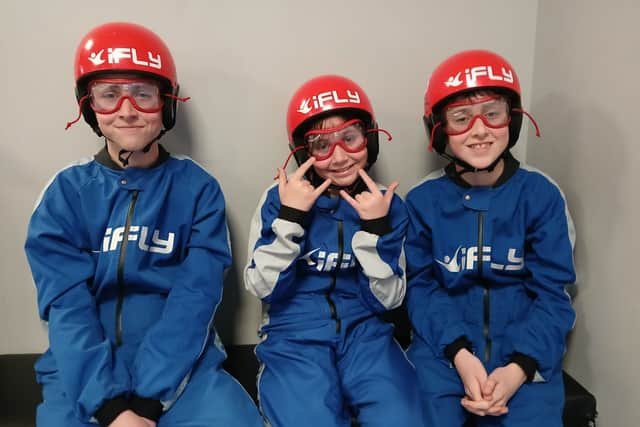
It meant the twins did not have to be apart and Wendy believes this helped to improve and speed up Riley’s recovery, describing it as “magical”.
“Eckersley House felt like a second home … and it took the pressure off completely,” Wendy said.
“We are eternally grateful to them.”
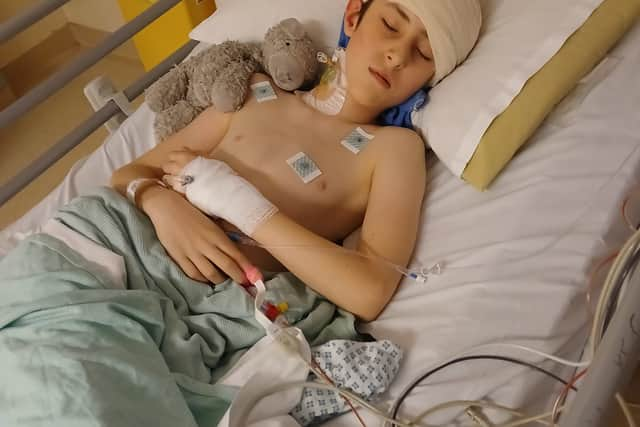
However, in January 2025, Wendy said “everything changed” when Noah started displaying the same symptoms as Riley.
“It was like a textbook Riley,” Wendy said.
“His speech was off, he couldn’t write or read properly, and straightaway I recognised the signs.
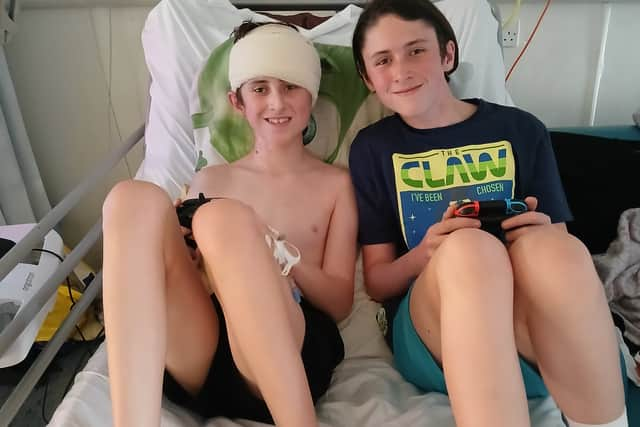
They rushed Noah to hospital, where he was provisionally diagnosed with moyamoya disease that same day, and Wendy said she was “gutted”.
He had an angiogram, which checks the health of blood vessels, in February, and surgery was booked in April and May with Riley’s surgeon.
Since Noah was older at the time of his diagnosis, he has found it harder to process – but Riley has been able to support him throughout.
“Everything is looking good from a medical point of view, we’re feeling positive,” Wendy said.

Wendy said the twins underwent testing to try to understand whether the condition is genetic, but there was “nothing that evidenced this” at the time.
To this day, she said doctors do not know why the twins were diagnosed with the same condition eight years apart.
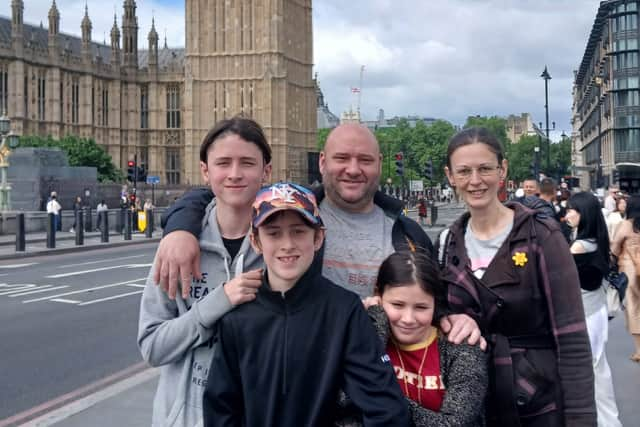
“We’ll always have that niggle, worrying if everything is OK, but I feel much more confident this time around and hopeful,” Wendy said.
“We, ourselves, know how to deal with it if anything happens, so it’s not as scary as it was the first time around.”
Wendy and Chris want to raise as much awareness of moyamoya disease as possible and have started a support group on Facebook to help other families.

The couple hope to get more answers in future about moyamoya disease, but for now the boys will continue having their regular check-ups and scans.
“The moyamoya can re-attack at any time, so they have to keep (having) the scans to make sure everything’s doing what it’s supposed to and nothing’s changed,” Wendy said.
“We’re just trying to get people to talk more and not to bottle it up because there are support mechanisms out there.
“And with Eckersley House, it will always be incredibly special to us.
“They’ve been there through two of the most difficult chapters of our lives.”