
Paralympic swimmer Maisie Summers-Newton hails her hero as she collects MBE
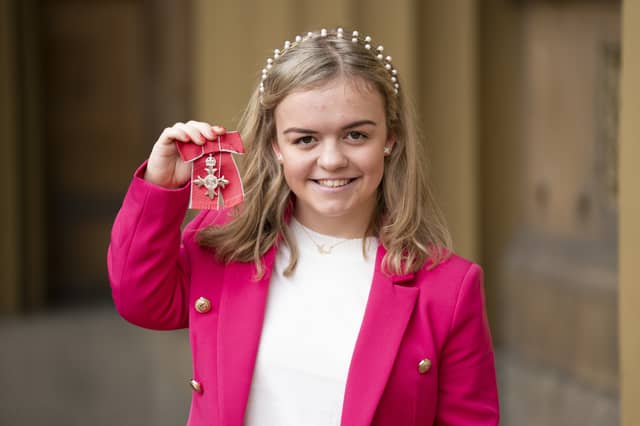

Paralympic swimming champion Maisie Summers-Newton has said that her long-time idol Ellie Simmonds going on Strictly Come Dancing to “dance her socks off” continues to prove that “anyone can do anything, no matter what disability you have”.
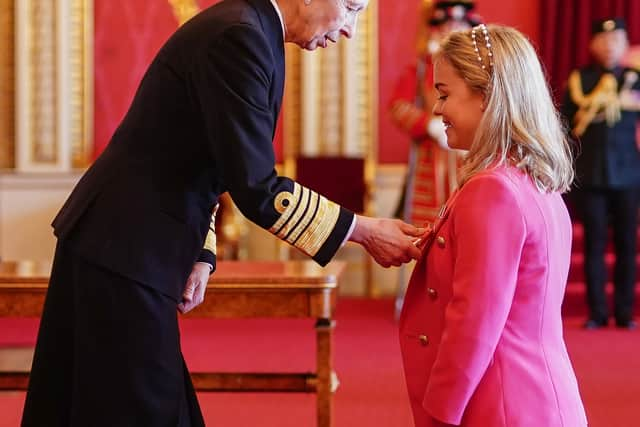
The 20-year-old Tokyo 2020 gold medallist was joined by renowned autism researcher Sir Simon Baron-Cohen and London 2012 closing ceremony set designer Esmeralda Devlin, among others, as they were recognised by the Princess Royal at Buckingham Palace on Wednesday.
Ms Summers-Newton, who picked up an MBE for services to swimming, described her success in Tokyo as “a dream of mine ever since I watched London 2012”.
She recalled watching Simmonds at the London Olympics when she was just 10 years old, and told the PA news agency: “Just seeing someone in that spotlight with the same disability as me, being a female as well, I think that was just so inspiring.
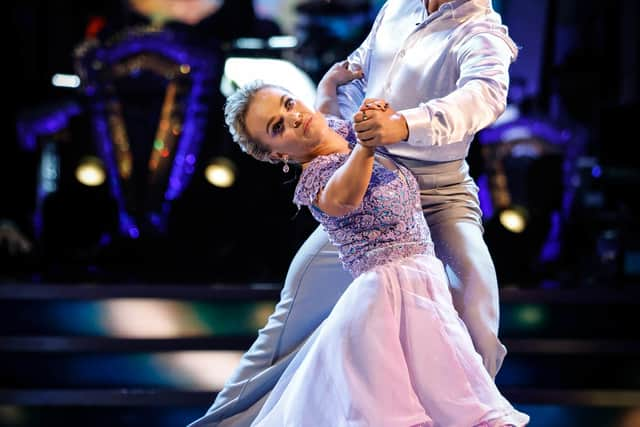
“I think she’s just proving anyone can do anything, no matter what disability you have, really. She’s just an inspiration.”
“I think you can kind of get your medals first, but I think to defend them is something extra special I guess.”
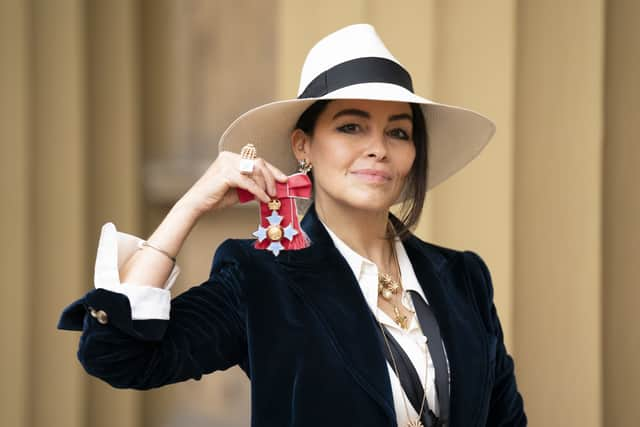
Set designer for the London 2012 Olympics closing ceremony Esmeralda Devlin said “it was really lovely to be part of a ritual” as she picked up her CBE for services to design.
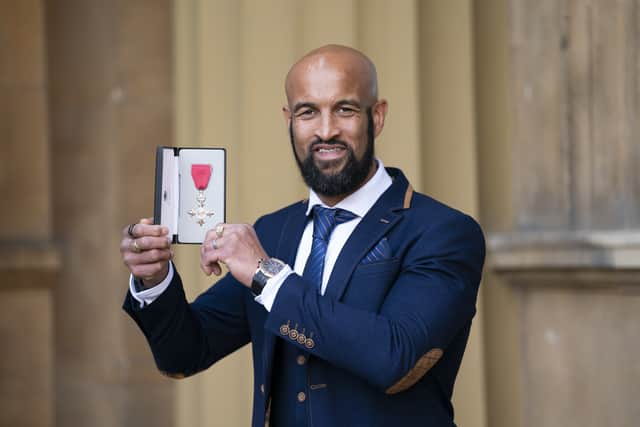
Meanwhile, former Leeds Rhinos and England international rugby player Jamie Jones-Buchanan said it was “a massive honour” to receive an MBE from the Palace.
He added: “I’ve always joked that growing up I was always a bit of a fan, it might sound a bit crackers, but a fan of Plantagenet history and the royals and kings and queens and that has always sort of inspired me, it’s always put hairs on the back of my neck.
“So I think that in some symbolic way you can come and be honoured in this way is a real pleasure.”
“I think there are other clubs such as Wigan Warriors that are taking those kinds of steps and including the community again. It’s always been quite a Northern working-class sport.
“Its biggest strength is also its biggest weakness and that’s been a tribal and parochial almost sometimes, sport.
“But actually, when we need to and when adversity strikes, we come together exceptionally well and we look after one another, it’s very tribal in nature. And so, in this day and age we’ve got to be mindful that everybody is a little bit different.”
Looking back at his career, he added: “I’ve played at some big stadiums, I’ve won some big trophies, I’ve got some nice medals I’ve won, but actually it’s the people that you do that with that’s most important.
“I think that’s what life’s all about.”