
Paris Olympics flame is lit at Greek cradle of ancient games
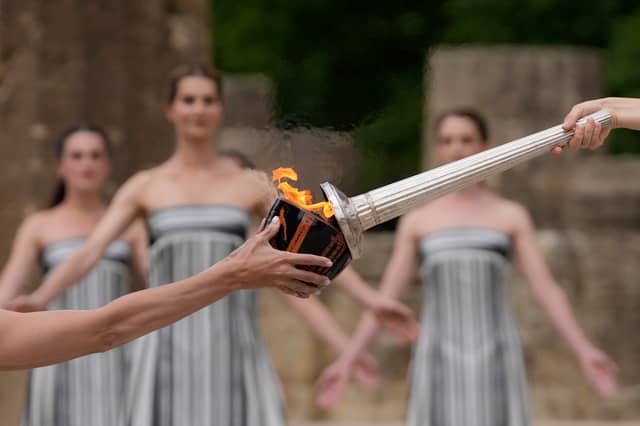

The flame that is to burn at the Paris Olympics was kindled on Tuesday at the site of the ancient games in southern Greece.
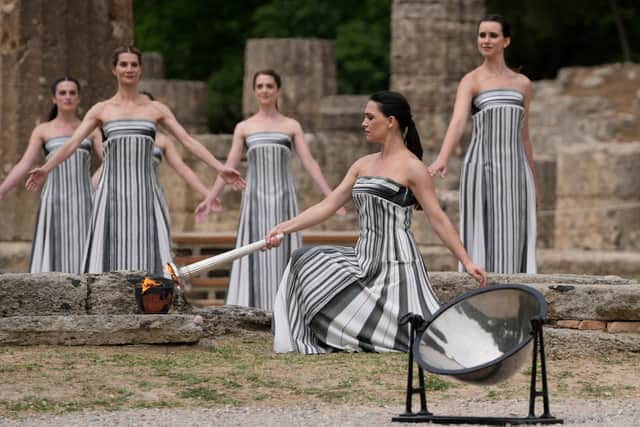
Cloudy skies prevented the traditional lighting, when an actress dressed as an ancient Greek priestess uses the sun to ignite a silver torch – after offering up a symbolic prayer to Apollo, the ancient Greek sun god.
Instead, a backup flame was used that had been lit on the same spot on Monday, during the final rehearsal.
Normally, the foremost of a group of priestesses in long, pleated dresses offers a prayer to the ancient Greek sun god, Apollo. She then dips the fuel-filled torch into a parabolic mirror which focuses the sun’s rays on it, and fire spurts forth.
From the ancient stadium in Olympia, a relay of torchbearers will carry the flame more than 5,000 kilometres (3,100 miles) through Greece until the handover to Paris Games organisers in Athens on April 26.
International Olympic Committee president Thomas Bach said the flame lighting combined “a pilgrimage to our past in ancient Olympia, and an act of faith in our future”.
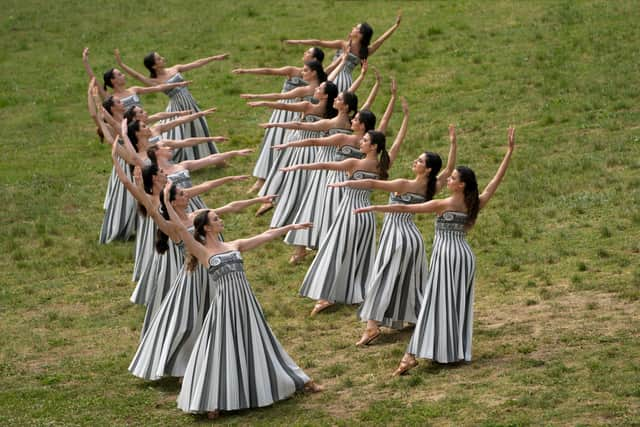
Thousands of spectators from all over the world packed Olympia for Tuesday’s event amid the ruined temples and sports grounds where the ancient games were held from 776 BC-393 AD.
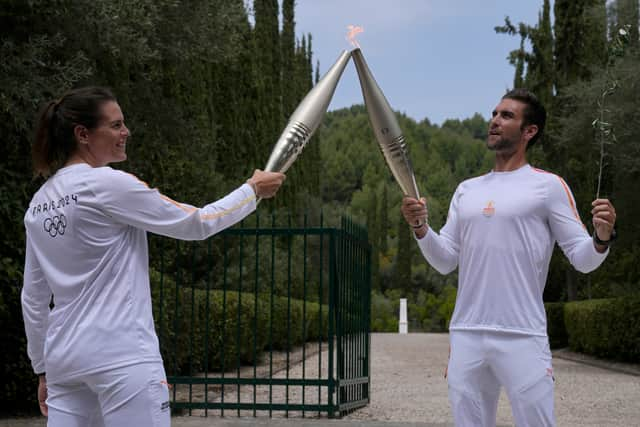
The next runner was Laure Manaudou, a French swimmer who won three medals at Athens in 2004. She will hand over to senior European Union official Margaritis Schinas, a Greek.
The flame will now travel from Athens’ port of Piraeus on the Belem, a French three-masted sailing ship built in 1896 — the year of the first modern games in Athens.
According to Captain Aymeric Gibet, it is due on May 8 in the southern French port of Marseille, a city founded by Greek colonists some 2,600 years ago.
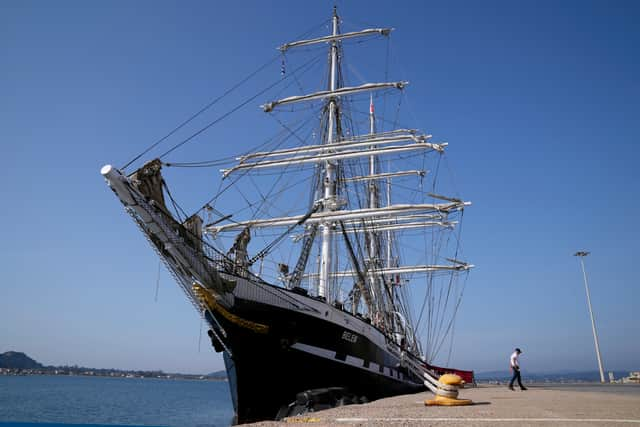
“We thought it would be a unique opportunity to see the flame lighting at the historic site of Olympia,” said Jean-Michel Pasquet from Lorient, near Nantes. “And when we also learned the Belem would carry the flame … we said we must do this.”
But Mr Pasquet said he would have to watch the Paris Games from home.
“For us, it would be really very expensive, unaffordable,” to go to the venues, he said. “So we’ll watch them on television … from our armchairs.”