
£1.5bn black hole in finances needs to be tackled in Scottish Budget – economists
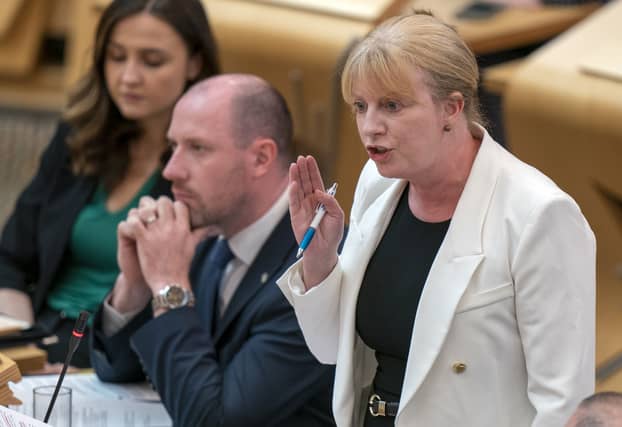

The Scottish Government faces a funding black hole of around £1.5 billion and next week’s Budget is likely to be one of the most challenging in the devolution era, according to economists.
Scottish Finance Secretary Shona Robison will likely need to find significant savings when she delivers the annual Budget speech as rises in Scottish income tax will not be enough to plug the gap, the Fraser of Allander Institute (FAI) said.
Analysis by the respected institute has set out the scale of the task facing Ms Robison, who is required to balance the books under Holyrood’s funding rules.
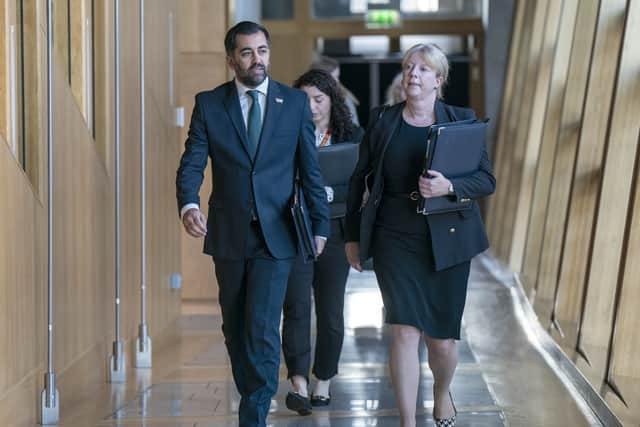
Ms Robison has said the Chancellor’s recent autumn statement was the “worst-case scenario” for Scotland and left her little room for manoeuvre in setting the Scottish Budget.
The increase in resource spending is largely down to public sector pay awards which are significantly higher than was budgeted for.
Fully compensating local authorities for the decision to freeze council tax is expected to add £300 million to the bill.
Income tax revenues have performed better than expected and there has been further funding from the UK Government, but the FAI said this has been outweighed by the spending pressures.
Tuesday’s Budget will be the first time Ms Robison, who is also Deputy First Minister (DFM) under Humza Yousaf, will deliver the Scottish Government’s annual tax and spending plans.
Professor Mairi Spowage, director of the Fraser of Allander Institute, said: “This large funding gap will mean difficult choices for the Scottish Government on what to prioritise.
“In a devolved context, this gap cannot be allowed to manifest in practice, so steps will need to be taken to address it.
“Of course, the DFM may choose to use powers over income tax to raise more revenue to plug this gap, but it is unlikely that this would be sufficient in isolation.
“Significant spending cuts are also likely to be required – the DFM has the unenviable task of choosing where the axe will fall.”
In a briefing to journalists, Prof Spowage said the fiscal outlook beyond 2024/25 will largely depend on funding decisions by the UK Government.
She said this year’s Budget was always going to be “tough”, and policies like the Scottish Child Payment had constrained spending on other areas.
Prof Spowage said the Government could have started thinking earlier in the year how to save money, rather than arriving at “this very difficult position in the few weeks before the Budget”.
She added: “One would question whether the best way to spend limited resources in this constrained fiscal environment is to fund a council tax freeze.”
The Strathclyde University economists said increasing income tax for high earners in Scotland would have a limited effect.
Joao Sousa, deputy director of the institute, said: “There has been a huge amount of speculation on whether new income tax bands will be introduced to help with the Government’s funding position.
“In our report, we analyse many of the options that have been discussed.
“It is important – always – to remember how much these measures will raise when likely behavioural responses are taken into account.
“For example, a new 44p rate above £75,000 will raise around £40 million – not insignificant of course, but nowhere near sufficient to balance the books.”
Last week the Scottish Government held an extra Cabinet meeting to go over “options” for the Budget.
While the First Minister has committed to freezing council tax, it has not been announced exactly how much local authorities will receive to compensate them for this.