
Rescues in Turkey offer moments of relief as quake death toll rises
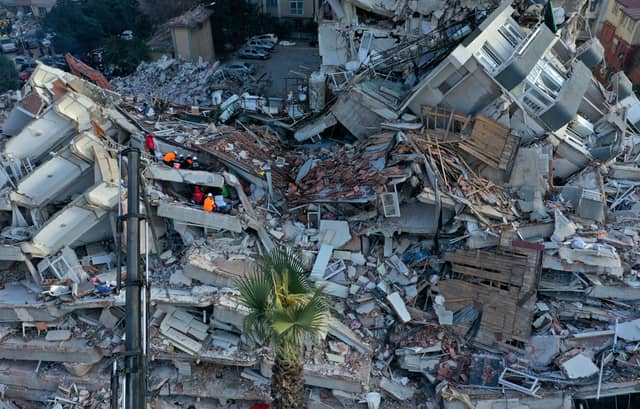

Rescuers have pulled several earthquake survivors from the remnants of buildings, including some who lasted more than 100 hours trapped under concrete, as the death toll in Turkey and Syria rose to more than 22,000.
The survivors included six relatives who huddled in a small pocket under the rubble, a teenager who drank his own urine to survive and a four-year-old boy who was offered a jelly bean to calm him down as he was pulled out.
But the flurry of dramatic rescues — some broadcast live on Turkish television — could not obscure the overwhelming devastation of what Turkey’s president called one of the greatest disasters in his nation’s history.
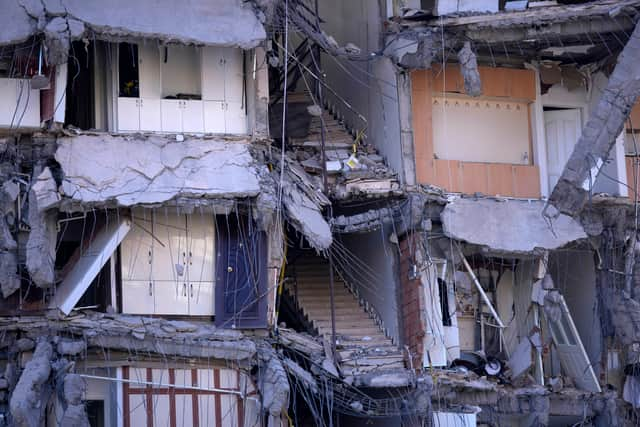
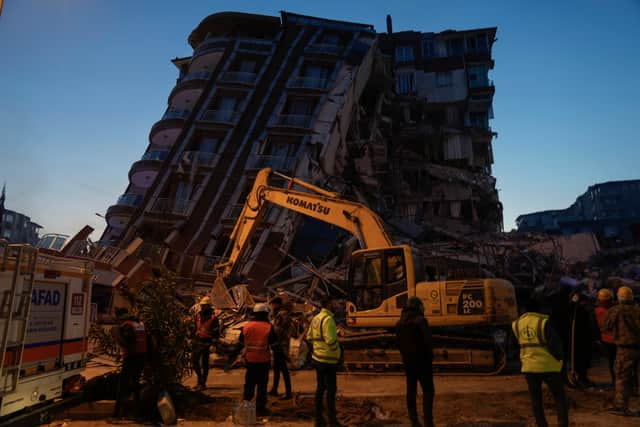
Entire neighbourhoods of high-rise buildings have been reduced to twisted metal, pulverised concrete and exposed wires, and the magnitude 7.8 quake has already killed more people than Japan’s Fukushima earthquake and tsunami, with many more bodies yet to be recovered and counted.
Four days after the earthquake hammered a border region that is home to more than 13.5 million people, relatives wept and chanted as rescuers pulled 17-year-old Adnan Muhammed Korkut from a basement in the Turkish city of Gaziantep, near the quake’s epicentre. He had been trapped for 94 hours, forced to drink his own urine to survive.
“Thank God you arrived,” he said, embracing his mother and others who leaned down to kiss and hug him as he was being loaded into an ambulance.
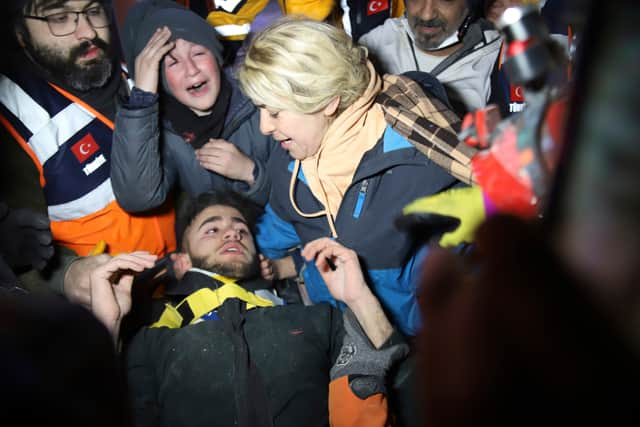
“I have a son just like you,” she told him after giving him a warm hug. “I swear to you, I have not slept for four days. I was trying to get you out.”
In Adiyaman, rescue crews pulled four-year-old Yagiz Komsu from the debris of his home, 105 hours after the quake struck. They later managed to rescue his mother, Ayfer Komsu, who survived with a fractured rib, according to HaberTurk television which broadcast the rescue live.
The crowd was asked not to cheer or applaud to avoid scaring the child, who was given a jelly bean, the station reported.
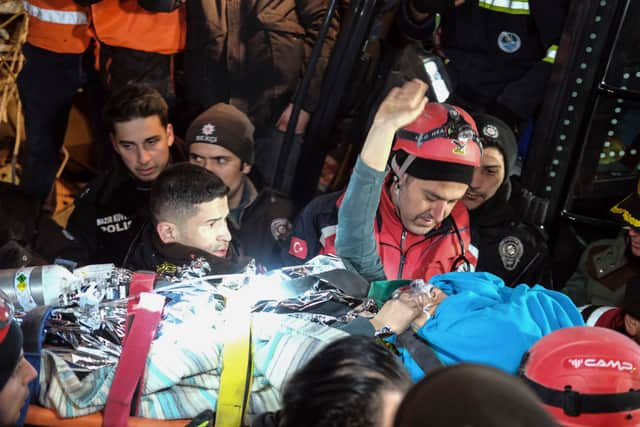
The crowd shouted “God is great!” after she was brought out.
The building was only 600ft from the Mediterranean Sea and narrowly avoided being flooded when the massive earthquake sent water surging into the city centre.
A married couple were pulled from the rubble in Iskenderun after spending 109 hours buried in a small crevice.
Meanwhile, a German team said it worked for more than 50 hours to free a woman from a collapsed house in Kirikhan.
In the hard-hit city of Kahramanmaras, two teenage sisters were saved, and video of the operation showed one emergency worker playing a pop song on his smartphone to distract them.
A trapped woman could be heard speaking to a team trying to dig her out in video broadcast by HaberTurk television. She told her would-be rescuers that she had given up hope of being found — and prayed to be put to sleep because she was so cold. The station did not say where the operation was taking place.
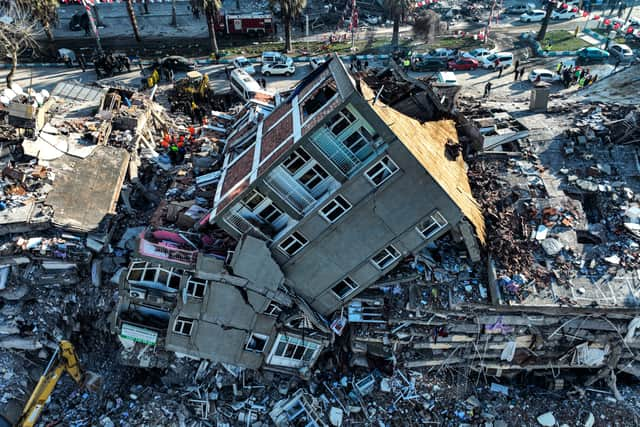
The rescues on Friday provided fleeting moments of joy and relief amid the misery gripping the shattered region where morgues and cemeteries are overwhelmed and bodies lie wrapped in blankets, rugs and tarpaulins on the streets of some cities.
In Kahramanmaras, a sports hall served as a makeshift morgue.
Temperatures remain below freezing across the large region, and many people have no shelter. The Turkish government has distributed millions of hot meals, as well as tents and blankets, but was still struggling to reach many people in need.
The conflict has isolated many areas of Syria and complicated efforts to get aid in. The UN said the first earthquake-related aid convoy crossed from Turkey into north-western Syria on Friday.
The UN refugee agency estimates as many as 5.3 million people have been left homeless in Syria. Sivanka Dhanapala, the country representative in Syria for UNHCR, told reporters that the agency is focusing on providing tents, plastic sheeting, thermal blankets, sleeping mats and winter clothing.
Syrian President Bashar Assad and his wife, Asmaa, visited survivors at the Aleppo University Hospital, according to Syrian state media.
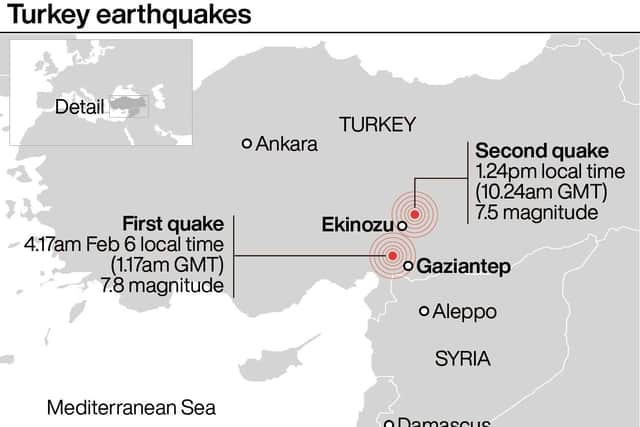
Aleppo has been scarred by years of heavy bombardment and shelling — much of it by the forces of Assad and his ally, Russia — and it was among the cities most devastated by the earthquake.
The Syrian government announced that it will allow aid to reach all parts of the country, including areas held by insurgent groups in the north west.
Meanwhile, Turkey’s conflict with Kurdish militants in Syria who are linked to the PKK has further complicated the delivery of aid. On Thursday, Kurdish officials in Syria said that Turkish-backed Syrian rebels had blocked an aid convoy destined for earthquake victims.
Turkey’s disaster management agency said more than 19,300 people had been confirmed killed in the disaster so far in Turkey, with more than 77,000 injured.
More than 3,300 have been confirmed killed in Syria, bringing the total number of dead to more than 22,000. The bodies of more than 700 Syrians killed in Turkey have been repatriated since Monday for burial, Syrian opposition official Mazen Alloush told The Associated Press on Friday.
Some 12,000 buildings in Turkey have either collapsed or sustained serious damage, according to Turkey’s minister of environment and urban planning Murat Kurum.