
Schwarzenegger visits Auschwitz to deliver message against hatred
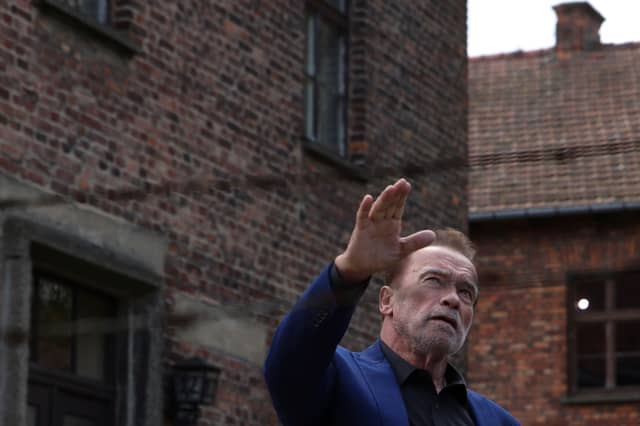

Film star Arnold Schwarzenegger has visited the site of the Auschwitz Nazi death camp, meeting a Holocaust survivor and the son of Holocaust survivors to deliver a message against prejudice and hatred.
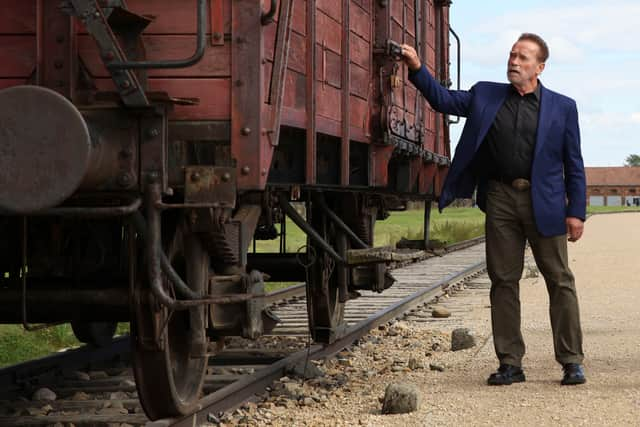
The actor and former California governor viewed the barracks, watchtowers and remains of gas chambers that endure as evidence of the German extermination of Jews and others during the Second World War.
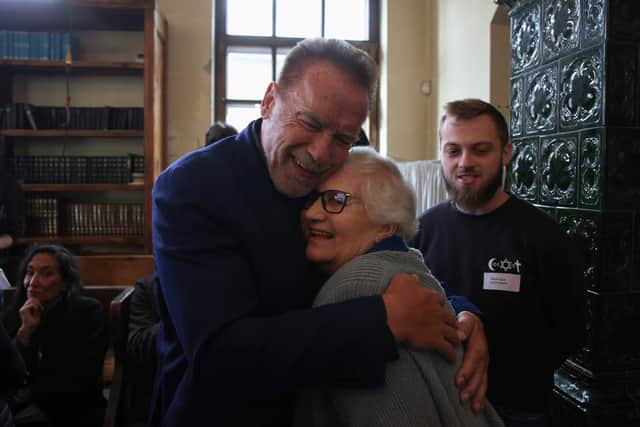
He also met a woman who as a three-year-old child was subjected to experiments by the notorious Nazi doctor Josef Mengele.
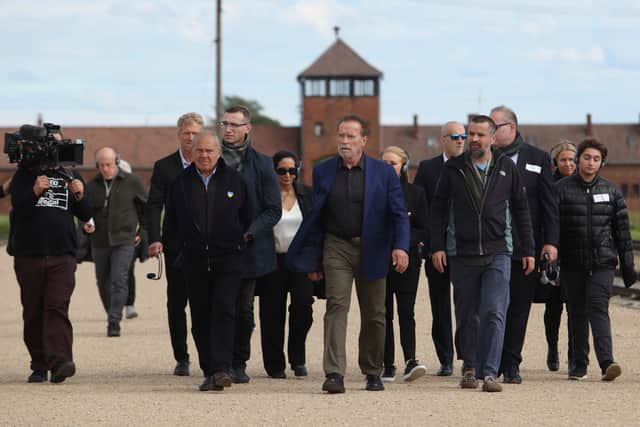
He stood alongside Simon Bergson, who was born after the war to Auschwitz survivors, and mentioned his own family history.
“I was the son of a man who fought in the Nazi war and was a soldier,” the 75-year-old Schwarzenegger said.
He said he and Mr Bergson, who are close in age, were united in their work.
“Let’s fight prejudice together and let’s just terminate it once and for all,” Schwarzenegger, who starred in The Terminator, said.
His visit to the site in southern Poland, which was under German occupation during the Second World War, was his first and came as part of his work with the Auschwitz Jewish Centre Foundation, whose mission is to fight hatred through education.
He said he could not attend in person then because he was filming a new action series in Canada and was in a “Covid bubble”.
After his visit to Auschwitz, Schwarzenegger vowed it would not be his last.
“I’ll be back,” he said.
Schwarzenegger, who is originally from Austria, has spoken openly in the past about his father, Gustav Schwarzenegger, being a Nazi soldier during the war.
In that video he brought up painful memories about how his own father was lied to as he fought, and how he returned to Austria a broken man, physically and emotionally, after being wounded at Leningrad.
Historians estimate that around 1.1 million people were killed at Auschwitz during the war.
Around one million of them were Jews.
Some 75,000 Poles were killed there, as well as Roma, Russian prisoners of war and others.