
Sculptor Sir Antony Gormley says art ‘a fundamental tool in our survival’
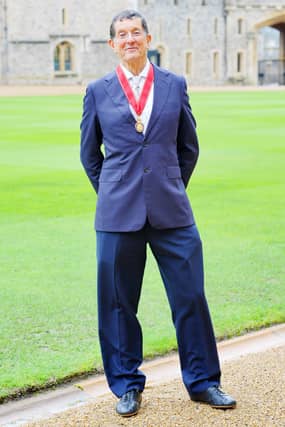

Sculptor Sir Antony Gormley has described art as being a “fundamental tool in our survival”.
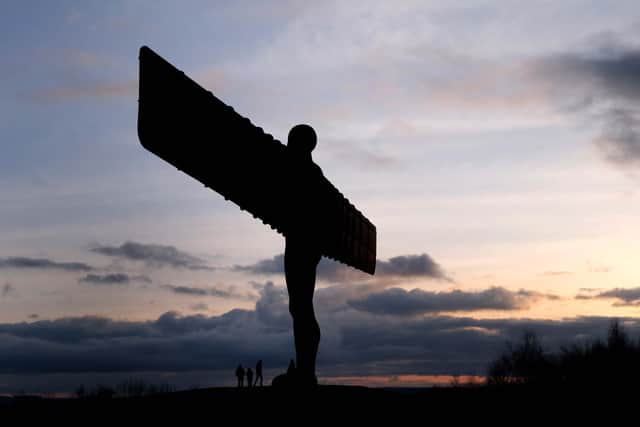
The Turner Prize winner is best known for creating the 20-metre-tall steel sculpture named Angel Of The North in Gateshead, Tyne and Wear.
Speaking on the Roundhouse podcast Making Space, Sir Antony said: “Our education has been formulated by teaching to test.
“For me, (it’s a) total diminishment of what it means to be human, if we only value things that can be measured. And the tragedy of the myopia of education that is only seen as providing the tools for gainful employment.
“Education has failed if it doesn’t link us with the thing that makes us feel alive, that makes us feel happy, that makes us feel purposeful and fulfilled.
“I think the fact is that art has been a fundamental tool in our survival, in our knowing, in a way ourselves and the world.”
He described how, despite working to ensure that art remained in the curriculum, it was something he believed “can’t really be taught” but required an environment with the space, time and materials to be provided for.
“Opening the gates of creative making can be provided, and then all that is necessary is the attention and the encouragement” he said.
“I wouldn’t be sitting here today if I hadn’t had wonderful art teachers at school.”
Sir Antony said he could not have created the sculpture with 54-metre-wide wings without thinking of the industrial history and legacy of the North East, that made the region the “workshop of the world”.
He said: “I think it was very much about recognising that a site, a place for a work, is not a geographical location findable on a map, (it is) the history and living truth of the population that lives there, which is not just human, but also all of the birds and the animals.
“The reason that it works is that it is literally, but also kind of imaginatively, rooted in that place, which is a mixture of where it is on the lower Team Colliery just over the hill from Tyne, but then also where it is in history in terms of human experience.”
The full Making Space podcast episode can be listened to from April 22.