
Shanghai residents ‘running out of food’ under lockdown
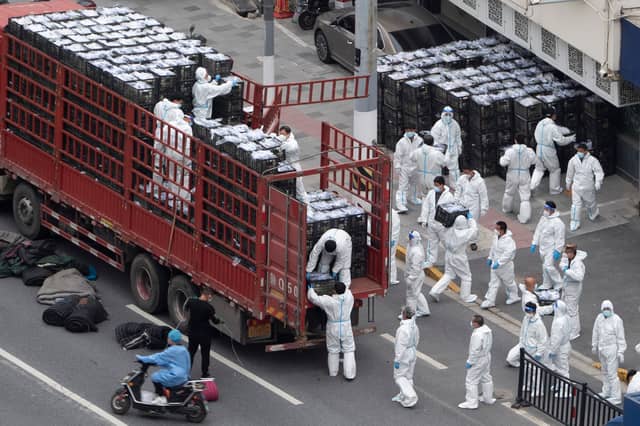

Residents of Shanghai are struggling to get meat, rice and other food supplies under anti-coronavirus controls that confine most of its 25 million people to their homes, fuelling frustration as the government tries to contain a spreading outbreak.
People in China’s business capital have complained online grocers are often sold out. Some received government food packages of meat and vegetables for a few days.
Zhang Yu, 33, said her household of eight eats three meals a day but has cut back to noodles for lunch. They received no government supplies.
Shanghai’s battle against the epidemic has reached the most critical moment
“It’s not easy to keep this up,” said Ms Zhang, who starts shopping online at 7 am.
“We read on the news there is (food), but we just can’t buy it,” she said. “As soon as you go to the grocery shopping app, it says today’s orders are filled.”
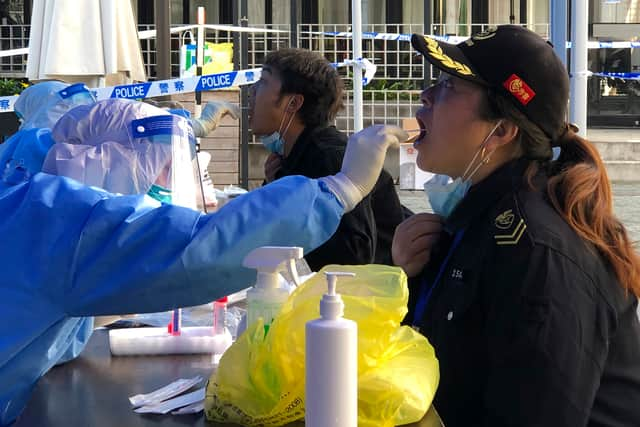
Shanghai highlights the soaring human and economic cost of China’s “zero-Covid” strategy that aims to isolate every infected person.
On Thursday, the government reported 23,107 new cases nationwide, all but 1,323 of which had no symptoms. That included 19,989 in Shanghai, where only 329 had symptoms.
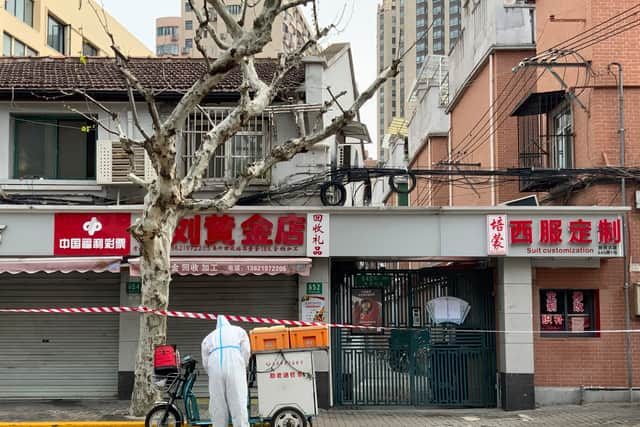
Complaints about food shortages began after Shanghai closed parts of the city on March 28.
Plans called for four-day closures of districts while residents were tested. That changed to an indefinite citywide shutdown after case numbers soared. Shoppers who got little warning stripped supermarket shelves.
City officials apologised publicly last week and promised to improve food supplies.
Officials say Shanghai, home of the world’s busiest port and China’s main stock exchange, has enough food. But a deputy mayor, Chen Tong, acknowledged getting it the “last 100 metres” to households is a challenge.
“Shanghai’s battle against the epidemic has reached the most critical moment,” Mr Chen said at a news conference. He said officials “must go all out to get living supplies to the city’s 25 million people.”
Another online grocer, Dingdong Maicai, said it shifted 500 employees in Shanghai from other posts to making deliveries.
Li Xiaoliang, an employee of a courier company, complained the government overlooks people living in hotels. He said he is sharing a room with two co-workers after positive cases were found near his rented house.
Mr Li, 30, said they brought instant noodles but those ran out. Now, they eat one meal a day of 40 yuan (£4.50) lunch boxes ordered at the front desk, but the vendor sometimes doesn’t deliver. On Thursday, Mr Li said he had only water all day.
The local government office “clearly said that they didn’t care about those staying in the hotel and left us to find our own way,” Mr Li said. “What we need most now is supplies, food.”
After residents of a Shanghai apartment complex stood on their balconies to sing this week in a possible protest, a drone flew overhead and broadcast the message: “Control the soul’s desire for freedom and do not open the window to sing. This behaviour has the risk of spreading the epidemic.”
While the Shanghai port’s managers say operations are normal, the chair of the city’s chapter of the European Chamber of Commerce in China, Bettina Schoen-Behanzin, said its member companies estimate the volume of cargo handled has fallen 40%.
Some large factories and financial firms are having employees sleep at work to keep operating. But Schoen-Behanzin said with no timetable to end lockdowns, “some workers aren’t volunteering any more.”
Residents of smaller cities also have been confined temporarily to their homes this year as Chinese officials try to contain outbreaks.