
Shirley-Anne Somerville: Schoolchildren can help reform Scottish education


Schoolchildren can help the Scottish Government make education better, Shirley-Anne Somerville has said.
The Education Secretary visited pupils at Carnegie Primary School in Dunfermline to seek their views on how to shape the future of Scottish education.
It comes as the Government launched a new national discussion called Let’s Talk Scottish Education which encourages children aged three to 18 to voice their opinions.
Scottish education will undergo a reform in the coming years as it scraps Education Scotland and the Scottish Qualifications Authority (SQA).
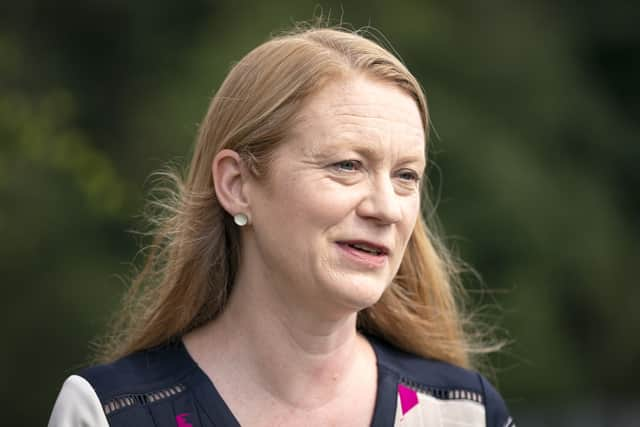
The national discussion, co-convened by Cosla, will run until December.
Speaking after her visit to the Fife school, Ms Somerville said: “The national discussion that we’ve launched today, I hope, will have a real impact on Scottish education.
“It is so important that it’s shaped by the children and young people themselves because there is no-one that know Scottish education better.
“While we’re also encouraging parents and carers and teachers and support staff to be involved, to be here at the school to hear directly from children and young people themselves about what they are proud of about their school, about what their priorities are for their school, it’s a really fantastic way to start the national discussion.”
Ms Somerville, an MSP for the Dunfermline constituency, held a roundtable discussion with children from Carnegie, where she heard their views on teacher numbers, additional support needs education and school resources.
Schools have been supplied with education guides in order to facilitate the discussion but children can also email the Scottish Government their ideas or use the TalkScottishEducation hashtag.
Ms Somerville added: “It’s really important that we listen to children and young people and we listen to what works for them.
“We’ve heard directly from the young people themselves, recognition about how young people learn differently and that we need to have an education system that accepts that and encourages that.
“We’ve heard about the fantastic support they get from the support staff and from their teachers, particularly those with additional support needs.
“If you listen very carefully to children and young people, they know what works for them and it is our responsibility to deliver a system in the best way we possibly can to respond to that.”