
Swimming in freezing water saves adrenaline junkie from constant pain and inspires her to write a novel


An adrenaline junkie who hails swimming in freezing cold water as her salvation from constant pain after 20 operations because of hypermobile joints that dislocate in her sleep, has written a novel inspired by her experience.
Often in agony growing up, advertising professional Charlotte Leonard, 41, started to think her problems were psychosomatic until she reached 30 and was finally diagnosed with Ehlers-Danlos syndrome hypermobility type – an often inherited condition causing unusually flexible joints.
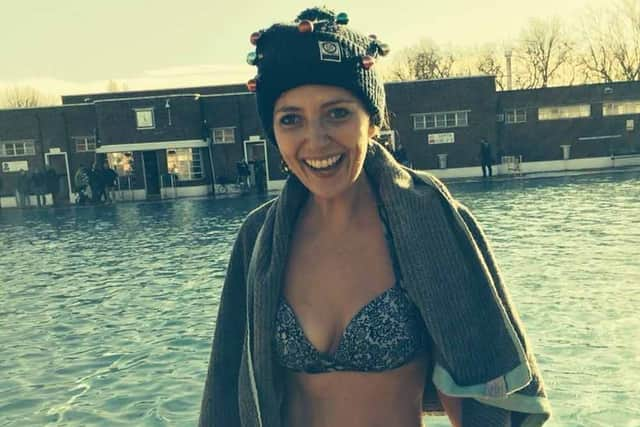
Charlotte, who lives in Muswell Hill, north London, with her entrepreneur husband Nils Leonard, 44, and their sons Jack, 16, Finn, 14, and Noah, 11, said: “Swimming replaced drugs for me and it has worked so much better without any side effects.”
Spending large swathes of her childhood suffering from aching joints which were chalked off as growing pains, her symptoms continued to baffle doctors.

She added: “I thought it must be what everyone goes through and what everyone feels.
“I was born with this condition, so I didn’t know any different.”
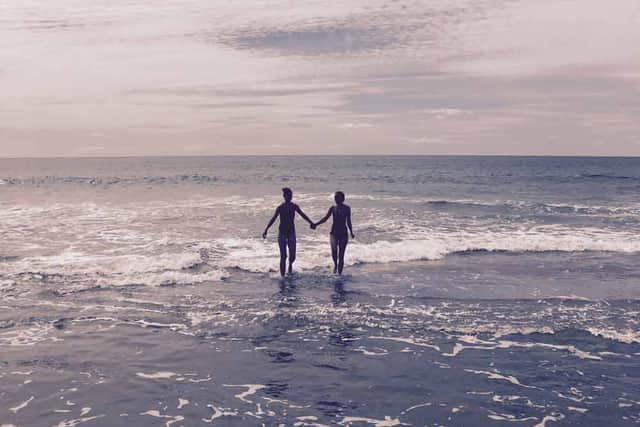
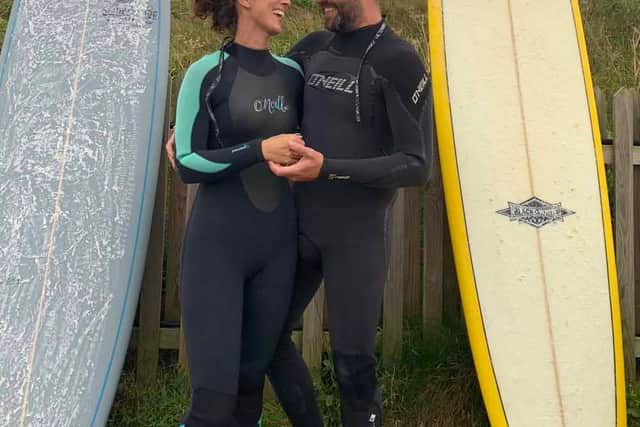
She said: “Wild swimming is a funny term to me, because I’ve always swum in the sea and in rivers.”
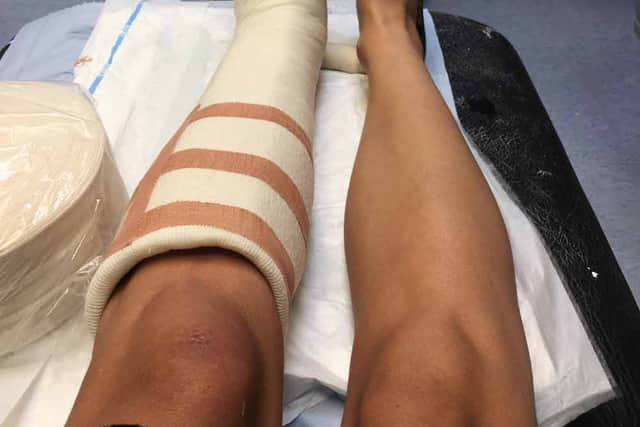
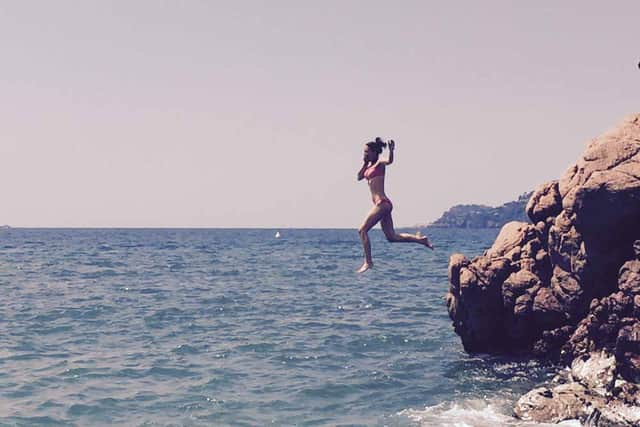
Refusing to let her persistent injuries – which saw her break fingers, fracture her elbow ice skating and break her foot amongst other things – hold her back, she continued to enjoy sports like skiing even though she has also broken her arm enjoying the winter sport.
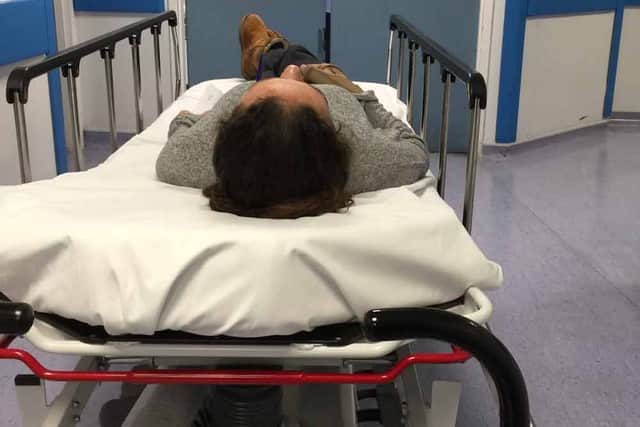
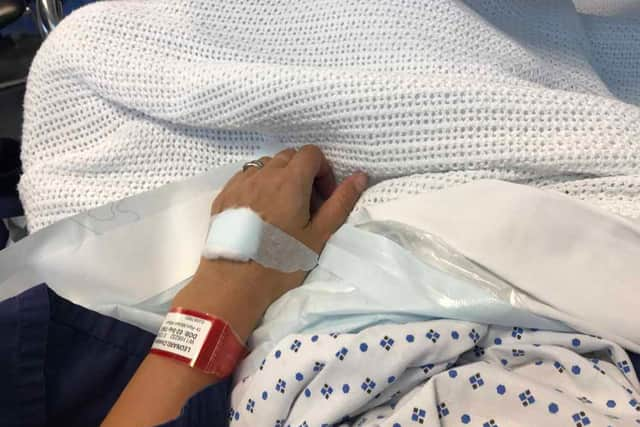
She said: “I’ve had 20 general anaesthetics in the last 15 years when I’ve had operations to fix things I’ve broken like my elbow, where I had three surgeries.
“I’ve broken quite a few bones just sledging down the road near my house.
After a succession of specialists were unable to give her a specific diagnosis, fearing her aches and pains were psychosomatic, Charlotte even consulted a psychiatrist when she was in her 30s, who assured her that her pain had a physical cause.
She said: “I’d seen a huge number of doctors over the years who couldn’t tell me what was wrong, but I knew something was.
She added: “But I remember them telling me it was medical, that it wasn’t psychosomatic.”
By the time she had her third son, Noah, in 2011, Charlotte’s pain became unbearable and she went to see a specialist at Charing Cross Hospital in London.
She added: “I was in more and more pain to the point where I needed to find a solution.
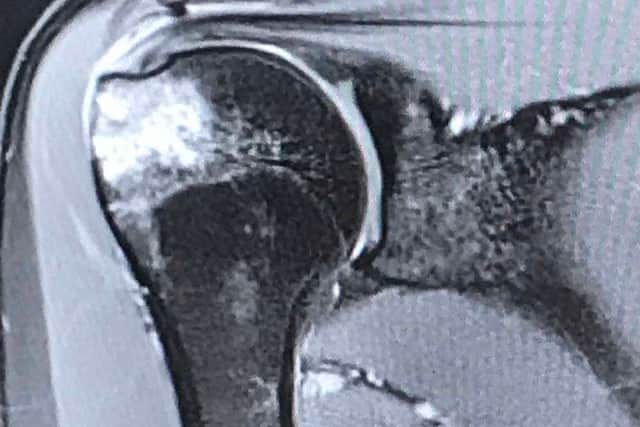
“My joints would ache and dislocate really easily. If I simply rolled over in bed my shoulder dislocated.”
Charlotte said: “It was so difficult to deal with that because I finally had an answer but it wasn’t the one I wanted, as it’s incurable.
“The treatment is basically just physio and pain management.
Despairing at the thought of a lifetime taking heavy painkillers, many of which triggered reactions, she felt thoroughly depressed.
She said: “I’m allergic to a lot of drugs. I spent the first year after the diagnosis trying absolutely everything and I would end up with a rash, or I’d fall asleep somewhere I shouldn’t.
Further dismayed as she read stories of other people with the condition, she feared her future looked bleak.
She said: “I really like adrenaline, sports. If I can throw myself out of a plane or bungee jump I will. But with my condition that’s become harder and harder.

She added: “But I kept reading stories about the condition and it sounded like a miserable life. I joined a Facebook group and so many people progressed into being in a wheelchair.”
Her final turning point came when she was offered liquid ketamine in early 2014 to kill the pain.
She added: “That’s not something I wanted to do. I needed to find other ways to cope.”
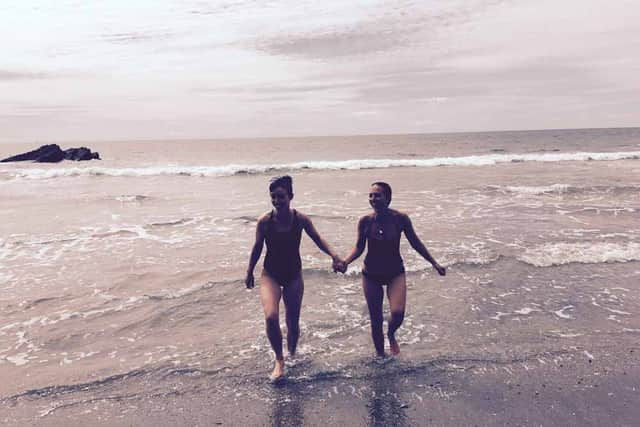
Determined to live her life on her own terms, remembering how she would “lose herself” and her worries as a child, when she swam in the seas and rivers in Cornwall, she wondered if this could be her salvation.
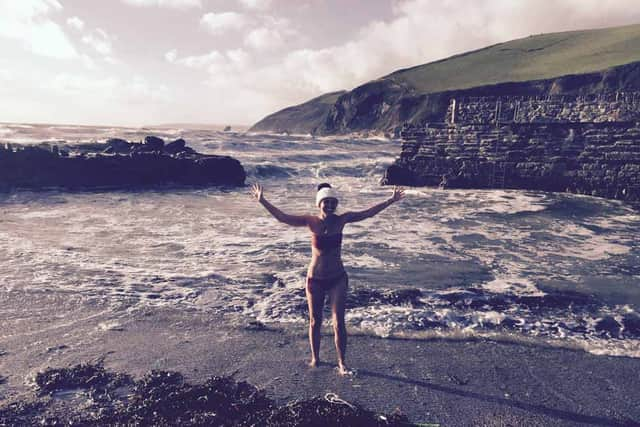
Thus her obsession with cold water swimming was born.
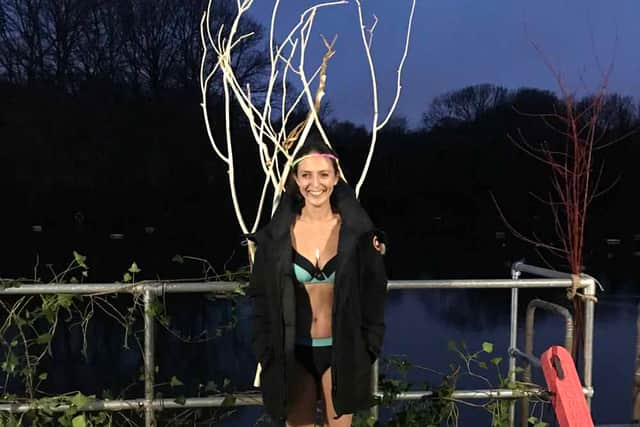
She said: “I always swam during the summer, but it wasn’t until after my diagnosis, once my youngest son started nursery, that I found more time to go to the ladies’ pond.
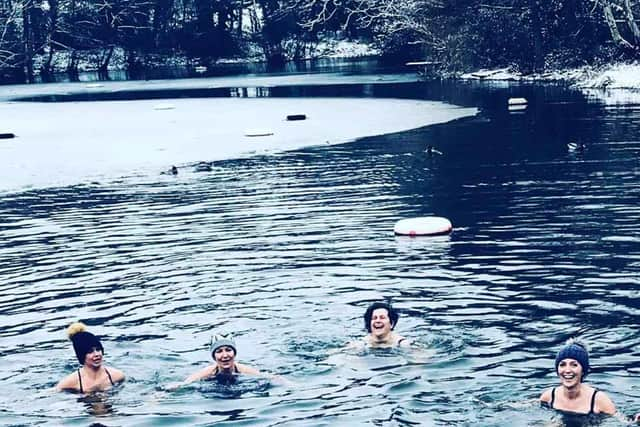
She added: “We used to go together over the summer, but we usually stopped by September, as it was cold. Instead, though, we decided to keep going.
“We went three times a week and we never stopped.”
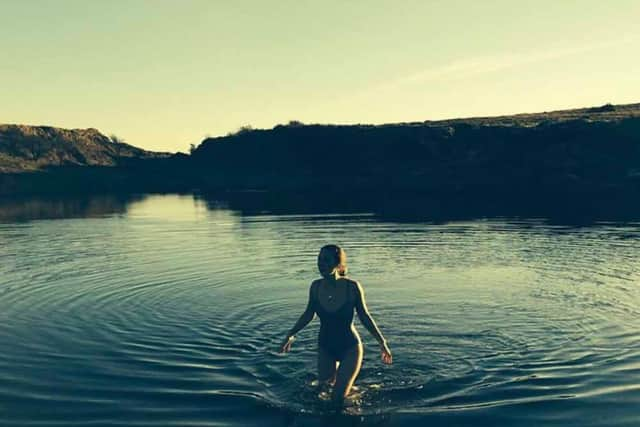
Suddenly her world opened up, as she delighted in taking her family to the River Thames outside London, the Irish Sea and to an array of rivers, lakes and even quarries in Cornwall, where she would swim to her heart’s content.
As well as recreating the buzz she had experienced from extreme challenges, through cold water or wild swimming she found a community of women who joined her in what has now become a popular activity.

She added: “It was so nice to be in an all female community.
“It got to a point that if we saw snow outside we’d be even more excited about getting into the water.”
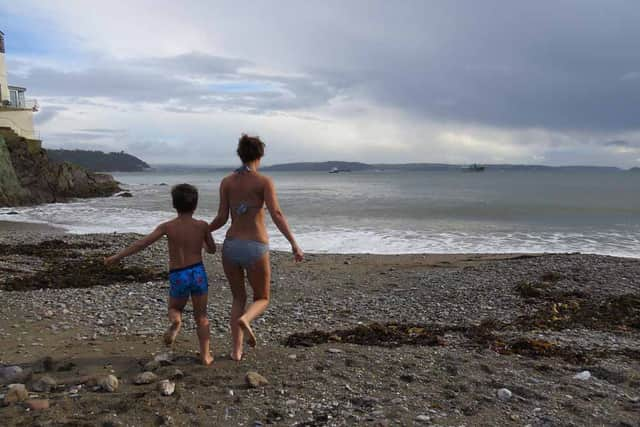
The Outdoor Swimming Society in the UK now boasts more than 100,000 members, while 7.5 million people in the UK enjoyed open water swimming in 2020, according to Sport England.
While Vindication Swim – a biopic about Mercedes Gleitze, the first woman to swim across the Channel in 1927 and one of Charlotte’s heroes – set for release later this year, has also turned the spotlight on female cold water swimmers.
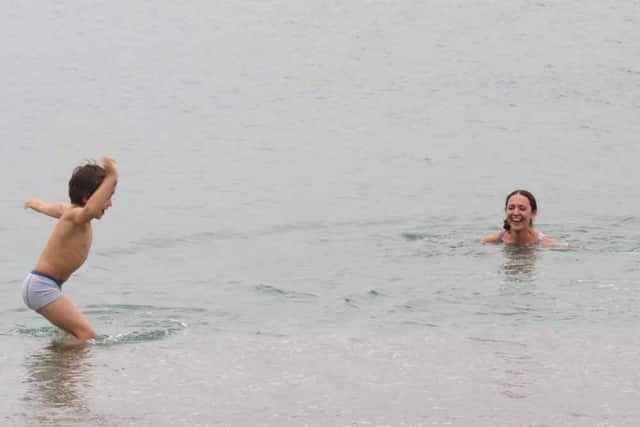
She added: “I always felt amazing when I swam, but swimming outside in the winter is just magical.
“Staying active is so important to me, as it’s part of my identity, without which I feel completely lost.
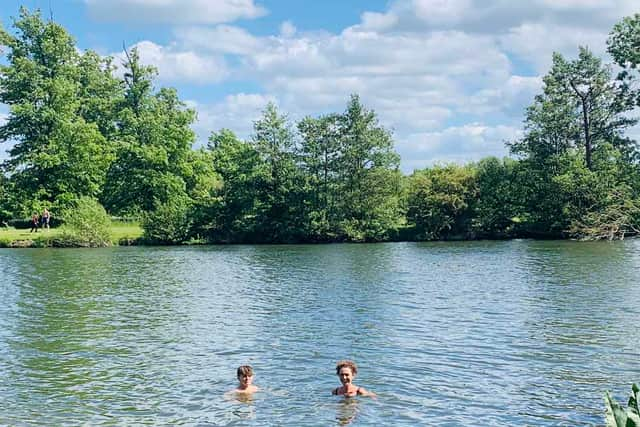
As well as lifting her spirits, swimming has replaced her pain medication.
She said: “It makes me feel so much better that I don’t have to take painkillers, which is so positive.”
It tells the story of a widow who finds her husband dead and travels to Cornwall to unravel the truth about what happened, where she meets cold water swimmers who support her through her grief.
Charlotte said: “I understand the support the cold water swimming community provides.
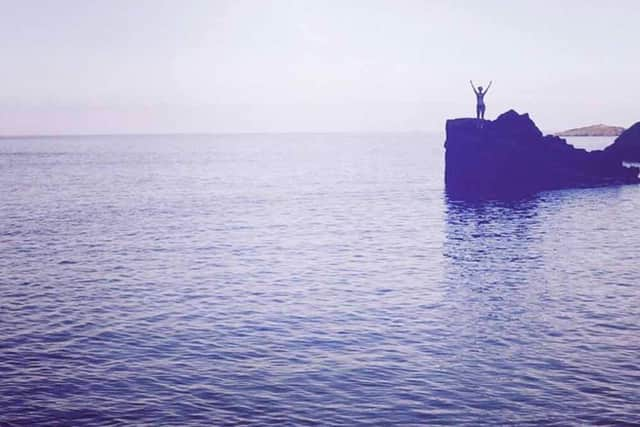
She added: “The act of cold-water swimming itself has also provided me with a huge amount of solace over the years and has helped me navigate many of life’s challenges, including grief.
“This enabled me to draw heavily on my personal experiences of swimming when writing the book.”
ENDS