
The Queen had an enduring affinity with the sport of kings
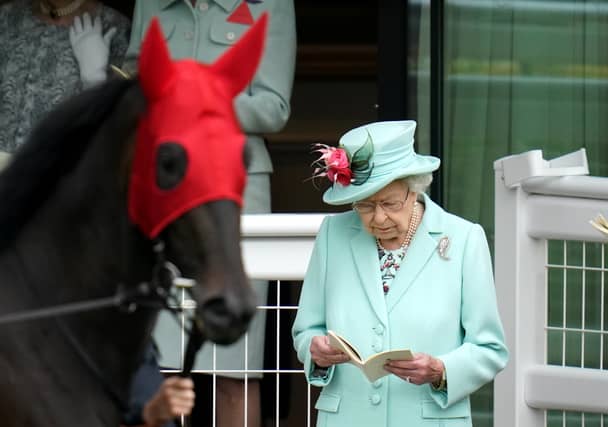

Racing was uniquely honoured by the Queen during her 70-year reign.
Her Majesty took a passive part in many other sports, presenting prizes at Wimbledon or the FA Cup Final, meeting the teams playing in the Lord’s Test or opening the Commonwealth Games and London Olympics. And, of course, she famously handed the 1966 World Cup trophy to Bobby Moore.
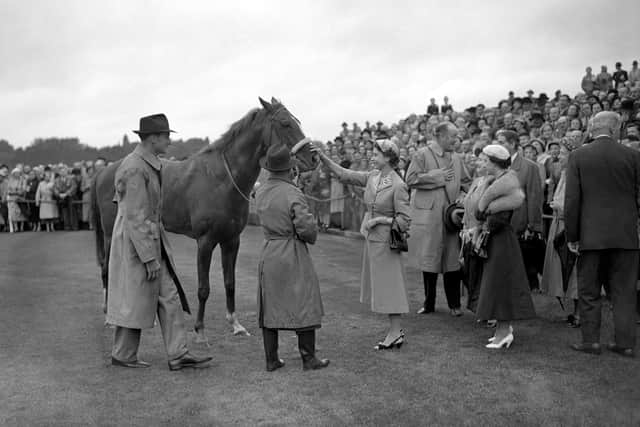
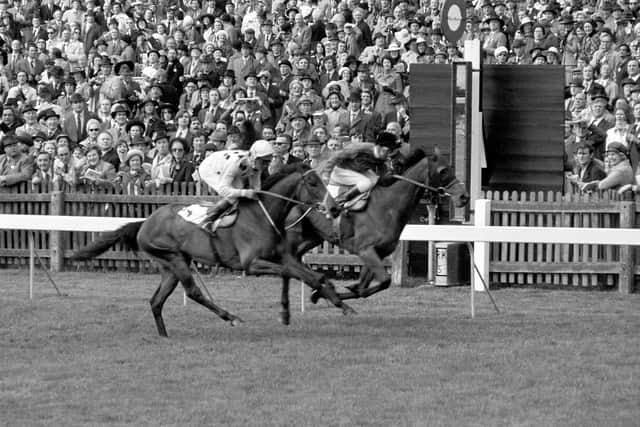
There was no royal victory that day, as her colt went down narrowly to Pinza – who gave the newly-knighted Sir Gordon Richards an elusive triumph in the big race at the 28th attempt.
But the Queen’s distinctive purple and red colours were carried to numerous successes after that, for a lady who was very much a ‘hands on’ owner, heavily involved in the breeding and training of her bloodstock.
She followed in the long tradition of royal involvement in the sport dating back to King Charles II, who practically launched Newmarket as a training centre, and Queen Anne, who founded Ascot racecourse.
Her father George VI was very successful on the Flat, winning the fillies’ triple crown with Sun Chariot in 1942, and his daughter’s love of the sport was a tremendous boost to racing.
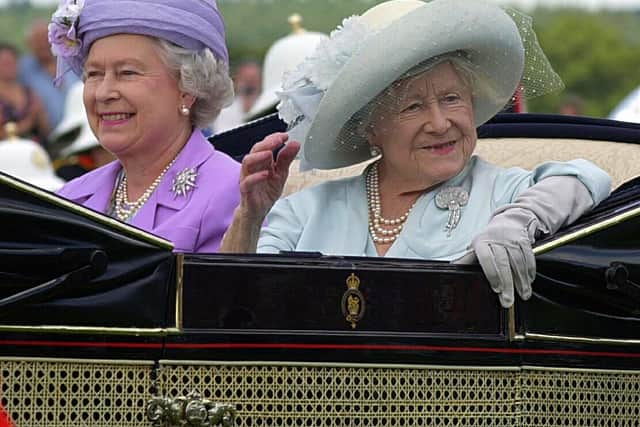
Her first winner came in partnership with the Queen Mother when Monaveen won over jumps at Fontwell in 1949. But it was on the Flat that she made her mark.
The Queen was crowned champion owner in 1954, when Cecil Boyd-Rochfort’s Aureole lifted the King George VI And Queen Elizabeth Stakes and also returned to Epsom to take the Coronation Cup.
And Her Majesty regained the title in 1957, after Carrozza – the lesser-fancied of her two runners from the Noel Murless stable – gave her a first Classic success.
The Queen’s fortunes suffered a slight dip after Pall Mall landed the 2000 Guineas at Newmarket in 1958, with Canisby in the Eclipse and Aiming High in the Coronation Stakes among her few big-race winners in the 1960s.
But a purple patch was just around the corner. In 1974 there was another narrow Classic success as Highclere, ridden by Joe Mercer for Dick Hern, just held off Polygamy by a short head in the 1000 Guineas at Newmarket before following up in the French Oaks at Chantilly.
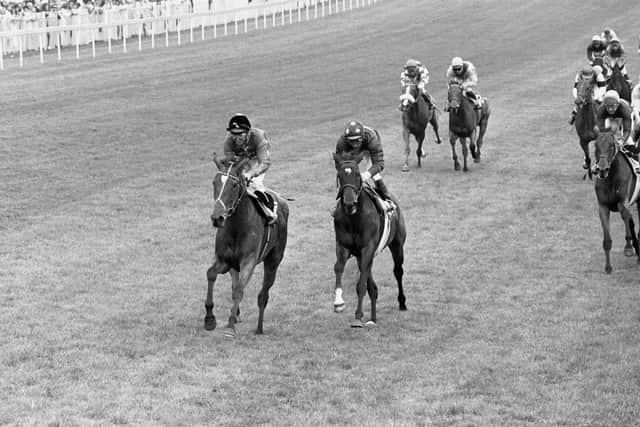
First the filly overcame trouble in running to collect the Oaks at Epsom under Willie Carson. Then she inflicted the first defeat on dual Prix de l’Arc de Triomphe winner Alleged in winning the St Leger at Doncaster.
The period since then saw plenty of success, particularly at Royal Ascot where the likes of Blueprint, Dartmouth, Colour Sergeant, Phantom Gold and, most famously, the brilliant filly Estimate all struck gold.
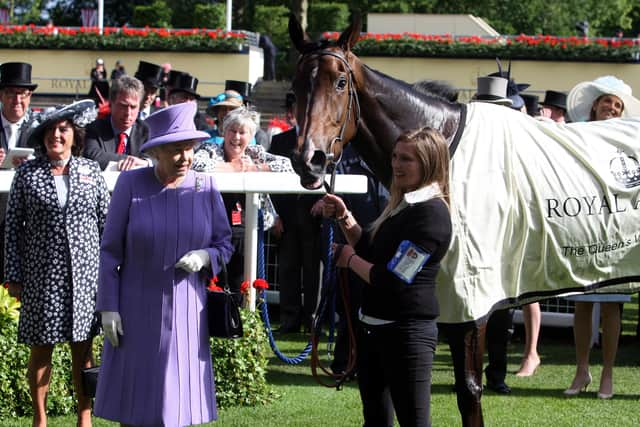
But the Derby always eluded her, with Milford beaten into 10th place behind stable companion Troy in 1979 and Carlton House finishing third to Pour Moi in 2011 as the 5-2 favourite.
Hopes of a third Oaks triumph for the Queen had been high when Height Of Fashion was champion two-year-old filly in 1981, but the decision was made to bypass Epsom as connections felt she would not handle the course’s undulations as she was a long-striding filly.
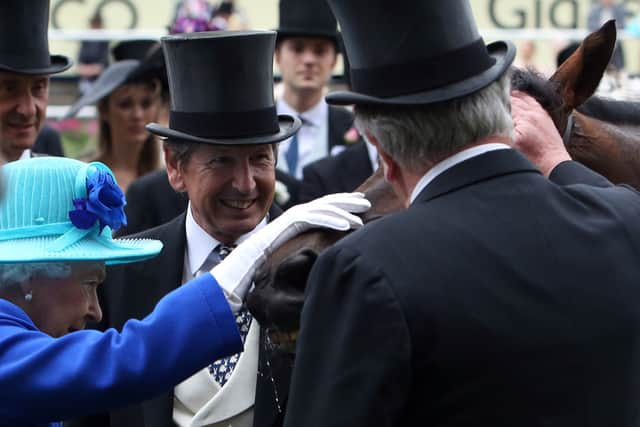
The proceeds were invested in the royal string, but Height Of Fashion proved one of the best broodmares of the century and produced numerous good horses – including the magnificent Nashwan, who took both the 2000 Guineas and the Derby in 1989.
The likes of Boyd-Rochfort and Murless were succeeded by Roger Charlton, Richard Hannon, Michael Bell and Sir Michael Stoute as royal trainers, with all enjoying success.
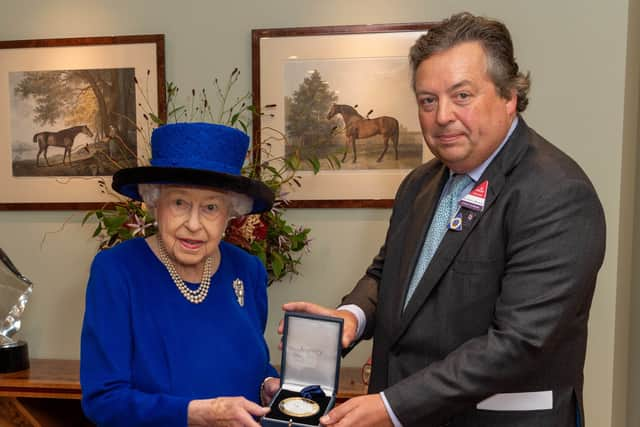
Her Majesty’s significance to the sport cannot be underestimated and her lifetime commitment to racing was recognised in October 2021, when she became the first entry into the Qipco British Champions Series Racing Hall of Fame under the ‘Special Contributor’ category.
Her racing manager, John Warren, spoke of the Queen’s “inner pride” at the invitation, while adding her “fascination is unwavering and her pleasure derives from all of her horses – always accepting the outcome of their ability so gracefully”.
Racing has been fortunate to have such a staunch supporter.