
Trump says US military has blockaded Iranian ports to pressure Tehran
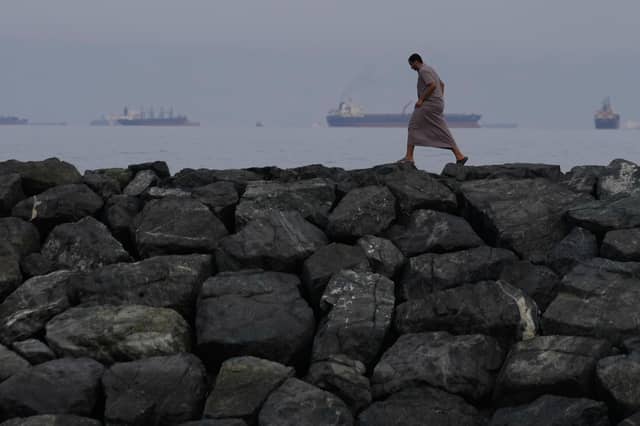

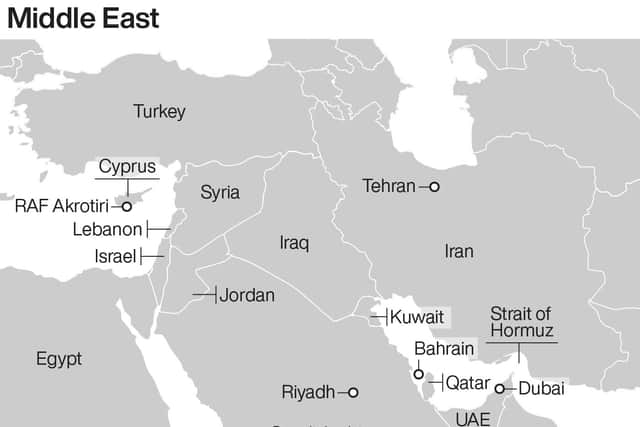
US President Donald Trump said the American military had begun a blockade of Iranian ports as part of his effort to force Tehran to open the Strait of Hormuz and accept a deal to end the war that has raged for more than six weeks.
Iran responded with threats on all ports in the Persian Gulf and the Gulf of Oman, taking aim at US-allied countries.
That set the stage for an extraordinary showdown that posed serious risks for the global economy and raised the spectre that the ceasefire could collapse and the war could resume.
Talks aimed at permanently ending the conflict, which began February 28 with US and Israeli strikes on Iran, failed to reach an agreement this past weekend.
There has been no word on whether negotiations will resume.

“We can’t let a country blackmail or extort the world because that’s what they’re doing,” Mr Trump said of Iran.
Speaking outside the Oval Office, Mr Trump suggested the US is still willing to engage with Iran.
“I can tell you that we’ve been called by the other side,” Mr Trump said.
He added: “We’ve been called this morning by the right people, the appropriate people, and they want to work a deal.”
Minutes before the scheduled start of the blockade, the United Kingdom Maritime Trade Operations agency issued a notice to mariners that said the restrictions included “the entirety of the Iranian coastline, including ports and energy infrastructure”.
It added that transit through the strait “to or from non-Iranian destinations is not reported to be impeded by these measures”, but added that ships “may encounter military presence” in the strait.
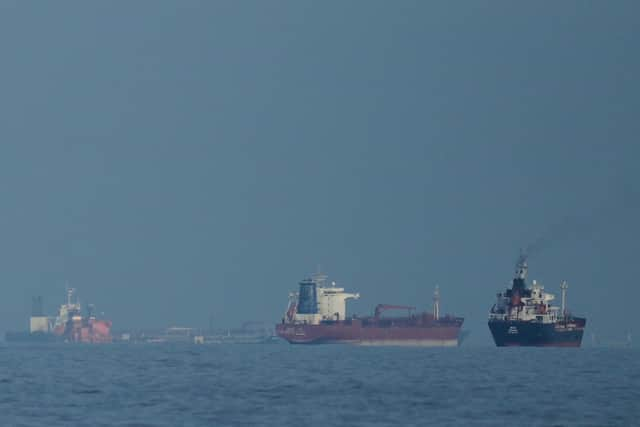
Tehran has allowed some ships perceived as friendly to pass while charging considerable fees, leading to accusations it is holding the global economy hostage.
Some analysts are doubtful that the US can restore normal shipping through force alone — and it is not clear how a blockade would work or what the dangers might be to US forces.
The US military’s Central Command announced that the blockade would be enforced “against vessels of all nations entering or departing Iranian ports and coastal areas”.
It said that would include all of Iran’s ports on the Persian Gulf and Gulf of Oman.
Centcom’s decision to allow ships traveling between non-Iranian ports to transit the strait was a step down from Mr Trump’s earlier threat to blockade the waterway.
Iran issued threats of its own.
“Security in the Persian Gulf and the Sea of Oman is either for everyone or for NO ONE,” the Islamic Republic of Iran Broadcasting reported on Monday.
“NO PORT in the region will be safe,” read a statement from the Iranian military and the Revolutionary Guard.
The threats halted the limited ship traffic that resumed in the strait since the ceasefire, according to a report from Lloyd’s List Intelligence.
Marine trackers say over 40 commercial ships have crossed since the start of the ceasefire last week, down from roughly 100 to 135 vessel passages per day before the war.
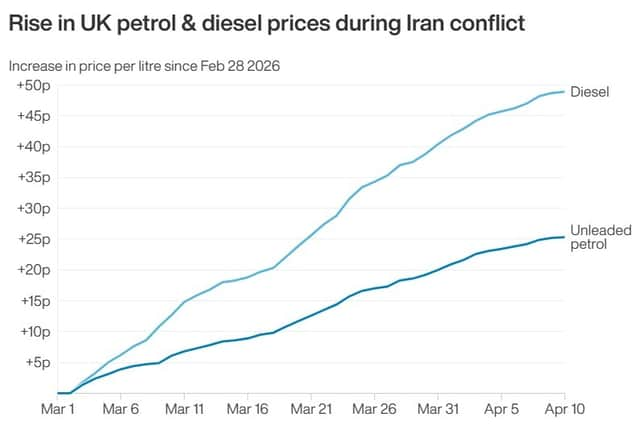
But the effects will be felt far beyond Iran.
The price of Brent crude oil, the international standard, rose 7% to hover around 102 dollars (£75) per barrel on Monday.
It cost roughly 70 dollars (£51) per barrel before the war.
Top-ranking Iranian officials threatened retaliation.
Ebrahim Rezaei, a spokesman for the Iranian parliament’s National Security Commission, dismissed US warnings of a potential blockade as “more bluffing than reality”, while warning that Tehran was prepared to respond if the situation escalates militarily.
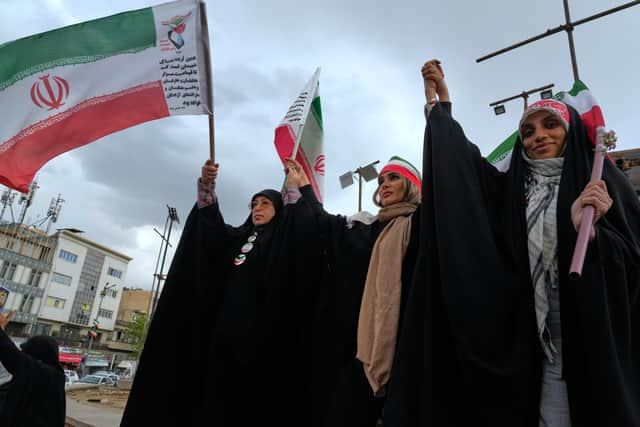
“And we may also reveal other cards that we have not used in the game.”
The Iranian parliament speaker, Mohammad Bagher Qalibaf, addressed Mr Trump in a statement, saying: “If you fight, we will fight.”
The blockade threat came after marathon US-Iran ceasefire talks in Pakistan ended without an agreement on Saturday.
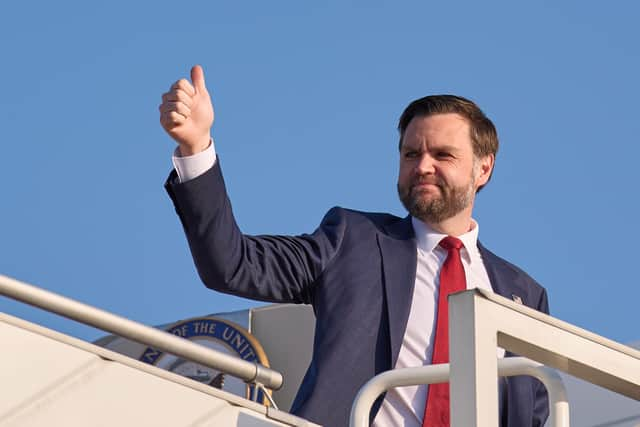
US vice president JD Vance said the talks stalled after Iran refused to accept American terms on refraining from developing a nuclear weapon.
Iran has insisted its nuclear programme is peaceful.
Iran’s ambassador to India, Mohammad Fathali, said the main sticking points for Tehran were its nuclear programme, war reparations and sanctions relief.
Neither Iran nor the US has indicated what will happen after the ceasefire expires on April 22.
The fighting has killed at least 3,000 people in Iran, 2,089 in Lebanon, 23 in Israel and more than a dozen in Gulf Arab states, and damaged infrastructure in half a dozen countries.
Pakistani foreign minister Ishaq Dar said his country will try to facilitate a new dialogue in the coming days.
Turkish foreign minister Hakan Fidan, whose country has supported mediation efforts, suggested that the ceasefire could be extended for 45 to 60 days to allow for more negotiations.