
US announces new Patriot missiles for Ukraine as part of £4.8bn aid package
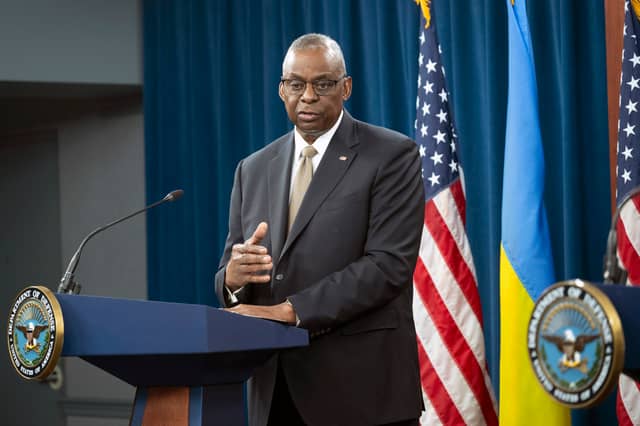

The US will provide Ukraine with additional Patriot missiles for its air defence systems as part of a massive six billion dollar (£4.8 billion) additional aid package, US defence secretary Lloyd Austin announced.
The missiles will be used to replenish previously supplied Patriot air defence systems.

Ukrainian President Volodymyr Zelensky discussed the need for Patriots early on Friday at the Ukraine Defence Contact Group, a coalition of about 50 countries gathering virtually in a Pentagon-led meeting.
The meeting fell on the second anniversary of the group, which Mr Austin said has “moved heaven and earth” since April 2022 to source millions of rounds of ammunition, rocket systems, armoured vehicles and even jets to help Ukraine rebuff Russia’s invasion.
Mr Zelensky said at least seven Patriot systems are needed to protect Ukrainian cities.
“We urgently need Patriot systems and missiles for them,” he said.
“This is what can and should save lives right now.”
At a Pentagon press conference following the meeting, Mr Austin said the US was continuing to work with allies to resource additional Patriot systems but did not commit to sending more US versions.
“It’s not just Patriot that they need, they need other types of systems and interceptors as well,” he said.
“I would caution us all in terms of making Patriot the silver bullet.”
Mr Austin said he is asking allied nations to “accept a little bit more risk” as they consider what weapons to send to Ukraine.
A number of nations have expressed some reluctance to send Patriot air defence systems to Ukraine because most do not have very many and they believe they need them for their own defence.
US officials said the aid package will be funded through the Ukraine Security Assistance Initiative, which pays for longer-term contracts with the defence industry and means that it could take many months or years for the weapons to arrive.
The new funding – the largest tranche of USAI aid sent to date – also includes the High Mobility Artillery Rocket System (HIMARS) as well as Switchblade and Puma drones, counter drone systems and artillery.
Friday’s meeting follows the White House decision earlier this week to approve the delivery of one billion dollars (£800 million) in weapons and equipment to Ukraine.
Those weapons include a variety of ammunition, such as air defence munitions and large amounts of artillery rounds that are much in demand by Ukrainian forces, as well as armoured vehicles and other weapons.
That aid, however, will get to Ukraine quickly because it is being pulled off Pentagon shelves, including in warehouses in Europe.
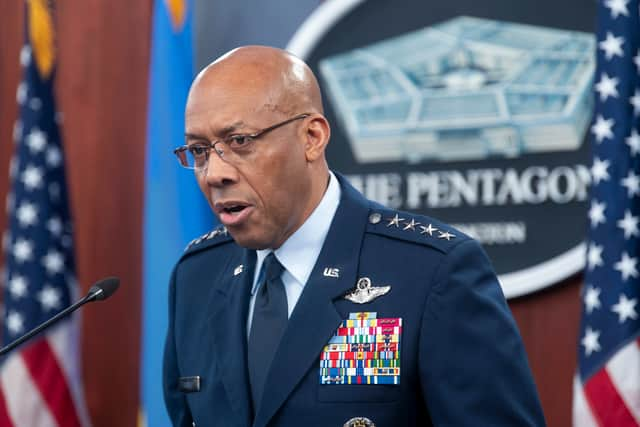
General CQ Brown, chairman of the Joint Chiefs of Staff, said the one billion dollar weapons package will have a key benefit.
“There’s some near-term effects,” said Gen Brown, who stood alongside Mr Austin at the Pentagon briefing.
“Now the Ukrainians don’t necessarily have to ration what they have because they know things are coming out of this package and there will be follow-on packages.”
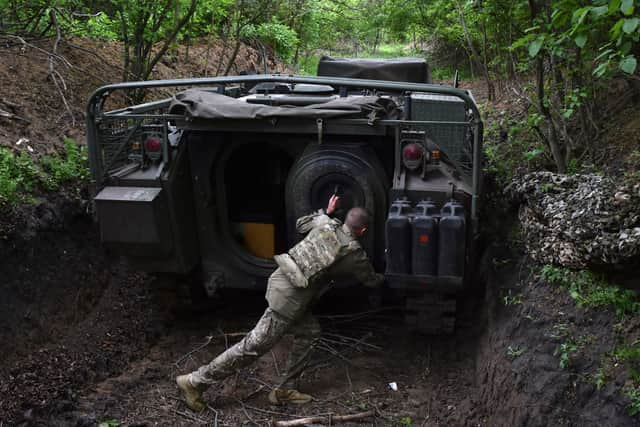
And they provide weapons Kyiv desperately needs to stall gains being made by Russian forces in the war.
Bitterly divided members of Congress deadlocked over the funding for months, forcing House Speaker Mike Johnson to cobble together a bipartisan coalition to pass the Bill.
The 95 billion dollar (£76 billion) foreign aid package, which also included billions of dollars for Israel and Taiwan, passed the House on Saturday, and the Senate approved it on Tuesday.
Senior US officials have described dire battlefield conditions in Ukraine, as troops run low on munitions and Russian forces make gains.
Since Russia’s February 2022 invasion, the US has sent more than 44 billion dollars (£35.2 billion) worth of weapons, maintenance, training and spare parts to Ukraine.
Among the weapons provided to Ukraine were Abrams M1A1 battle tanks.
But Ukraine has now sidelined them in part because Russian drone warfare has made it too difficult for them to operate without detection or coming under attack, two US military officials told The Associated Press.