
What is ‘fragile fashion’? Bora Aksu brings the trend to London Fashion Week
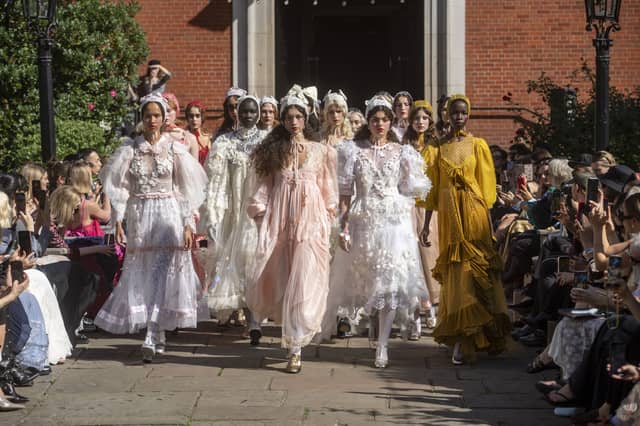

The setting – a pathway framed by rose bushes rather than a LED-lit catwalk – was the first sign this would not be a typical runway show.
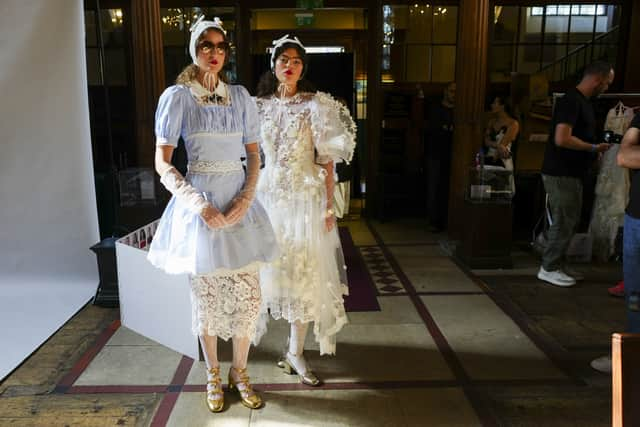
Aksu’s starting point was his own archive of broken porcelain dolls. “Broken dolls remind me that beauty does not lie in perfection but in the traces of love, time, and survival,” he said before the show.
“Through this collection, I wanted to create a world where flaws and cracks are celebrated not as weakness, but as strength and beauty.”
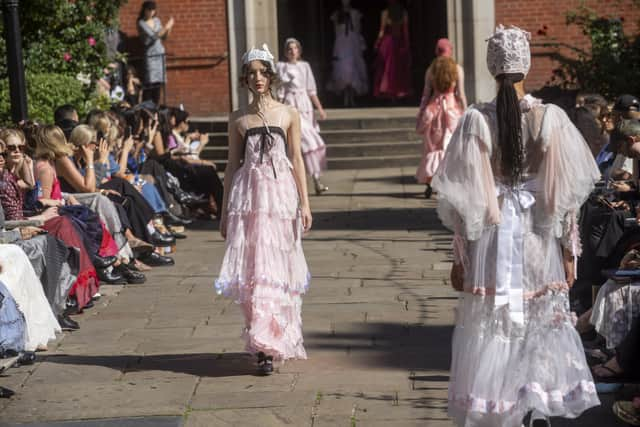
Slimline dresses were trimmed with lace; butterflies and flowers hand-embroidered on bodices; gingham softened into sheer overlays.
Some looks – like a monochrome checked dress layered over black lace tights and harlequin diamonds – evoked Aksu’s signature Victoriana influence.
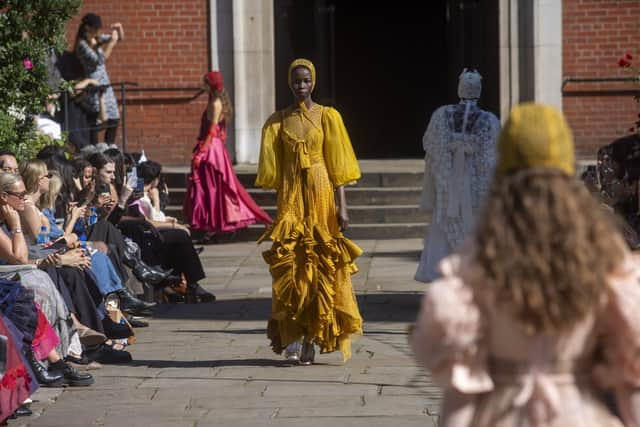
Aksu also built his concept into the fabrics themselves. The designer sourced deadstock lace from small manufacturers in Istanbul to revive them into diaphanous dresses.
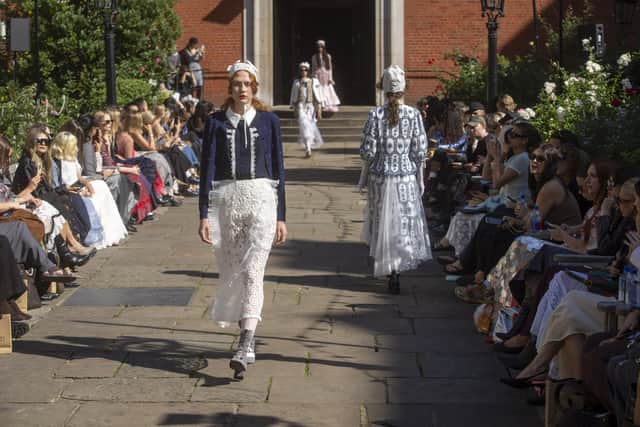
Even the headwear, which consisted of lace caps, kerchiefs and little crowns, was part of a mood that celebrated imperfection.
The palette of the collection was fittingly fragile as well. Colours unfolded like faded keepsakes: powder pinks, soft corals, peaches and powder blues anchored by ghostly whites, shadowy blacks and touches of midnight navy.
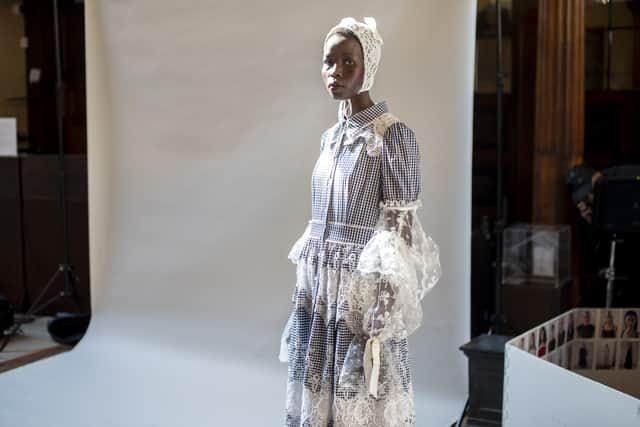
The cracked edges and raw seams recalled Aksu’s theme of broken porcelain, but also mirrored the current cultural state of mind: audiences are ready to move beyond polished, Instagram-perfect fashion into something more emotional, even a bit uncanny.
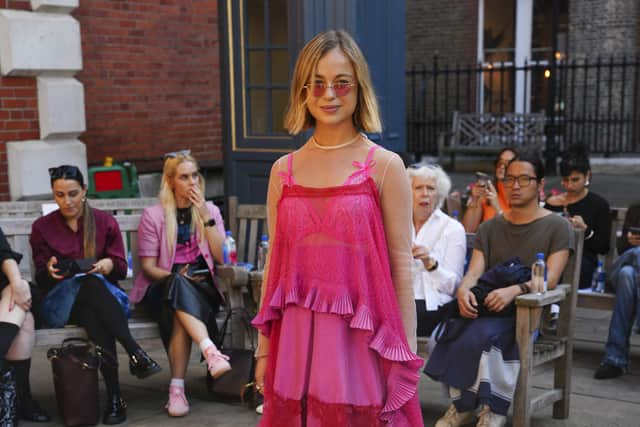
Lady Amelia Windsor’s presence in the crowd was a neat punctuation mark: British aristocracy watching a collection that deconstructs the idea of perfect dolls.
This love letter to fragility redefined resilience within imperfection, and perhaps it was a hint that “fragile fashion” could be the next big trend.