
Why collagen is a cult beauty staple – according to experts


You may have heard the term thrown around regarding ageing, but the true significance of collagen is often overlooked. This protein is the building block of healthy skin, hair, nails and bones, and is the key to youthful-looking and healthy skin.

Celebrities have jumped on the collagen bandwagon – with the release of actress’ Kate Hudson’s InBloom supplement range and Jennifer Aniston’s peptides powder that she swears by – but are these fads?
We spoke to experts on the key things you should know about collagen before introducing it to your beauty routine.
1. What is collagen?

There are 28 different types of collagens, explains famed physician influencer, Dr Nora Jaafar, “type 1-3 are the most common, and type 1 and type 3 are the ones found in skin. The actual structure of collagen changes as it becomes damaged by other factors like UV and sun exposure, smoking and poor diet.”
2. What are collagen supplements?
Collagen supplements are products to provide the body with additional protein commonly derived from cows, pigs or fish. They can come in various forms ranging from powders to capsules and gummies.


Hunter & Gather Bovine Collagen Peptides Protein Powder, £28, Healf
3. Can you take collagen just through skincare/serums?


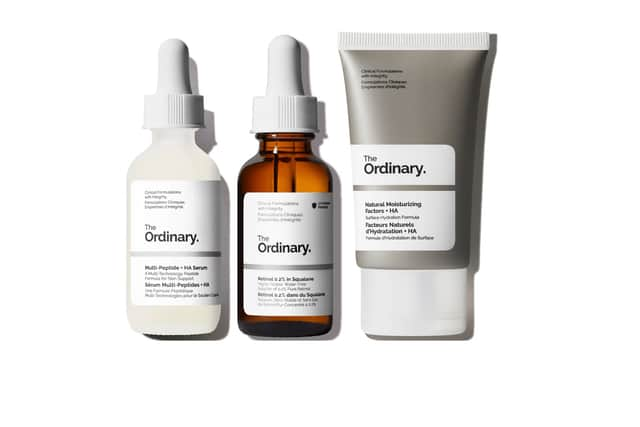
The Ordinary The Firm and Plump Collection, £13, Look Fantastic
4. What are the expected benefits of introducing collagen?

“An oral supplement that included collagen was given daily to women aged 26 to 68. The results showed significant improvement in nail cracking and nail brittleness by nearly 80%, as well as with hair dullness, hair dryness, and nail softness after 8 weeks,” says Patel. “A longer trial conducted revealed that, after nine months, 100% of participants saw an improvement in hair dryness, hair dullness, and nail peeling, compared to taking collagen before and after.”

Giovanni Biotin & Collagen Restoring Hair Mask 295ml, £9.74 (was £12.99), Look Fantastic
5. What type of collagen you should take
Not all the information out there is going to work for you when introducing collagen into your routine. “You need to look for hydrolysed collagen peptides in your supplements,” says Jaafar, “because usual collagen molecules, a lot of the time, are too large to be absorbed and therefore be beneficial. With hydrolysed collagen peptides, they essentially are broken down to smaller peptides, making it easier for a digestive system to absorb.”
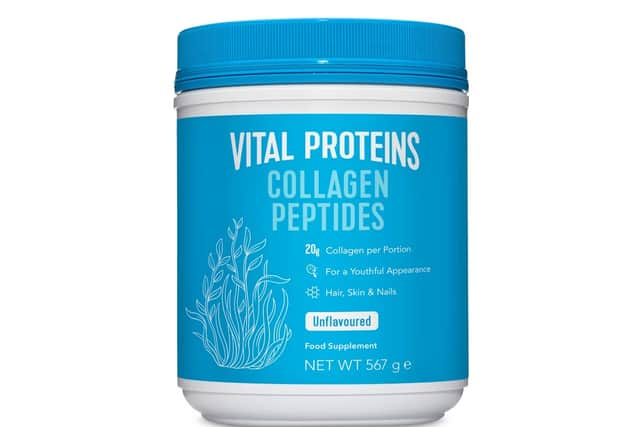
Vital Proteins Collagen Peptides 567g, £34.99 (was £39.49), Medino
6. Should you be collagen banking?
Collagen banking is a buzzy new term that essentially refers to the concept of preserving and enhancing the body’s collagen levels over time.

The most popular way people are practising collagen banking is through the injectable polynucleotides treatment that uses processed salmon sperm, which can be injected into the skin to stimulate collagen production. “This works better than tropical treatments,” explains Jaafar, “because the collagen stimulating product is being injected straight into the dermis.”
7. When you’ll see the results
Results tend to be most visibly effective for skin hydration after eight weeks, Patel notes. “While it shows potentially promising results for skin, remember that you can’t control where your collagen goes! The body uses it as it sees fit.”
After 12 weeks, your skin will be in the maintenance phase after introducing this new product, this is when you will begin to see real change, specifically when looking at your skin.