
Woman, 30, wheelchair-bound by mystery condition which ‘grinds’ her joints together paints to distract her from pain
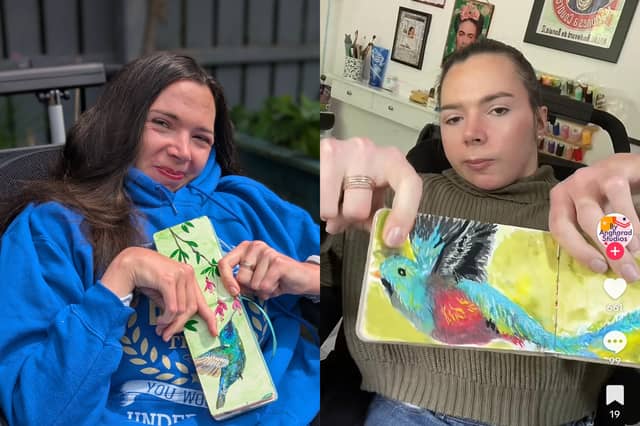

A 30-year-old wheelchair-bound since childhood by a mystery degenerative condition which causes her joints to “grind together” has said she paints to distract herself from her chronic pain.
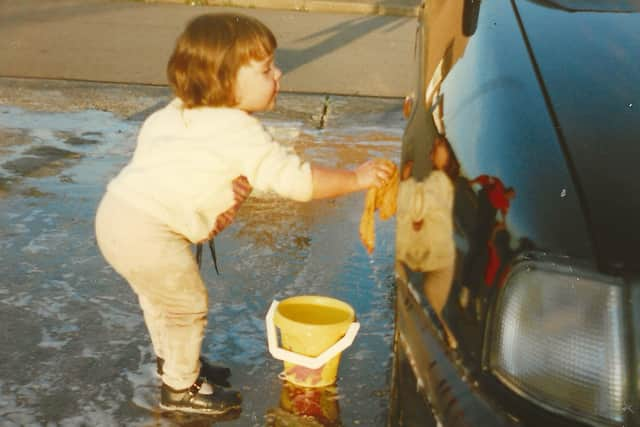
Angharad Brawn, based in the village of Ynysddu in South Wales, said she was born “perfectly healthy”, but from the age of five she started to experience aches in her legs which worsened throughout her childhood.
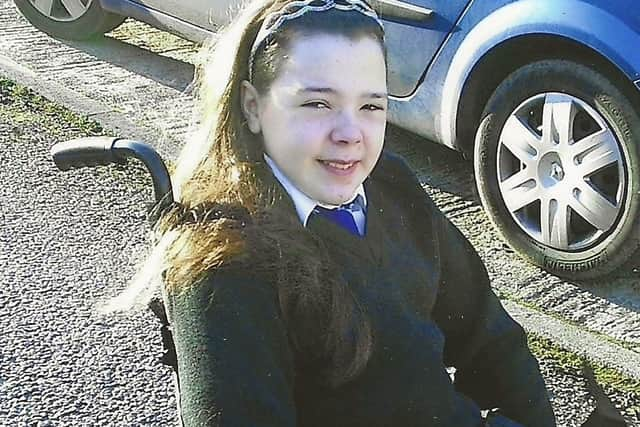
By the end of primary school, she needed a wheelchair and her condition continued to worsen, to the point where she developed scoliosis and needed a hip replacement at 18.
Angharad underwent genetic testing where her symptoms were likened to a rare genetic disorder – but as she was not a direct match, she has been left without an official diagnosis.
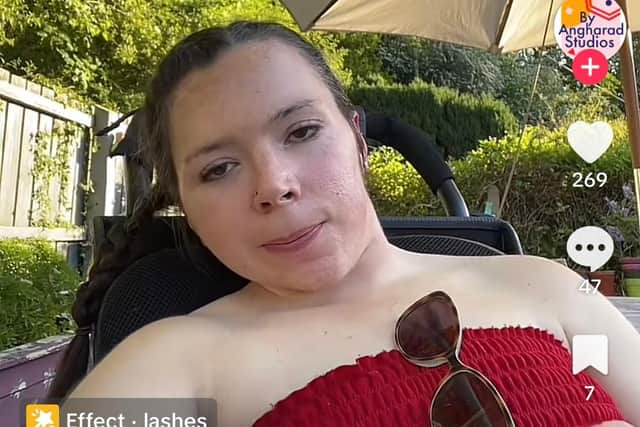
Angharad says she has “no idea” how her condition will deteriorate in the future, with her latest “scary” struggles impacting her speech and ability to swallow – but over the last two years, she has “rediscovered (her) love of painting” to provide a distraction from her pain.
Determined to remain independent, Angharad has published a children’s picture book based on her experience, regularly sells her artwork at craft fairs and on her website, and showcases her creations to thousands of TikTok followers.
“Being in pain is draining but there’s nothing that can be done about it, I’ve just got to get on with it.
“My art really helps as it means I have to focus on something else, my bungalow has normally got different projects I’m working on all over it, so I’ve always got some sort of distraction at hand.”
“By the time I was seven, it was more obvious I was struggling,” she said.
“I started not being able to do things, like riding a bike.”
Her mother, Deborah Gordon, pressed for a second opinion, however, and Angharad underwent several tests, tried out various pain relief medications and had physiotherapy under a community care team.
At the age of nine, Angharad started using crutches, then by the end of primary school she needed a wheelchair – before eventually progressing to a motorised one for her independence at 14 years old.
After many appointments and blood tests, Angharad said her symptoms were likened to a condition called Schwartz-Jampel syndrome (SJS), a rare genetic disorder which affects muscle function and skeletal development.
For a confirmed SJS diagnosis, Angharad would need to display eight specific chromosome abnormalities, but she just has two, meaning she has been living without an official diagnosis.
“What’s particularly scary is that I am now having problems with my speech and my swallowing,” she said.
Angharad said her condition also results in a “distortion” of her skeleton and she has scoliosis, a curvature of the spine, which had to be corrected by metal rods implanted in her spine aged 16.
Describing her chronic pain, Angharad said she has “good days and bad days”.
“I get pain in most of my joints, but especially in my right hip, back and shoulders,” she said.
In August 2019, Angharad was offered a bungalow through Caerphilly Council, where she now lives on her own and a team of carers visit her in the mornings and evenings.
As she cannot walk or stand, Angharad uses a hoist in the ceiling to help her get out of bed and into her wheelchair or shower chair.
“I normally describe myself as stubbornly independent, I will always try and do something myself before asking for help,” she said.

Angharad said she always wanted to be a jewellery designer and attended the School of Jewellery at Birmingham City University, but her deteriorating hand function saw her change direction and pursue art instead.
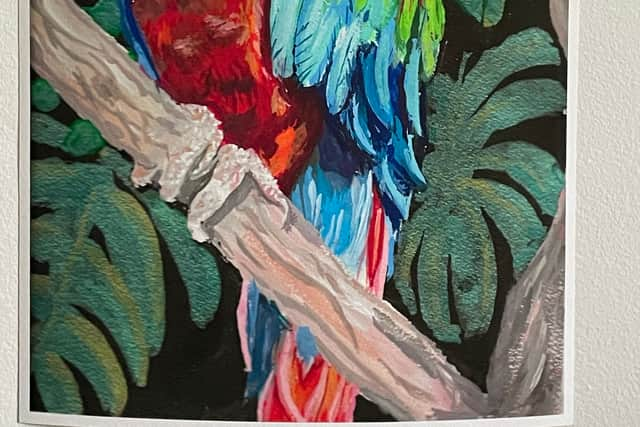
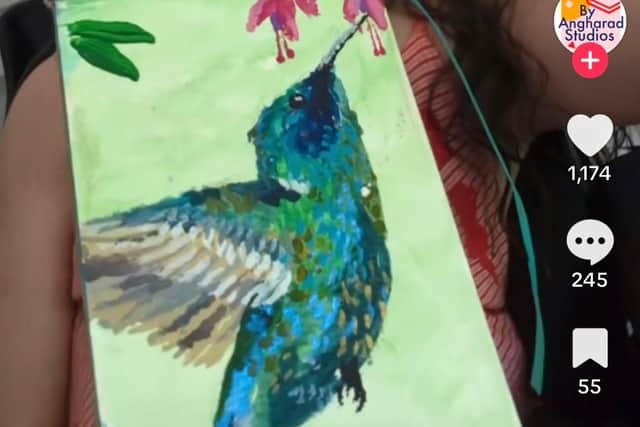
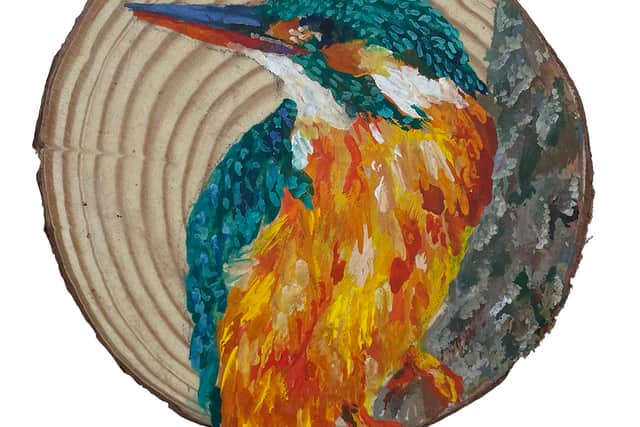
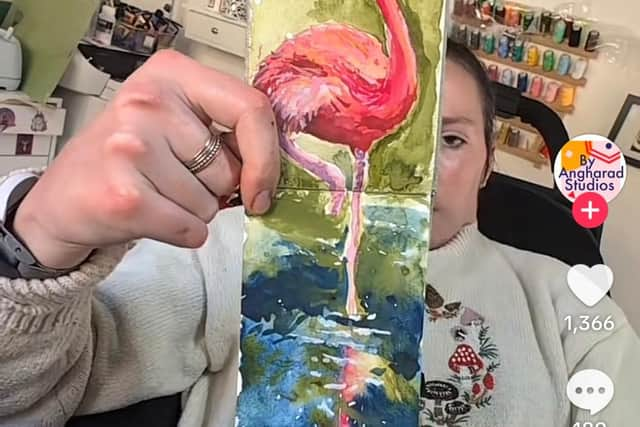
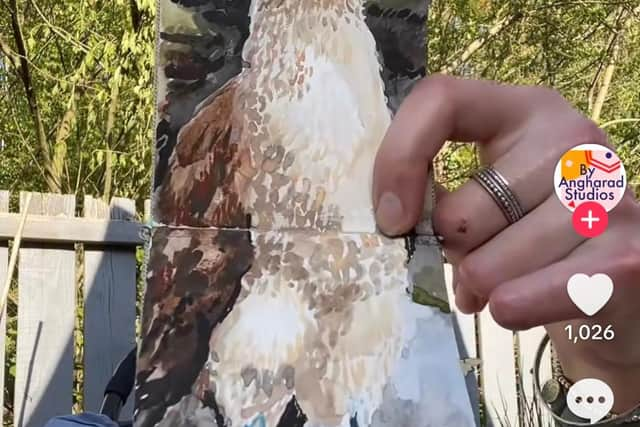
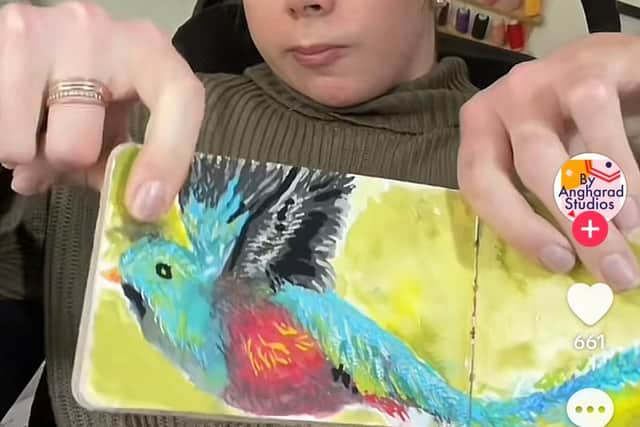
She now focuses on painting animals, with birds being her favourite, and she is currently working to fill a sketchbook with various types of birds.
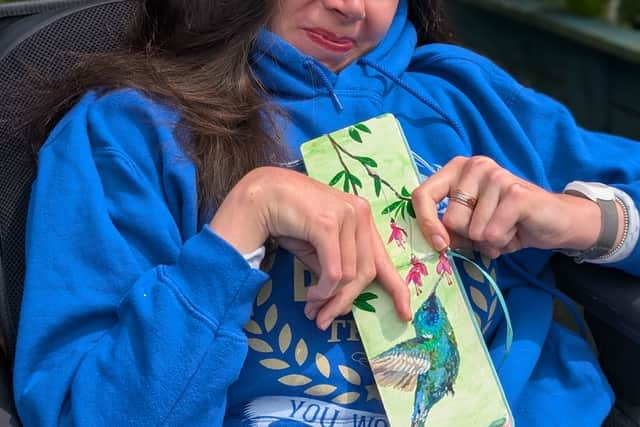
“My hands can also be shaky and I get a lot of muscle spasms.
“I think that’s why I prefer painting animals, they normally don’t have smooth edges, so it doesn’t really matter if my hands shake a bit.”
Angharad said she has to work around her disability in order to produce her artwork – which she sells at local craft fairs and on her website, byangharadstudios.com.
She has also written, illustrated and self-published a children’s picture book, titled The Wobbly Penguin, which is based on her experience growing up with a degenerative condition.
While Angharad said she does not know what the future holds for her condition, estimating she will need more support and potentially a speaking device if her speech continues to be impacted, she remains positive.
“I just want to show that even though someone may have a very obvious physically disabling condition, they’re still fighting to be as independent as they can be,” she said.