
Why February is the new January when it comes to fitness


Fitness resolutions fallen by the wayside? You’re not alone.
January often brings nothing more than a huge sense of pressure, combined with residual festive fatigue. It’s not the best combination for becoming your best fitness self.
So, if your January didn’t quite get off to the start you intended, fear not. February might just be your time.

Suzy Reading, psychologist and author of Sit To Get Fit, agrees: “The Christmas period is often very depleting. We just want to hibernate in January, and after a period of cocooning, we feel a little readier for movement in February.
“The signs of spring help us, too. It feels like the snowdrops are nodding in encouragement and the daffodils definitely bring us cheer. We can feel the heaviness begin to lift.”
Finances are likely to look a bit brighter, as well. January is generally lacking in funds thanks to overspending at Christmas. Come February, we’ve (finally) had our first pay day since the festivities, so if you fancy trying out a new class or going to the gym, it’s more of a realistic goal.

Come the second month into a new year, everything just seems to get a bit better, says fitness expert Laura Williams. “We wake up on January 1 and think we’d better do something – anything – to show willing on the first day of the year. That’s just not as exciting as wanting to get fit for a holiday or train for a race.”
Mayatt agrees: “As a PT, it’s usually February and March when work becomes very busy with new clients. Holidays are being booked, weddings organised… And also, people just know it’s the final part of winter. It starts to get brighter in the mornings and our motivation to move increases.”
So, if January has proved something of a fitness flop, what’s the best way to get going in February?
Look ahead
“Look at the year as a whole,” suggests Williams. What’s around the corner? What’s a ‘maybe’? What’s going to be fun? When and where might you need extra strength or energy? Think about how your fitness routine – existing and future – might benefit the plans you’ve already made.”
Start small
Focusing on gradual incremental change, is the way to go, says Jak Phillips, global content director at Les Mills. “One mistake people often make is going too hard and too fast with a new exercise routine. By jumping headfirst into a tough workout, you’re likely to feel miserable while you’re working out, sore afterwards, and reluctant to repeat the experience.”
What – and who – can help you?
“Look at your resources: time, money, friends, family – what have you got to help you get where you want to go?” Williams continues. “Figure out what you can spare, particularly in terms of time and money, before you make your fitness wish list.” And if you can buddy up with a friend, colleague or family member, even better.
Set goals – big and small
Ask yourself what you want to achieve – and what you will settle for, says Williams. “I suggest having both a ‘dream goal’ and a ‘settle-for goal’. It’s not being defeatist, it’s about having an achievable option for when fatigue and despondency set in.”
Focus on the short-term
Do something new
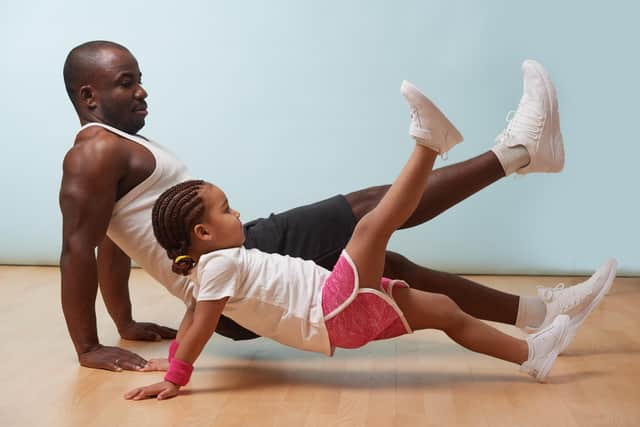
Finally, Williams advises starting a ‘Just One Thing’ list. “You can add these weekly or monthly and it could start with something as simple as taking the stairs, and progress to trying a new bodyweight exercise, running with a family member, an end-of-day stretch… Aim to combine quick wins with activities that will challenge you, both physically and mentally.”