Search


22 Apr 2026
Search
22 Apr 2026

Please allow ads as they help fund our trusted local news content.
Kindly add us to your ad blocker whitelist.
If you want further access to Ireland's best local journalism, consider contributing and/or subscribing to our free daily Newsletter .
Support our mission and join our community now.
To continue reading this article, you can subscribe for as little as €0.50 per week which will also give you access to all of our premium content and archived articles!
Alternatively, you can pay €0.50 per article, capped at €1 per day.
Thank you for supporting Ireland's best local journalism!


The fear of not having the right words, not knowing where to start, or worrying you’ll upset someone, can keep us from saying the thing that might actually tug them back from the brink of a devastating decision. Talking can change everything, as Melanie Blumenthal, 39, has found. “It can be hard to sit down in front of someone you love and say, ‘You realise this is not OK. What can we do about it?’ [Rather] than just keep on smiling and let this person be,” she says. “Letting this person be is to arrive at the point that can put his life in danger. It’s what happens when you go deep down a depressive or manic episode.”
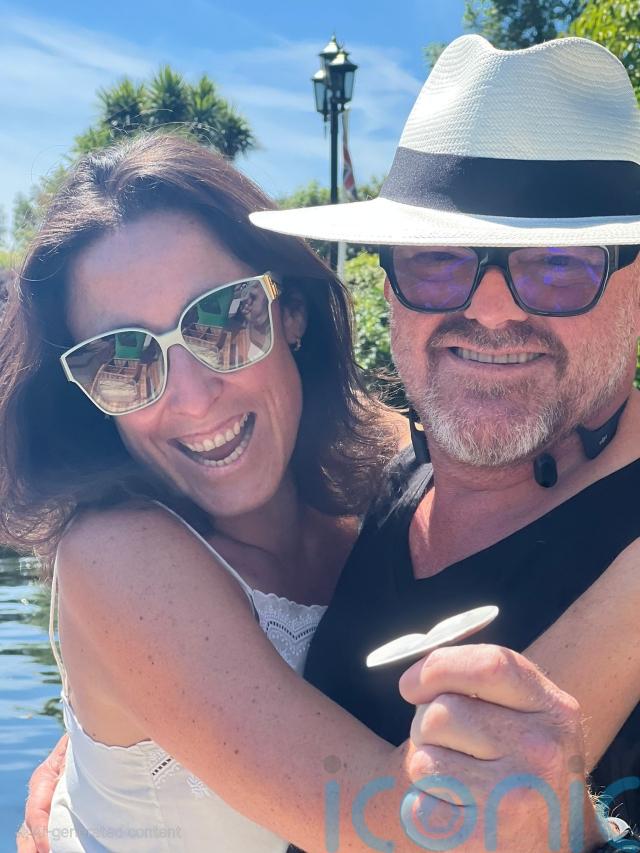
The French-born entrepreneur had been married to chef and molecular gastronomy extraordinaire Heston Blumenthal for just a few months when, in November 2023, she had to have him sectioned in France under the mental health act. Heston, now 59, was admitted to a psychiatric ward and diagnosed with bipolar, and since then, the couple have been determined to talk about their experience.
“We’ve realised there’s a big lack of education around bipolar and by talking out loud and without fear – because it can happen to anyone – it can help lots of people and save lives,” explains Melanie, a new ambassador for Bipolar UK (@bipolar_uk). “When we had H’s diagnosis, we were told, ‘Don’t talk about it. Don’t say anything, hide it,’” she remembers, adding with a wicked smile: “Unfortunately for them, we are people who, if you tell us: ‘Don’t do that,’ we do it.”
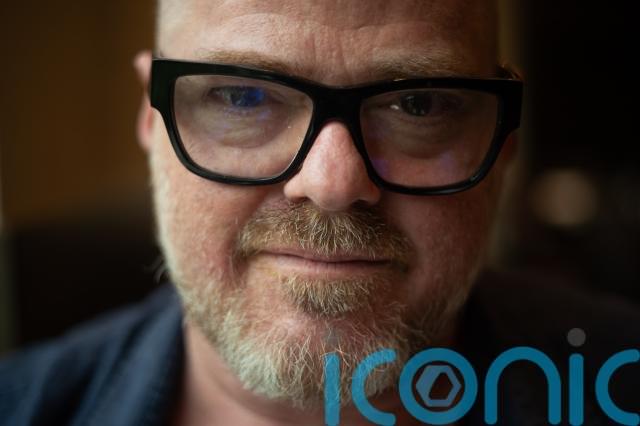
“The stigmatisation of bipolar changes from people talking about it,” says Heston, sitting beside his wife, wearing his trademark glasses. “You look at the number of people it affects; you’ve got more than one million diagnosed. How many more are undiagnosed? And then the loved ones that care for people with bipolar, that have to live with it before it’s diagnosed.”
According to Bipolar UK, 56% of people living with bipolar are undiagnosed and one in 12 Brits lives with someone who has the condition. “It’s horrible, because [more than] one in five people with bipolar is going to try to take their own life,” says Melanie. “These numbers are enormous, and I feel we have to do something about it.”
On average it takes more than nine years to get a diagnosis, but getting one “gives a lifeline, not just a label”, says Melanie, which is why she’s supporting Bipolar UK’s new campaign, ‘Maybe it’s bipolar?’ encouraging people to take the bipolar test and seek support. “It’s a first door you can push. Try to do the test, and then after, whatever happens, Bipolar UK has the network in place [to support you].”
Heston managed to build his food empire, including the three-Michelin starred Bray restaurant, The Fat Duck, creating famously eccentric dishes like snail porridge and bacon-and-egg ice cream, all while living with undiagnosed bipolar. But the signs had been there for years; his sister Alexis also has bipolar. “I was carrying lots of anger at the start. I was like, ‘Why has no one done anything before? Why has no one spotted anything?’ We started talking with the psychiatrist, [looking] in the past, everything was there for decades – everything! He was ticking the boxes,” says Melanie. “He’d seen a psychiatrist for his ADHD, but maybe it was misdiagnosed; there are lots of similarities.” In fact, according to the NHS, one in six people with bipolar also have ADHD.
The day before Heston was admitted for psychiatric help, after a weeklong manic episode, Melanie remembers “we had to sit down and say, ‘Look, you realise you can’t talk like that to people? You realise it’s nearly a week that you haven’t slept?’ H was in front of me saying, ‘Yes, yes, it’s OK’. [I said] ‘Do you realise that now we have really few options, your life is quite in danger, and I would love you to follow us to see some doctors?’”
Heston’s response was to say, “No, I’m OK. My energy levels are OK”. “And that’s the danger of bipolar. When the person is in a manic state, it’s really deceptive,” says Melanie. “They feel full of energy and trust me, to bring him to go and see a doctor: Mission impossible. Impossible! I tried everything.”
Fortunately for Heston, Melanie knew she had to step in. “If you were someone else, you could have just thought it was behavioural issues I had, as opposed to chronic mental health issues. But you didn’t,” says Heston to his wife. “This is wrong, but I still grieve a little bit the manic highs. I didn’t have my underpants over my trousers, but I felt I was superman, I could save the world. And that feeling was fantastic. Then the dark side of that feeling was not fantastic.”
He says that through “care, through Melanie, through the medication” he’s learned so much more about bipolar and believes “there should be more emphasis on the loved ones”, as there is with conditions like Alzheimer’s, where they often feel helpless but are “the ones that can make the difference”. “It’s a lot,” he says, acknowledging the responsibility that falls to Melanie. “It’s a lot, but it’s all about love. If you had cancer or if you were diabetic [it’d be the same],” she says. “I would lie to you if I was saying, ‘I was never scared, everything was OK’. No, there were some moments I was really, really scared. I was thinking that I would never see my husband again.”
She considers herself and other loved ones of people with bipolar as “anchors”. “In the first six months [after his diagnosis] I was really scared for Heston because I was seeing there was this loneliness and it’s hard to see the person that you love in pain,” she says. Now, she joins Heston at monthly meetings with his medical team (“Because there is what he feels, but there is how I see him,”), and supports him to stick to a healthy routine and take his medication. “It’s turned down the peaks. [I] haven’t gone into the suicidal troughs. I had those before, but it’s squashed everything down,” says Heston of his meds.
“It’s definitely a weight off my shoulders, talking about it and understanding that some of my behaviour is because of my condition, I come to me with more self-forgiveness,” he adds. “If you talk about the side effects, the character traits, it makes such a massive difference. You’re not a loony, you’re not a nasty person. You are potentially quite difficult to live with…” he says wryly, looking at Melanie, who smiles back.
“It wasn’t you. Never forget [what happened], because it’s important, it allows you to spot the triggers and when you go in the wrong area, but forgive,” says Melanie. “Forgive, because it’s the condition that was taking over the person, and without forgiveness, the journey is going to be harder.”
And if you are struggling, do not lose hope. You and your loved ones can get a diagnosis and find a way through, she says: “There is lots of hope, if really people can see it’s a journey, some moments are going to be tough, but keep on, it’s for the best.”

Subscribe or register today to discover more from DonegalLive.ie
Buy the e-paper of the Donegal Democrat, Donegal People's Press, Donegal Post and Inish Times here for instant access to Donegal's premier news titles.
Keep up with the latest news from Donegal with our daily newsletter featuring the most important stories of the day delivered to your inbox every evening at 5pm.

This publication supports the work of the Press Council of Ireland and Office of the Press Ombudsman, and our staff operate within the Code of Practice of the Press Council. You can obtain a copy of the Code, or contact the Council, at www.presscouncil.ie, Lo-call 1800 208 080 or email: info@presscouncil.ie.