Search


07 Mar 2026
Search
07 Mar 2026

Please allow ads as they help fund our trusted local news content.
Kindly add us to your ad blocker whitelist.
If you want further access to Ireland's best local journalism, consider contributing and/or subscribing to our free daily Newsletter .
Support our mission and join our community now.
To continue reading this article, you can subscribe for as little as €0.50 per week which will also give you access to all of our premium content and archived articles!
Alternatively, you can pay €0.50 per article, capped at €1 per day.
Thank you for supporting Ireland's best local journalism!


New research suggests that small increases in daily moderate-to-vigorous intensity physical activity may reduce the risk of death.
The study, which was published in The Lancet, examined data from almost 95,000 middle-aged and older adults in the UK, and 40,000 people from Norway, Sweden and the US.
Researchers, led by academics from the Norwegian School of Sports Sciences, found that just five minutes extra of exercise per day could reduce 6% of deaths among the least active people, and among the general population it could reduce the risk of deaths by 10%.
Figures from the UK arm of the study, taken from the UK Biobank study, also show that reducing sedentary time by 30 minutes a day could reduce 4.5% of deaths among all adults taking part in the study, apart from those who were already very active.
This important research shows that even just a few minutes of movement each day can deliver meaningful health benefits. With that in mind, we spoke to Tara Riley – pilates, barre, and strength trainer – who shared five short-burst exercises that can be easily woven into even the busiest schedules.
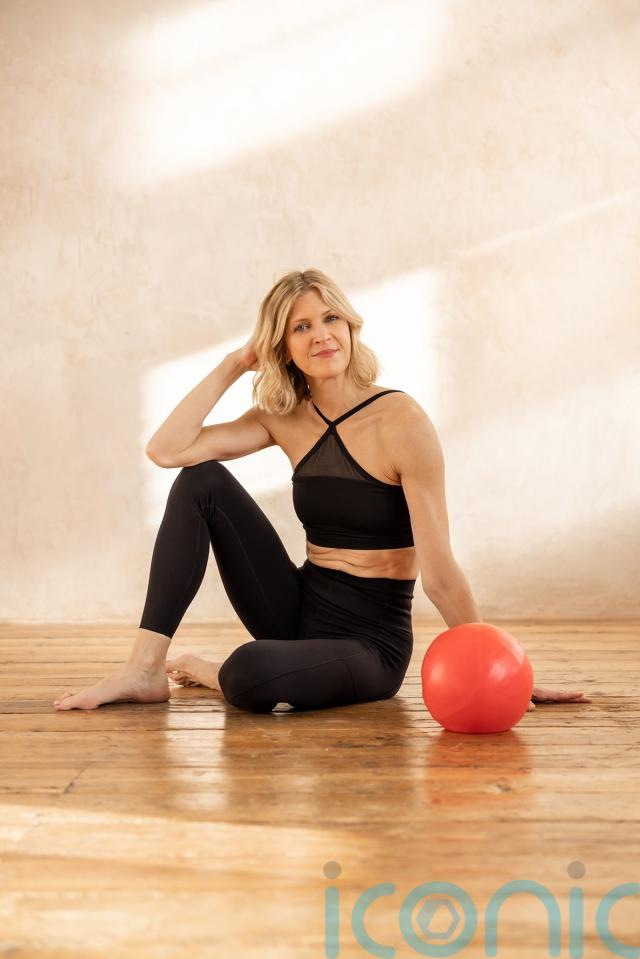
1. Squats
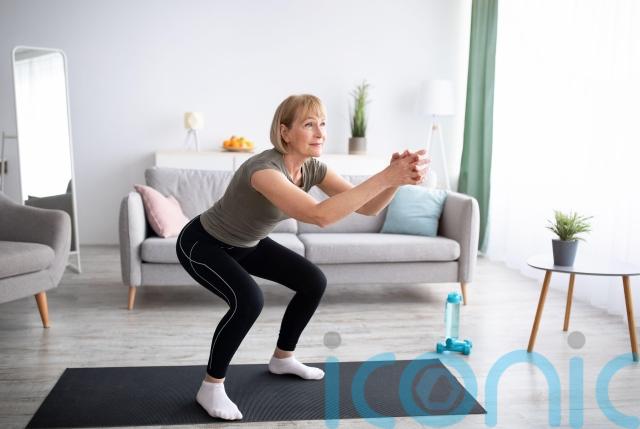
“Squats are fantastic, especially if you’ve done lots of sitting during the day. They are a really great way to reactivate those glutes and use those legs,” says Riley. “For a standard squat, just put your legs about hip-width apart and send your bottom backwards and shift your weight into your heels.
“You could even do some squats hovering over a chair as that can help give you a good sense of where your body should be. If you want to make them harder, you could also do little pulses to really fire up your legs so your glutes feel really warm by the end of it.”
2. Planks
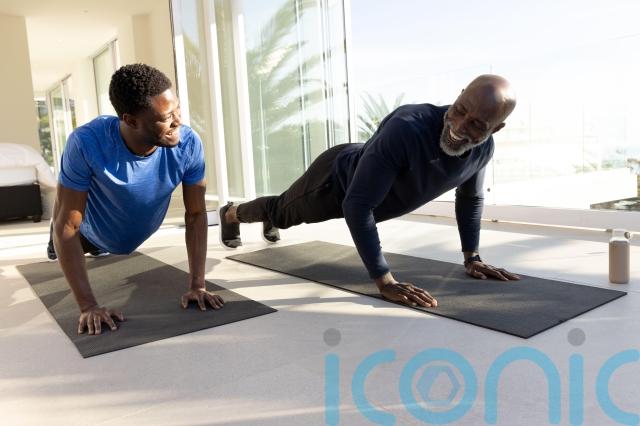
“I would also recommend some sort of variation of a plank,” advises Riley. “A plank is a really good way to build strength and stability as you are stabilising through your shoulders, your hips and through your core.”
However, she recognises that holding planks for a long period of time can be challenging, so has suggested some options for beginners looking to work their way up to it.
“You can always start on your hands and knees and do knee taps,” suggests Riley. “For this, hover your knees off the ground and then tap them back down. Then as you get stronger, hover them off and hold for 20 seconds.
“Also, if your wrists aren’t super happy in this position, you can always go onto your elbows.”
3. Hip mobility exercises
“I am also a big fan of hip mobility, because I know it’s an area that a lot of people really suffer with. Lots of people have got tight hips or painful hips, and sometimes that comes from doing a lot of sitting,” says Riley.
“Everyone walks and goes up and down stairs, but that’s actually only moving that joint in two directions, forwards and backwards, and really that joint wants to move side to side and in a circle to keep it healthy and happy.”
She highlights how exercises like hip and leg circles can be done at anytime and anywhere, and can really help with your mobility.
“Stand up and pop your hand on a surface and lift one leg straight forward and back to standing 15-20 times and then lift it back for the same amount of reps,” instructs Riley, “You’re going to start to feel those glutes going, and then you can also lift it out to the side again for the same amount of reps.
“Then bring the knee forwards, and then circle it out to the side, and the round to the back so you’re doing a big hip or leg circle. This is a really good strengthening but also mobilising hip exercise.”
4. Tabletop toe taps
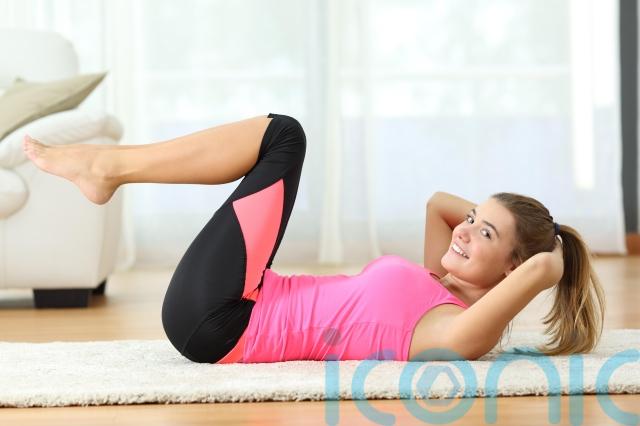
“If you sit at a desk all day long, you might have a tendency to start to hunch forward to look at your work screen,” recognises Riley. “Doing core exercises like tabletop toe taps is really good for strengthening the core to help you sit and stand up straight.”
For tabletop top taps, you start on the floor.
“Lie on your back and take your legs into a tabletop position, so your knees are bent,” instructs Riley. “Make sure your knees are above your hips and your shins are parallel to the floor, and then just tap one toe down at a time and bring them back up to table top position.
“Try to do that while breathing, but also without your back moving. So, make sure that you aren’t arching your back and are really working into that core. If you’re feeling really strong, you could curl forwards and keep your head off the floor while you tap your toes.”
5. Shoulder glides
“I think your shoulder mobility and the ability to move your arms is really important for your back and for how your shoulders feel, so an exercise like shoulder glides can be really great,” says Riley. “Start by standing upright against the wall, so the back of your head and shoulder blades are both touching the wall.
“Reach both your arms all the way up overhead, so the backs of your hands are also against that wall, and then draw those elbows down towards your waist and up again. Try to keep the back of your hands and your arms against the wall as you do that.”

Subscribe or register today to discover more from DonegalLive.ie
Buy the e-paper of the Donegal Democrat, Donegal People's Press, Donegal Post and Inish Times here for instant access to Donegal's premier news titles.
Keep up with the latest news from Donegal with our daily newsletter featuring the most important stories of the day delivered to your inbox every evening at 5pm.

This publication supports the work of the Press Council of Ireland and Office of the Press Ombudsman, and our staff operate within the Code of Practice of the Press Council. You can obtain a copy of the Code, or contact the Council, at www.presscouncil.ie, Lo-call 1800 208 080 or email: info@presscouncil.ie.