
Income tax changes and social welfare increases in Budget
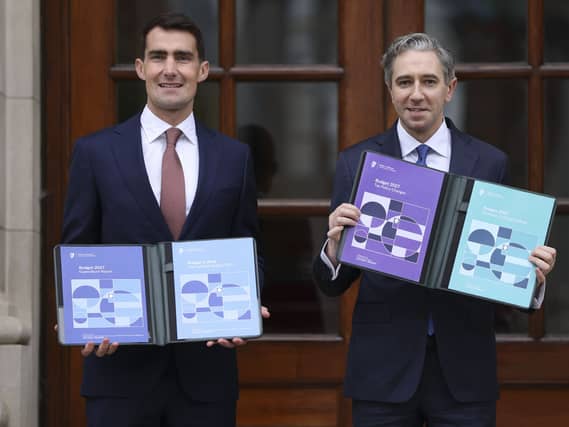

The Budget includes a personal income tax package worth 1.3 billion euro.
The Government has emphasised income tax changes to “give people more of their own money” as it revealed its annual Budget.
Finance Minister Simon Harris outlined increases to tax credits as well as the standard rate cut-off point for income tax as he began delivering the Budget in the Dáil shortly after 1pm.
However, the Budget was immediately derided as an “insult to workers” by Ireland’s opposition party Sinn Féin.
The Budget includes a personal income tax package worth 1.3 billion euro, with Mr Harris explaining: “I’m increasing the standard rate cut-off point by 2,500 euro to 46,500 euro, with proportionate increases for married couples and civil partners.
“I’m increasing each of the main tax credits, the personal employee and earned income tax credits by 125 euro, and I’m increasing the home care or tax credit by 100 euro.”
The income tax exemption in the childcare services relief will also widen as part of Budget 2027 – increasing by 5,000 euro to 20,000 euro.
Mr Harris also expanded on the Government’s investment savings scheme, which will have a tax-free threshold of 50,000 euro, a flat tax of 1% on the value of the account above that threshold, and a maximum contribution limit of 12,000 euro per year and no minimum contribution.
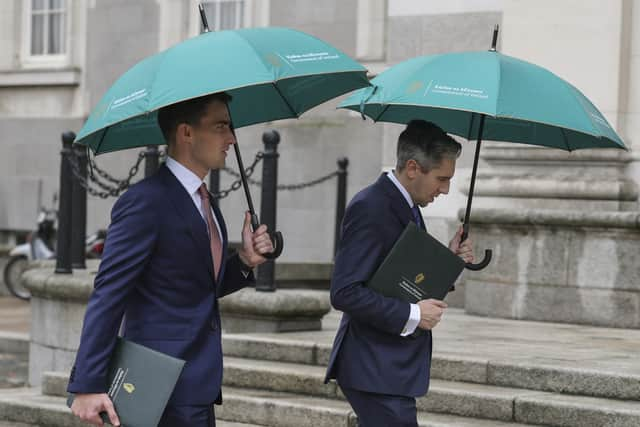
The carbon tax on home heating oil is being reduced and will not increase in the lifetime of the Government as Mr Harris acknowledged energy prices as the “most acute area of pressure” on households.
Mr Harris said there would also be no increase “in any form of tax either at the pump or in your home” during winter.
The Government will also increase the entry threshold for the USC 3% band by 1,600 euro, to 30,300 euro.
The rent tax credit will be increased by 150 euro to 1,150 euro while the help-to-buy scheme for first-time buyers will be increased by 5,000 euro to 35,000 euro.
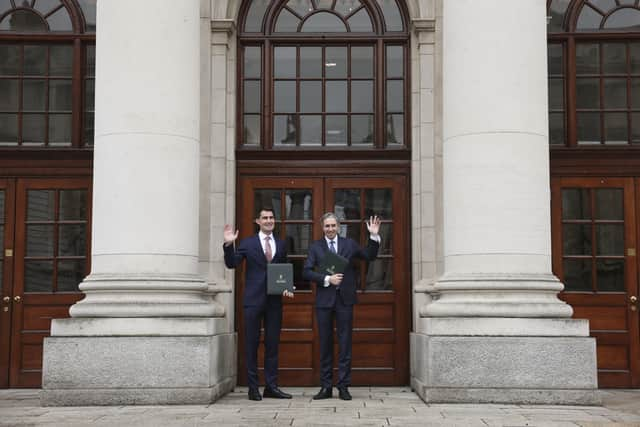
There will also be a 7% derelict property tax in this year’s Finance Bill.
He also announced a 15 million euro support package for rural pubs and a one euro excise increase on the cost of a pack of cigarettes, with pro-rata hikes on other tobacco products.
Mr Harris was followed by Fianna Fáil deputy leader and Public Expenditure Minister Jack Chambers, who announced that current expenditure growth will be cut to 6% next year.
Mr Chambers said the public finances were vulnerable to a concentration of corporation tax receipts and claimed committing to permanent expenditure increases would be “akin to writing cheques today that we may not be able to pay tomorrow”.
He said the Government is to reduce the maximum childcare fees paid by parents from 735 euro to 550 euro per month for children up to senior infants.
This will save parents 2,220 euro per child per year.
There will be a 10 euro increase in weekly social welfare rates, the Public Expenditure Minister said.
Mr Chambers said this would “more than offset” projected inflation and benefit 1.6 million people including pensioners, job seekers, carers and disability scheme recipients.
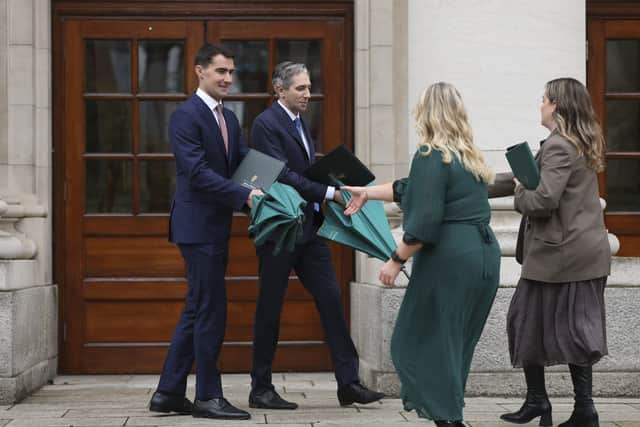
A new 500 euro cost-of-disability payment will be provided to an estimated 240,000 people in receipt of other long-term disability payments.
The minister said eligibility for free contraception will also be expanded to those aged up to 37.
Meanwhile, the weekly fuel allowance and living alone allowance will increase by five euro and three euro respectively.
The Department of Housing will be given 9.4 billion euro for spending, including 2.2 billion to continue to support the social housing needs of 110,000 households through housing assistance, rental accommodation and social housing current expenditure schemes.
A total of 170 million euro will be allocated to climate action and the environment, including 25 million euro for the EU just transition programme in the Midlands.
Mr Chambers said the State is to give funding to recruit up to 1,000 trainee gardaí and an intake of 850 new permanent Defence Force members next year.
He also said the student contribution will be permanently reduced by 150 euro while SUSI maintenance grants will go up by 4.5% from January.
Mr Harris said that the Government could not achieve everything it wanted in a single Budget but said Tuesday’s measures would set the country “on a path, a trajectory, a way forward”.
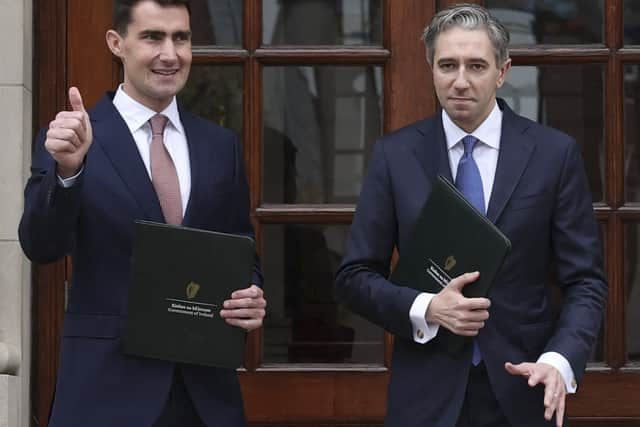
He said: “The path we are setting out here today is an optimistic one for Ireland.”
Mr Chambers said success could not be measured by “the level of our spending”, adding: “That success must be measured in the homes that are built, in hospitals, waiting lists that are reduced, in childcare places created, in infrastructure delivered, and ultimately in whether people at home can see and feel a difference in their daily lives.”#
Sinn Féin said the Budget “fails completely” as it accused the Government of leaving workers behind.
The party’s finance spokesman Pearse Doherty said the “majority” of Irish workers “won’t get a sniff at” the 750-euro tax break.
“Time and time again, this Government leaves ordinary Irish people behind, those who keep Ireland moving, those who work hard and who are trying to build a life,” he said.
“Your Government is hell-bent on making life harder with the choices that you make.”
Mr Doherty also said families across Ireland “desperately needed” the Government to act on the spiralling cost of energy and fuel.