Search


22 Apr 2026
Search
22 Apr 2026

Please allow ads as they help fund our trusted local news content.
Kindly add us to your ad blocker whitelist.
If you want further access to Ireland's best local journalism, consider contributing and/or subscribing to our free daily Newsletter .
Support our mission and join our community now.
To continue reading this article, you can subscribe for as little as €0.50 per week which will also give you access to all of our premium content and archived articles!
Alternatively, you can pay €0.50 per article, capped at €1 per day.
Thank you for supporting Ireland's best local journalism!


Witnesses who saw George Nkencho while he was confronted by gardai say he appeared to brandish a knife at them, an inquest into his death has heard.
Mr Nkencho, 27, died outside his home in Dublin in December 2020 after being shot multiple times by members of a Garda armed support unit.
The incident was the subject of an independent criminal investigation by the then Garda Siochana Ombudsman Commission (GSOC), now Fiosru, which concluded in June 2023 with the submission of an investigative file to the director of public prosecutions.
After a decision not to pursue any criminal prosecution in relation to the shooting, an inquest into his death began this week at Dublin District Coroner’s Court.
The second day of proceedings was held on Wednesday and heard from witnesses who saw gardai approach Mr Nkencho on a grassy area between houses and a primary school in Cherryfield, Hartstown.
This interaction came after gardai were alerted to an incident in which Mr Nkencho punched an assistant manager of a nearby shop.
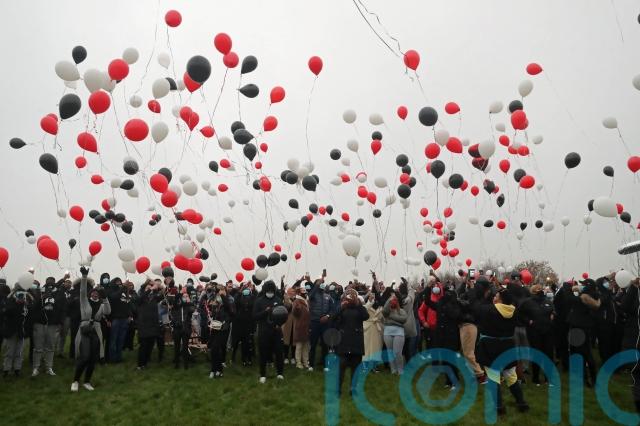
Former firefighter and paramedic Richard Desay told the inquest he was closing his blinds when he saw an unmarked garda car pull up on the green close to his house.
He said the grey Hyundai garda car pulled across a footpath to block Mr Nkencho’s route, in what appeared to be an effort to contain him, it was shortly followed by a marked garda car.
Mr Desay said a garda “tried to engage George” who was “gesturing and kind of bouncing around” before raising a knife “above his head” and stepping “towards gardai shouting and waving a knife”.
He said he could not see how big the knife was but saw a “significant flash of light” when the sun hit the blade, adding that he had “serious concerns for the safety of the gardai”.
He said one of the gardai took out his baton and he became particularly worried about an officer who had become isolated from the others.
The court was shown a short clip filmed by Mr Desay on his phone showing Mr Nkencho walking around the garda cars.
Mr Desay said the two cars were joined by a small garda van and later by another vehicle, which he recognised to belong to an armed garda unit.

Mr Nkencho and the gardai moved out of Mr Desay’s sight and after he heard there had been a fatal incident he wrote down what he remembered and contacted GSOC.
The jury was also read a statement from a man who had recorded videos on his phone of Mr Nchenko’s interactions with the gardai in the area.
Kevin Nolan said he saw gardai charge towards Mr Nkencho with batons, before following the man in the direction of one of the housing estates.
Mr Nolan also said he walked towards the activity and later heard five or six bangs but did not initially think they were gunshots.
When he arrived at the house, he heard someone shout “they shot my brother”.
He said he had uploaded some videos to Snapchat and Facebook.
Earlier, the court heard evidence focused on an incident preceding the shooting in which previous witnesses said Mr Nkencho punched a retail worker at a Eurospar and brandished a knife, before entering an adjoining post office.
It detailed how there had been commotion in the Hartstown Eurospar after Mr Nkencho punched the store’s assistant manager.
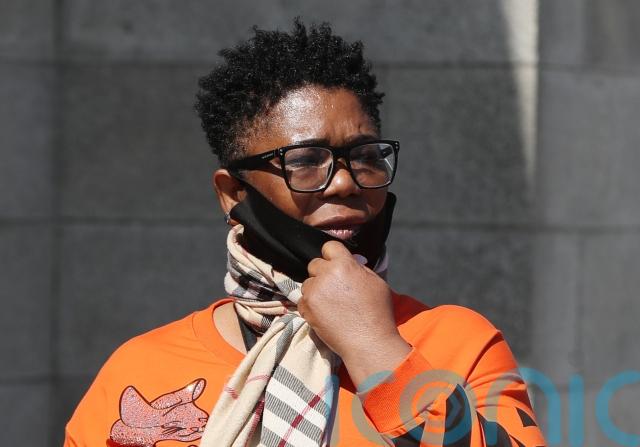
He then moved towards the exit of the store, where he interacted with a man who appeared to be known to him, before re-entering the complex to join the queue of the post office.
Gavin Pritchard told the court he had heard commotion and shouting while queuing in the post office but did not see the incident in the shop.
He saw a man who had been shouting and later recognised this to be Mr Nkencho, having taken an FAI coaching course with him in 2014, and went over to speak to him outside the shop.
He said he had not seen him since 2014 but when he told Mr Nkencho who he was, he seemed to recognise him and calm down.
Mr Pritchard said Mr Nkencho said he wanted to go to the post office and that he told him to “go on”, and they both joined the queue.
He said he thought something was not right with Mr Nkencho, that he did not look like he was under the influence of anything but he “did not look like a fella in his right frame of mind” and “looked lost in a sense”.
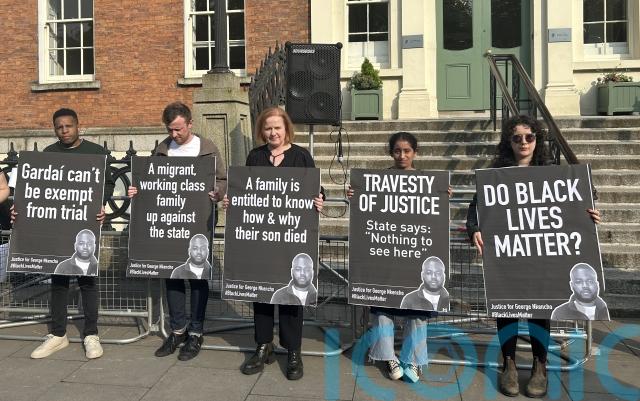
The witness said he left after being served at the post office and believed Mr Nkencho seemed calm at this point.
The court was then shown CCTV footage of their interaction outside as well as Mr Nkencho engaging with the postmistress at the top of the line.
The postmistress, Martina Shiels, told the inquest she had heard shouting in the shop and saw Mr Pritchard leave the queue to interact with Mr Nkencho.
She said Mr Pritchard told her he had “sorted it” and told Mr Nkencho he “couldn’t be doing that in the shop”.
She said Mr Nkencho had queued for about nine minutes before being served.
She said he had inquired about his social welfare payment but was told it would not be paid until the next week.
Ms Shiels said he understood what he was told and he left.
She said staff and other customers were nervous at the time.
Ms Shiels said he had been a customer before and there had not been any previous issues.
Aideen Hughes, who was pregnant at the time, said she was “really afraid” when she saw Mr Nkencho in the post office.
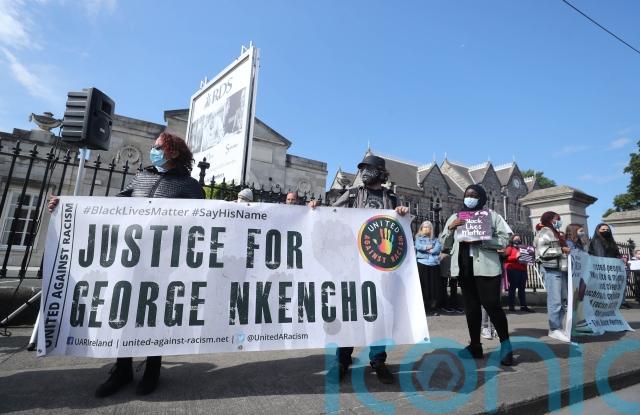
She said he made a gesture towards his trousers that led her to believe he had a knife and that he seemed to have “a stare on him” and seemed in a “state of mental health or shock.”
The then-manager of the Eurospar, Niall Kinahan, said Mr Nkencho had appeared “really wound up” and “on edge” when pacing around the complex, saying it was clear he did not want anyone near him.
Other witnesses also told the inquest he appeared “menacing” and “agitated”.
Mr Kinahan said this was in contrast to how he had seen him in the shop on other occasions, where he appeared medicated and to be moving slowly.
He told the court he was not sure how to deal with Mr Nkencho and allowed him to join the post office queue as he did not want to cause conflict or escalate the situation.
He said he prevented anyone else from joining the queue and gestured to others that they should get out of the way.
The inquest is a fact-finding process to deliver a verdict on the circumstances of the death, rather than the jury proportioning blame or exonerating anyone.
The hearings are listed for three weeks, sitting Tuesday to Friday.

Subscribe or register today to discover more from DonegalLive.ie
Buy the e-paper of the Donegal Democrat, Donegal People's Press, Donegal Post and Inish Times here for instant access to Donegal's premier news titles.
Keep up with the latest news from Donegal with our daily newsletter featuring the most important stories of the day delivered to your inbox every evening at 5pm.

This publication supports the work of the Press Council of Ireland and Office of the Press Ombudsman, and our staff operate within the Code of Practice of the Press Council. You can obtain a copy of the Code, or contact the Council, at www.presscouncil.ie, Lo-call 1800 208 080 or email: info@presscouncil.ie.