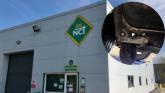
'Literally put a sock in it!'- NCT centre gobsmacked by customers DIY cover-up fail
Search


13 Apr 2026

Please allow ads as they help fund our trusted local news content.
Kindly add us to your ad blocker whitelist.
If you want further access to Ireland's best local journalism, consider contributing and/or subscribing to our free daily Newsletter .
Support our mission and join our community now.
To continue reading this article, you can subscribe for as little as €0.50 per week which will also give you access to all of our premium content and archived articles!
Alternatively, you can pay €0.50 per article, capped at €1 per day.
Thank you for supporting Ireland's best local journalism!

Pic: Oscar Mooney, chair, Beta Bajart, film-maker, Anja Murray, ecologist, Yosef Dvores, ecologist and Tommy Early, Mount Allen Farm

Some 48 people attended a screening in the Bee Park Community Centre, Manorhamilton, of The Forest Midwife by Beta Bajgart, film-maker with See the Light Productions.
The Film portrayed the growing of native trees on 27 out of 40 acres of land in Co. Roscommon by Catherine Cleary and her family. Catherine Cleary, a native of Dublin, is a writer and social entrepreneur, and also co-founder of the Pocket Forests initiative.
The screening was hosted by local community group Our Native Glens, and the panel discussion after the screening was led by Oscar Mooney, a forestry PhD student and member of Our Native Glens. The panel members consisted of Beta Bajgart (Film-maker), Anja Murray (Ecologist, Author & Broadcaster), Yosef Dvores (Ecologist and Chairperson of Our Native Glens), and Tommy Earley (Mountallen EcoFarm).
Following the screening, discussions led to some thoughtful and respectful insights into the topic of forestry in County Leitrim.
How the word ‘forest’ has led to negative connotations in our minds, associated with darkness, and Sitka spruce plantation domination, but also, more importantly and significantly, with the idea of loss from the landscape. Loss of busy, active farmed land, with crops or animals and the people who farmed them.
Councillor Eddie Mitchell referred to the way we feel about the loss of people. How we need and want people to come and live in the community. He mentioned that he sees every patch of Sitka as a family gone. Investors planting native trees in the landscape is better than Sitka, but really, he says, “they need to plant themselves”.
READ MORE: Superb Leitrim shock Sligo for first Connacht SFC win over Yeatsmen since 2011
Other people referred to the colonialism aspect of the loss of land from local ownership. Danish Banks and/or other investment companies could come in and pay significantly more money for land than locals could afford, leading to resentment against Sitka Spruce plantations.
Local musician and Artist Dee Armstrong mentioned how County Leitrim has had two significant losses: firstly, during the famine, when the population was between 150,000 and 160,000, and declined significantly afterwards. And secondly, during the 60’s and 70’s where one in every two people left the area.
Other voices reinforced the importance of having trees in the right place. Leitrim is lucky to still have some important semi-natural grasslands, with important native and rare flowers such as the small white orchid and Irish ladies tresses. Some of our grasslands are also home to the rare and native Marsh Fritillary Butterfly. So native trees do have an important place in the landscape, but so too do other habitats such as grasslands and boglands.
Anja Murray stressed the importance of leaving corners for natural regeneration to allow scrub and thickets of blackthorn to grow.
READ MORE: Honouring Leitrim man's life and sculptures on his first anniversary
“Most of the time we have to do absolutely nothing”. Tommy Earley mentioned how, as farmers, we can significantly improve the nature conservation values of our farms by simply allowing our hedgerows to fill out and grow thicker. He mentioned technological improvements make it easier for us to remove scrub, but just because the technology is there doesn’t mean that we have to use it.
Another Manorhamilton Native noticed the gender imbalance in the room was 70% female, and asked the potentially loaded question: Is it only women who care about the environment?
Our Native Glens, based in County Leitrim, continues to carry out voluntary nature activities throughout the year, including tree planting, invasive removal (rhododendron ponticum and Himalayan balsam), tree-cycling, nature recording, training and awareness-raising walks and talks.

Subscribe or register today to discover more from DonegalLive.ie
Buy the e-paper of the Donegal Democrat, Donegal People's Press, Donegal Post and Inish Times here for instant access to Donegal's premier news titles.
Keep up with the latest news from Donegal with our daily newsletter featuring the most important stories of the day delivered to your inbox every evening at 5pm.

This publication supports the work of the Press Council of Ireland and Office of the Press Ombudsman, and our staff operate within the Code of Practice of the Press Council. You can obtain a copy of the Code, or contact the Council, at www.presscouncil.ie, Lo-call 1800 208 080 or email: info@presscouncil.ie.