Search


07 Mar 2026
Search
07 Mar 2026

Please allow ads as they help fund our trusted local news content.
Kindly add us to your ad blocker whitelist.
If you want further access to Ireland's best local journalism, consider contributing and/or subscribing to our free daily Newsletter .
Support our mission and join our community now.
To continue reading this article, you can subscribe for as little as €0.50 per week which will also give you access to all of our premium content and archived articles!
Alternatively, you can pay €0.50 per article, capped at €1 per day.
Thank you for supporting Ireland's best local journalism!


The strawberries have been hulled, the cream whipped and the whites pressed for another two glorious weeks of tennis balls thwacking base lines and spectators shouting, ‘C’mon Tim!’ at every opportunity. Wimbledon 2025 has begun, but this year it will feel different for lots of fans, because two-time champion Sir Andy Murray, 38, will not be on court.
His mum, Judy, 65, will be there though and is looking forward to experiencing the tournament without the “huge pressure and huge stress” visited on her sons, Andy, and seven-time Grand Slam doubles champion Jamie, 39, at the height of their playing careers.
“When the boys played as juniors, I found it enormously exciting,” says Murray, who remembers watching Wimbledon on the sofa with her mum, on their black and white telly, as a child in Scotland. “In the days where all hopes of any success were really pinned on them, after Tim Henman and Greg Rusedski retired, I went to watch their matches and left. I didn’t hang around,” she remembers. “I am looking forward to going back, watching anybody else and just enjoying the whole atmosphere of this wonderful, wonderful tournament.”
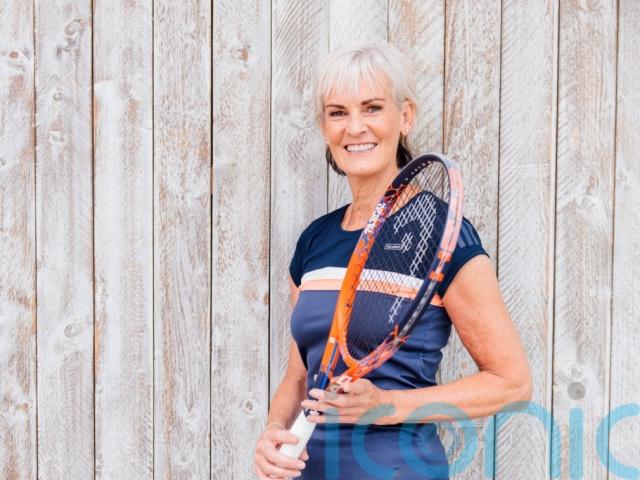
Jamie is in the doubles draw, but Andy retired at the Paris Olympics last summer. “I’m very happy he’s retired. He went through so much to try to repair the hip, rehab the hip, give himself a chance to compete again on the biggest stages,” says Murray. “The last five years or so, you had your heart in your mouth all the time, hoping nothing else was going to break down in his body, because when he got the hip injury [around 2016], he was number one in the world. He was playing the best tennis of his life.”
That time was “amazing to be part of, certainly not something I ever would have imagined my kids or myself doing, coming from Scotland, where we have no real track record of success in tennis,” says Murray with pride. “The fact they both made it to world number one, have Grand Slams, Olympic golds and come from a little town [Dunblane] in the middle of Scotland that has terrible weather and not much in the way of decent tennis facilities, is really quite remarkable.”
On X, Murray’s bio description reads, tongue-firmly-in-cheek: “Tennis coach. Pushy mum – allegedly.” Having started out as both boys’ coach and just for being a woman in a sport, the sexism is irritating and predictable, but Murray is clearly tough and willing to make herself heard – whether that’s calling out Tennis Scotland for not using her boys’ success for the good of grassroots tennis (“It disappoints me that nobody really capitalised on the huge opportunity there was for our sport, having had front and back page coverage for the best part of 15 years,”) or challenging traditionalists who don’t want tennis courts overrun by pickleball (“It’s quite noisy, but it’s a lot of fun,” says Murray of the new racket sport), which she flags in her new novel, Game, Set & Murder.
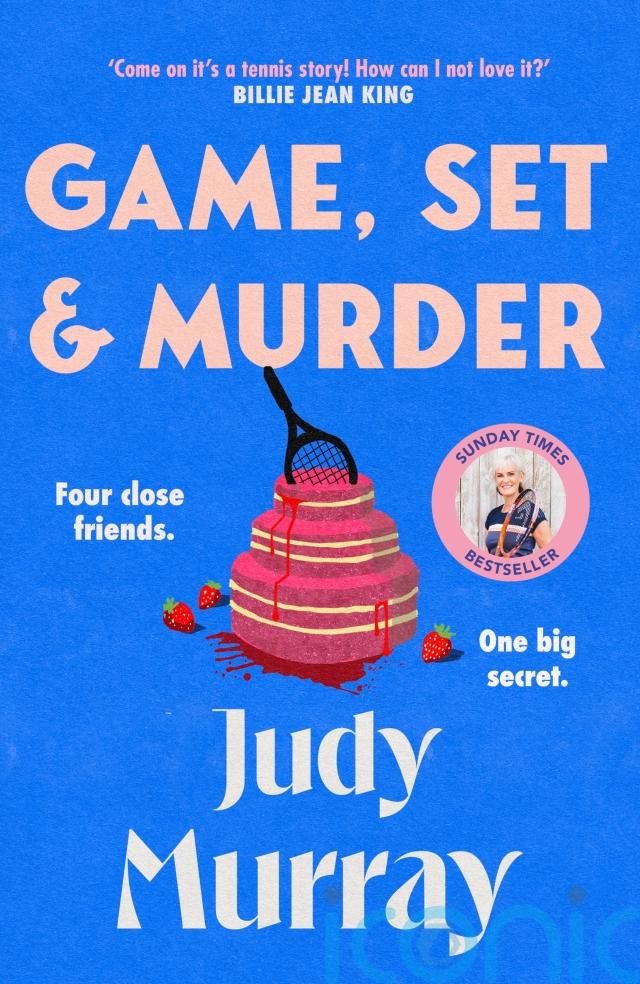
A whodunnit set in a tennis club, it revolves around four women whose male coach is poisoned at an afternoon tea celebration. “It’s all the things I love: A whodunnit, tennis, cake,” says Murray happily.
Born out of a penchant for murder mysteries and inspired by hit TV show, Big Little Lies (“I just loved the way that unfolded”), Murray calls herself “a real grammar and spelling geek,” which is how she got into writing. Her 2014 Strictly Come Dancing partner, Anton Du Beke, sent her one of his novels to proofread during Covid. Murray got her red pen out and sent it back covered in notes. “He phoned me and said, ‘Could you not just have said, ‘Well done, Anton. That was brilliant?’” But he did encourage her to write her debut, The Wild Card, which Murray used to raise awareness of issues that exist for women in sport, noting archly that “fiction allows you to point the finger at things without pointing a finger at anyone specifically”.
At 65 and an OBE, former British Fed Cup team captain Murray, who won 64 tennis titles in Scotland during her own playing career, no longer has qualms about speaking her mind. “You spend a lot of your life worrying about what people think of you,” she says. “You definitely get to a stage where you don’t really care.”
She continues: “I’ve been in lots of situations, especially with women’s sport, where I put my head above the parapet a lot.” It is left to the old guard who have nothing to lose anymore to do a lot of that tough stuff.”
She understands why young tennis players can be reluctant to speak out through worry it could jeopardise funding, sponsorship or even their place on a team, but says some will need to take on the mantle at some point. “Look at Billie Jean King, still championing equality in so many different ways, and has done for many, many years. But none of us are going to be around forever. Somebody is going to have to step up and take that on,” she says.
One area her head has very much been above the parapet is on the subject of transgender women competing in elite women’s sport. “There have always been categories in sport and they’re there to ensure fairness and safety,” says Murray. From her experience working with youngsters, pre-puberty she’s seen “not so much difference between the boys and the girls in terms of strength” but “once you go through puberty, the boys really pull away from the girls in terms of height, strength and speed.”
“I’ve always believed that anyone who is biologically male and has gone through puberty is at a huge advantage over the girls,” she says, and when asked for her thoughts on the UK Supreme Court’s April ruling that the legal definition of a woman is based on biological sex, says: “The ruling for me was just common sense. And welcome back, common sense.”
Murray, who works with the WTA (Women’s Tennis Association) and is running a three-year tennis program for women and girls in Saudi Arabia – in a role criticised for ‘sportswashing’, but which Murray calls “a huge opportunity to be a catalyst for change” – says “women’s sport is in the best place it’s been in my lifetime”. But adds there’s still “a long way to go”.
“If you invest properly in women’s sport and sportswomen, and get the performance up to a world-class level, where you can win medals. If the performance is that good, it is watchable, it’s televisible and therefore it’s sponsorable,” she says. “You get eyes on screens, bums on seats and then you enormously increase the visibility, and then you make sport really cool for women.”
— judy murray (@JudyMurray) July 4, 2024
A spokesperson for Tennis Scotland commented: “Grassroots tennis participation in Scotland is at an all-time high, including record club membership of 81,428 people, while there has been significant recent investment in public tennis facilities – including the refurbishment of 163 park courts and construction of three purpose-built indoor community tennis centres.”
Game, Set & Murder by Judy Murray is published in hardback by Orion Books, priced £20 (ebook £9.99). Available July 3.

Subscribe or register today to discover more from DonegalLive.ie
Buy the e-paper of the Donegal Democrat, Donegal People's Press, Donegal Post and Inish Times here for instant access to Donegal's premier news titles.
Keep up with the latest news from Donegal with our daily newsletter featuring the most important stories of the day delivered to your inbox every evening at 5pm.

This publication supports the work of the Press Council of Ireland and Office of the Press Ombudsman, and our staff operate within the Code of Practice of the Press Council. You can obtain a copy of the Code, or contact the Council, at www.presscouncil.ie, Lo-call 1800 208 080 or email: info@presscouncil.ie.