Search


13 Apr 2026
Search
13 Apr 2026

Please allow ads as they help fund our trusted local news content.
Kindly add us to your ad blocker whitelist.
If you want further access to Ireland's best local journalism, consider contributing and/or subscribing to our free daily Newsletter .
Support our mission and join our community now.
To continue reading this article, you can subscribe for as little as €0.50 per week which will also give you access to all of our premium content and archived articles!
Alternatively, you can pay €0.50 per article, capped at €1 per day.
Thank you for supporting Ireland's best local journalism!

Ronan Scully with beneficiaries of the Offaly Camino Walk 2025 in Kenya

There is a kind of suffering that does not make noise. It does not march. It does not shout. It does not always make the evening news. It lives instead in the quiet.
In the parent in Dublin who says they’ve “already eaten” so their child won’t feel guilty taking the last portion. In the young worker in Tipperary staring at their bank account at the end of the month, wondering how a full week’s work still isn’t enough. In the pensioner in Offaly who sits in a darkened room, wrapped in layers, measuring out heat in hours as if it were medicine. It lives in the hesitation before turning on the kettle or putting fuel in the car. In the dread of opening a bill. In the silent arithmetic of survival that now shapes ordinary lives.
Will you pray for me?
This is what the cost of living crisis looks like. Not numbers. Not graphs. Not policy briefings. But human lives, slowly tightening under a weight they did not create. And increasingly, these stories are not distant. They are being entrusted to me, quietly, personally, and often with a vulnerability that is hard to put into words. Emails that begin with apologies for “bothering” me. Messages sent late at night, when the worry feels heaviest. Phone calls where there are long pauses, where the silence says more than words ever could. And again and again, one simple, humbling request: “Will you pray for me?"
People are not just asking for solutions. They are asking not to be forgotten. They speak of cupboards growing emptier. Of choosing which bill cannot be paid this week. Of the quiet strain this places on marriages, on families, on their own sense of self-worth. Some speak through tears. Others speak with a calm that is almost more painful, because it has the sound of someone who has run out of energy to hope.
And in those moments, you realise something profoundly unsettling, that people are carrying far more than they are ever showing the world. It is a privilege to be trusted with these stories. But it is also a burden. Because once you have heard them, truly heard them, you cannot unknow them. And you cannot pretend that this crisis is abstract or distant. It is here. It is now. And it is breaking people, quietly.
READ NEXT: THE BIG READ: The Middle East conundrum and its ripples into Tullamore and Offaly
A prosperous nation, anxious people
Ireland is, by many measures, a successful country. We speak of growth, of opportunity, of global standing. We attract investment. We celebrate progress. On paper, we are thriving. And yet, beneath that story another reality unfolds. Rents that defy reason. Homes that remain out of reach. Food prices that quietly climb week after week. Energy bills that arrive not as routine correspondence, but as moments of fear. For many, budgets are no longer plans. They are battles. And the hardest part is not only the scarcity. It is the uncertainty. The constant, gnawing question, "Will I have enough tomorrow?"
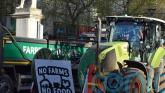
Because this crisis is not inevitable. It is shaped by choices, about housing, wages, energy, and political priorities, that continue to place the heaviest burden on those least able to carry it. Charity matters, but it is not enough. Charity may ease today’s suffering, but justice is what prevents tomorrow’s. And yet, at a time that demands courage, we are offered caution. At a time that cries out for urgency, we are given delay. We see frustration spilling out onto our roads in recent days, with blockades and protests disrupting daily life. These actions reflect a deep anger and a sense of being unheard. Protest has its place, and it must always remain peaceful and mindful of others, especially those already struggling or in need of care. But we must also ask, what kind of society creates the conditions where people feel they have no other way to be seen or heard? The deeper crisis is not the disruption on our roads. It is the quiet suffering in our homes. The cost of delay is paid in cold houses, in skipped meals, in parents lying awake at night trying to make impossible sums add up. It is paid in the silent erosion of hope.
A global echo of the same pain
Look beyond our shores, and the same story repeats. Across Europe, across the United States, across many parts of the developing world especially in Africa, this crisis deepens old wounds and creates new ones. Families choosing between food and medicine. Workers holding multiple jobs and still falling behind. Entire communities living one unexpected expense away from collapse. This is not isolated. It is systemic. And increasingly, it is normalised. That may be the most dangerous part of all.
More than economics: A spiritual crisis
Because what we are living through is not just an economic crisis. It is a spiritual one. A crisis that exposes something deeper than inflation or policy failure. A crisis that reveals who we have become and who we are in danger of becoming. There is, in this moment, a kind of spiritual deficit, a thinning of compassion, a shrinking of imagination, a quiet acceptance of inequality that would once have shocked us. We have learned, slowly and almost without noticing, to live alongside suffering without being moved by it. And that should disturb us. Because when a society begins to lose its capacity to feel, it begins to lose something far more valuable than wealth. It begins to lose its soul. "What good is it for someone to gain the whole world, yet forfeit their soul?" (Mark 8:36)
The breaking of a Covenant
There is an unspoken agreement that holds any society together. That if you work hard, you can live with dignity. That if you fall, you will not be abandoned. That the vulnerable will be protected. That agreement is beginning to fracture. People feel it. Not as theory, but as lived reality. The sense that the system is no longer failing by accident, but functioning in a way that leaves too many behind. The sense that indifference has crept in where responsibility once stood. And when that trust erodes, something fundamental begins to break. Because a society is not held together by economics alone. It is held together by care and compassion and especially for the most vulnerable in our country and world or so it should be!
READ NEXT: THOUGHT FOR THE WEEK: Life is not just short - it is sacred notes Offaly columnist
The failure of leadership
At a moment that demands boldness, we are offered caution. At a moment that calls for imagination, we are given incrementalism. At a moment that cries out for moral courage, we are met with careful language and limited ambition. It is not that solutions do not exist. It is that the will to pursue them seems absent. And that absence is not neutral. It has consequences. Because every delay, every half-measure, every cautious compromise is carried, disproportionately, by those already struggling the most. "Woe to those who make unjust laws… to deprive the poor of their rights." (Isaiah 10:1–2). These are not ancient warnings for another time. They are words that echo into the present.
A mirror turned toward ourselves
But this moment does not only call leaders to account. It calls all of us. Because it is easier to point outward than to look inward. We live in a culture that has quietly trained us to accumulate more. To want more. To consume more. To measure success by what we have rather than who we are. And yet, all around us, there are people who have less than enough. How have we learned to live with that contradiction? When did excess become acceptable in the presence of need? When did we stop being disturbed? This crisis is asking us something deeply uncomfortable, not just what kind of society we are building, but what kind of people we are becoming.
Anxiety, burnout, and quiet despair
There is another layer to this crisis, less visible, but deeply felt. The mental and emotional toll. The exhaustion of constantly worrying. The strain of never quite feeling secure. The quiet despair that comes from doing everything “right” and still struggling. People are not just financially stretched. They are emotionally and spiritually depleted. And some are simply trying to get through the day without falling apart.
The quiet strength of community
And yet, amid all of this, there are signs of something else. Something stubbornly hopeful. Across Ireland and in many parts of the world, people are showing up for one another. In food banks and community centres. In small, unseen acts of kindness. In neighbours who check in, who share, who care. This is a different kind of economy. An economy of compassion. An economy that reminds us that even when systems falter, humanity does not have to. "Carry each other’s burdens, and in this way you will fulfil the law of Christ." (Galatians 6:2). But this cannot remain the work of the few. It must become the commitment of the many.
Call to wake up
There is a deeper danger than rising prices. It is the slow normalisation of indifference. The quiet acceptance that this is simply how things are. That some will struggle so others can thrive. That nothing can really change. But history tells us otherwise. Change has always been possible. Not because it was easy. But because people refused to accept what was. "Do not be overcome by evil, but overcome evil with good." (Romans 12:21). This is not a sentimental idea. It is a demanding one.
Thought for the week
So as your thought for this week, do not look away. When someone says they are “fine,” pause long enough to wonder if they are. When you pass someone tired, burdened, worn down by life, resist the urge to move on quickly. Notice. Because behind more doors than we realise, there are people lying awake at night, praying for strength, praying for provision, praying simply to get through another week. Some of them have written those prayers in emails. Some have whispered them down a phone line. Some have entrusted them, quietly, to others, hoping someone, somewhere, will carry them before God. Perhaps this week, you might become part of the answer to one of those prayers.
Ask yourself, "Where have I become comfortable with what should trouble me? Where have I mistaken awareness for action? What would it cost me to truly care?" And then, do something. Give, even when it stretches you. Listen, even when it slows you down. Speak, even when it feels uncomfortable. Act, even when you are tired. Because compassion is not a feeling. It is a decision. And the measure of a society is not how it treats the comfortable, but how it responds to the struggling, the forgotten, the unheard. Let me leave you with one of my prayers for Compassion and Courage: "God of the poor, the forgotten, and the weary, You see what we so often fail to see. You see the empty cupboards. The unpaid bills. The silent tears. You see the parent who worries through the night, The worker who feels they are falling behind, The elder who feels left behind. Forgive us for the ways we have grown comfortable. In a world that asks others to go without. Forgive us for our silence, Our hesitation, Our indifference. Break our hearts, gently, but truly, For what breaks Yours. Give us eyes that see beyond ourselves. Give us hearts that refuse to harden. Give us courage that does not wait for permission. Be near to those who are struggling today. Not as an idea, but as a presence. Provide for them. Sustain them. Remind them that they are not alone, and not forgotten. And let us not leave this work to You alone. Make us instruments of Your compassion. Make us builders of a more just world. Make us restless in the face of suffering, And determined in the face of injustice. Le cúnamh De, May we choose love when it is difficult, Generosity when it is inconvenient, And action when it is needed most. Amen."

Subscribe or register today to discover more from DonegalLive.ie
Buy the e-paper of the Donegal Democrat, Donegal People's Press, Donegal Post and Inish Times here for instant access to Donegal's premier news titles.
Keep up with the latest news from Donegal with our daily newsletter featuring the most important stories of the day delivered to your inbox every evening at 5pm.

This publication supports the work of the Press Council of Ireland and Office of the Press Ombudsman, and our staff operate within the Code of Practice of the Press Council. You can obtain a copy of the Code, or contact the Council, at www.presscouncil.ie, Lo-call 1800 208 080 or email: info@presscouncil.ie.