Search


08 Mar 2026
Search
08 Mar 2026

Please allow ads as they help fund our trusted local news content.
Kindly add us to your ad blocker whitelist.
If you want further access to Ireland's best local journalism, consider contributing and/or subscribing to our free daily Newsletter .
Support our mission and join our community now.
To continue reading this article, you can subscribe for as little as €0.50 per week which will also give you access to all of our premium content and archived articles!
Alternatively, you can pay €0.50 per article, capped at €1 per day.
Thank you for supporting Ireland's best local journalism!


Fractions of points. Marginal over-rotations. Steps of out twizzles. Agonising near misses have been the story of Great Britain’s 2026 Winter Olympics so far.
Yet there were times when even near misses were an outlandish aspiration. And sports whose peaks – or even foothills – have remained utterly unconquerable to home nation athletes.
Here the Press Association picks out the five Winter Olympic sports for which no amount of heavily-funded performance programmes would be likely to yield a place on the podium.
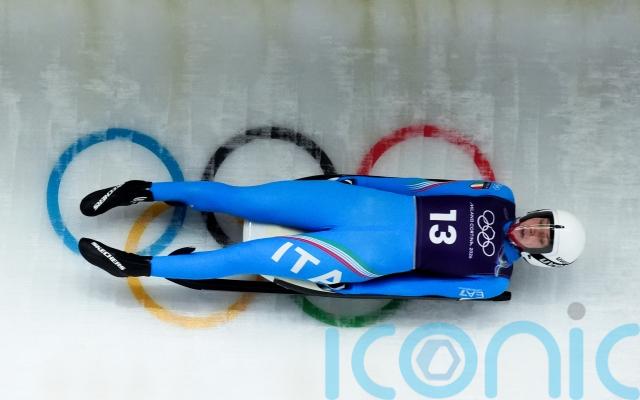
Shove a Briton down an ice chute head-first and the world seems to be their oyster. Ask them to lie back and it is a different story. Britain’s first Olympic luger, Gordon Porteous, was disqualified from the 1964 Games for failing to cross the finish line feet-first. Britain’s best ever luge result was 15th by Jeremy Palmer-Tomkinson at Lake Placid in 1980.
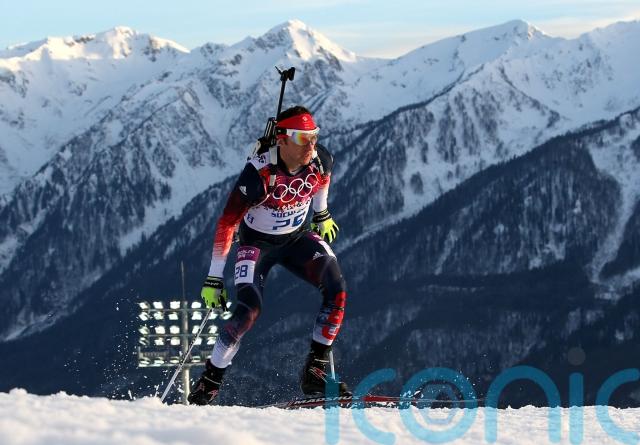
Over two dozen British competitors have strapped on smallbore rifles and skied off into the snowbound Olympic countryside since biathlon made its debut in its modern form in 1960. A sport with deep roots in ancient hunter-gathering techniques, they could not have done much worse if they had paused en route to pick nuts and berries.
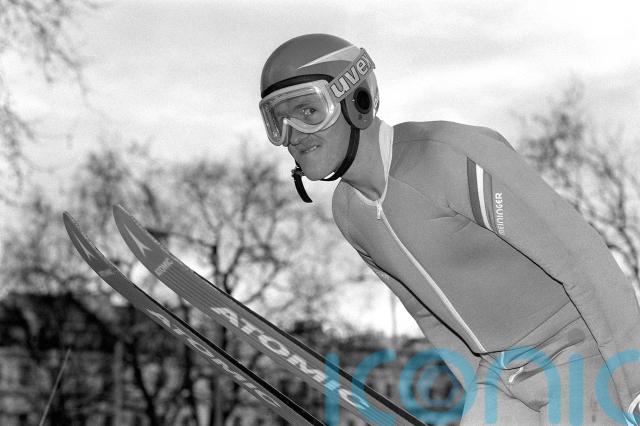
It was a case of what might have been for Eddie “The Eagle” Edwards, who blamed his pair of last-place finishes in Calgary in 1988 on a pair of misted-up glasses. Edwards proved so embarrassing to the stuffed shirts at the British Olympic Association they introduced stringent new qualifying criteria designed to put off would-be imitators. Team GB’s only subsequent ski-jumper, Glynn Pedersen, finished 43rd and 48th in his two events in 2002.
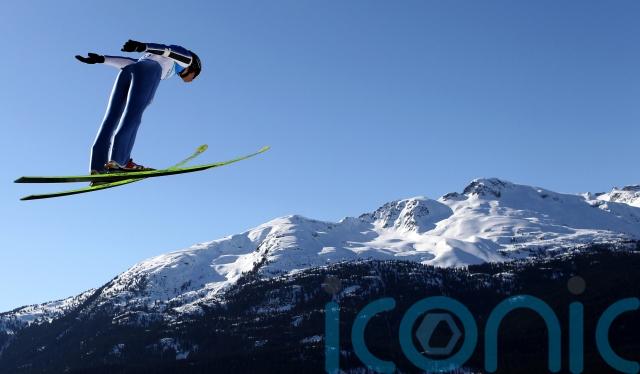
Blending cross-country and ski jumping, Nordic Combined evolved in Norway in the late 19th century as a means to identify the ultimate versatile skier. Clearly a guy from Cornwall, whose highest peak is the 420m Brown Willy, was always going to be disadvantaged. So credit to Percy Legard, Britain’s only ever competitor in the discipline, who panted home in 45th place in 1936.
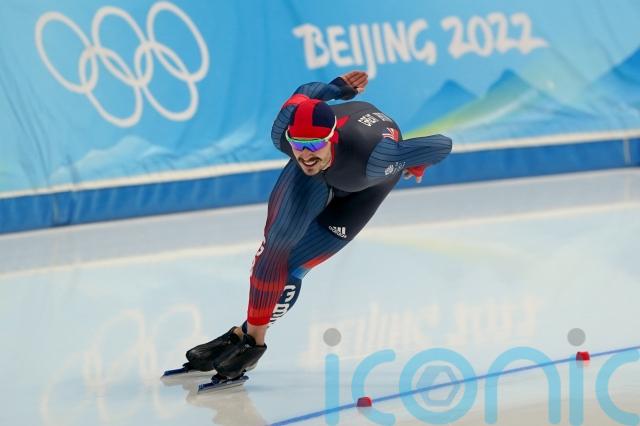
Blame global warming for Britain’s lack of long-track speed skaters. For the first few Winter Olympics multiple athletes, most of whom were Norfolk-based and honed their skills on East Anglia’s frozen fens, represented the Union Jack. Since the Fens stopped freezing, long track hopes have melted away. Dutch-born Cornelius Kersten and his partner, Ellia Smeding, ended a 30-year absence when they raced for GB in Beijing in 2022.

Subscribe or register today to discover more from DonegalLive.ie
Buy the e-paper of the Donegal Democrat, Donegal People's Press, Donegal Post and Inish Times here for instant access to Donegal's premier news titles.
Keep up with the latest news from Donegal with our daily newsletter featuring the most important stories of the day delivered to your inbox every evening at 5pm.

This publication supports the work of the Press Council of Ireland and Office of the Press Ombudsman, and our staff operate within the Code of Practice of the Press Council. You can obtain a copy of the Code, or contact the Council, at www.presscouncil.ie, Lo-call 1800 208 080 or email: info@presscouncil.ie.