Search


21 Apr 2026
Search
21 Apr 2026

Please allow ads as they help fund our trusted local news content.
Kindly add us to your ad blocker whitelist.
If you want further access to Ireland's best local journalism, consider contributing and/or subscribing to our free daily Newsletter .
Support our mission and join our community now.
To continue reading this article, you can subscribe for as little as €0.50 per week which will also give you access to all of our premium content and archived articles!
Alternatively, you can pay €0.50 per article, capped at €1 per day.
Thank you for supporting Ireland's best local journalism!


A mountaineer who has been climbing peaks since he was a toddler is preparing to achieve the fastest known time to summit and descend Mount Everest without supplemental oxygen.
Karl Egloff, a 44-year-old Swiss-Ecuadorian extreme mountaineer, has been working on his mission to set speed records on each of the Seven Summits – the highest mountains on each of the traditional continents – since 2014. Having already broken records on Argentina’s Aconcagua, Tanzania’s Kilimanjaro, Russia’s Elbrus, and the United States’ Denali, his next attempt will be on the world’s highest mountain: the Himalayas’ Mount Everest.
While there have been several attempts to speed climb the peak, none have succeeded without supplemental oxygen, meaning the feat could be Karl’s for the taking when he makes his attempt in May 2026.
However, as Karl said of the mountain: “I cannot control it… And you have to return healthy back home.”
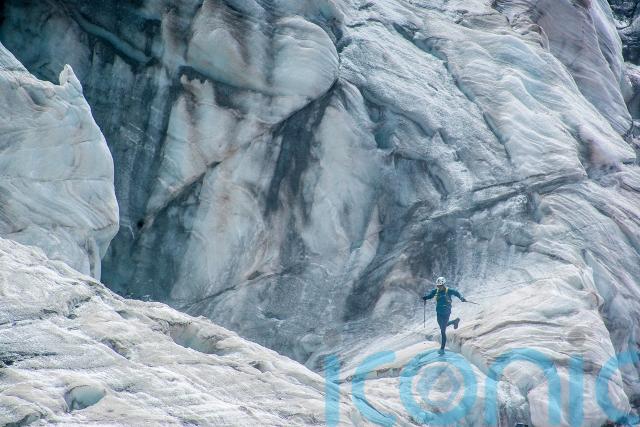
Karl has been climbing mountains for as long as he can remember.
Born in Ecuador to a Swiss father, a mountain guide, and an Ecuadorian mother, he would climb his homeland’s peaks with his dad, being carried in his backpack before he was old enough to climb himself. He and his father would head to the mountains almost every weekend, and he remembers even as a young child asking when they could go higher, when they could climb more technical peaks.
It followed naturally, then, that from the age of 13 he began working towards becoming a mountain guide, starting to lead his own groups at 15 years old.
“It was kind of predictable what was going to happen,” Karl told PA Real Life.
In 2012, Karl’s interest in speed climbing began. He was invited to join a fast ascent of Mount Cotopaxi, Ecuador’s second highest summit, and he “smashed the record”, climbing up and down the 5,897m active volcano in one hour and 37 minutes.
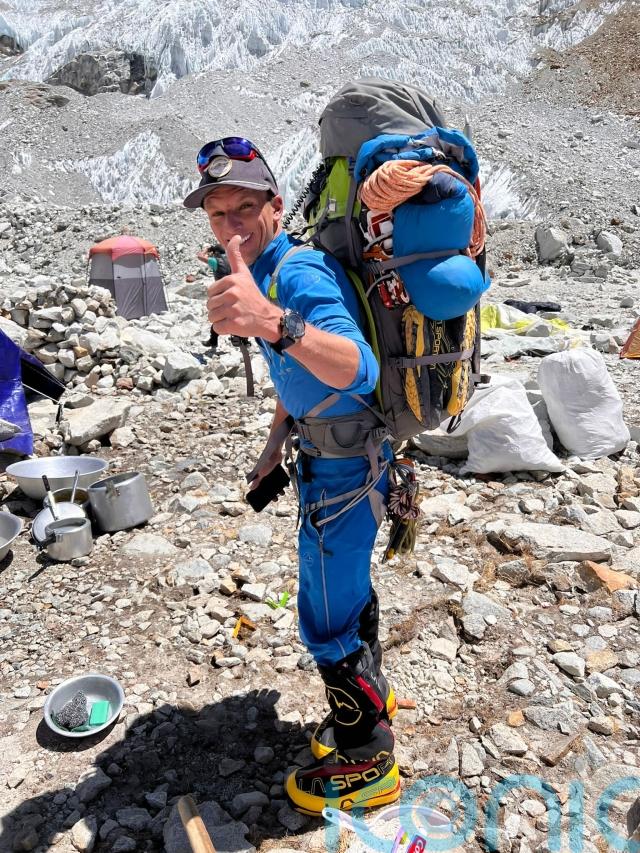
“When I came back, I was aware that I can do this, that I’m capable of doing this,” he said.
“Starting with Cotopaxi, I opened my eyes and I said to myself: ‘Okay, I’ve got to go higher. I’ve got to do my own project’. And this is where Seven Summits in speed climbing started.”
Since then, he’s been focusing on setting the speed climbing records on the world’s Seven Summits, and has already succeeded on Aconcagua, Kilimanjaro, Elbrus, and Denali. In the next 12 months, he will attempt the three remaining summits: Mount Vinson in Antarctica, the Carstensz Pyramid in New Guinea, and Mount Everest.
Ahead of his May attempt on the world’s highest mountain, he is preparing not only for the physical endurance feat, but for climbing above the so-called death zone of 8,000m.
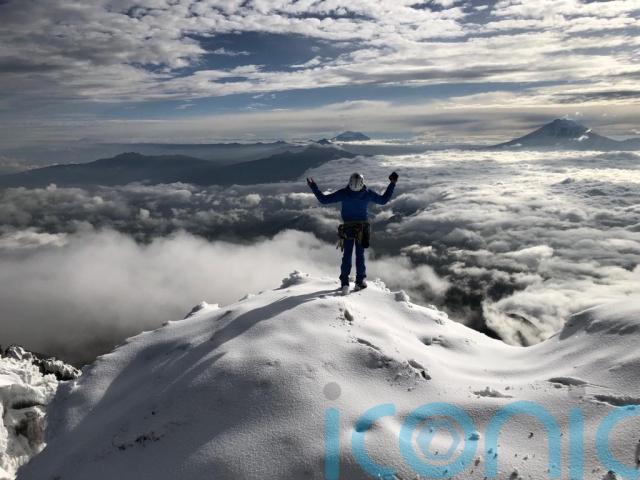
In the death zone, the level of oxygen – about one-third of that at sea level – is insufficient to sustain human life for an extended period. While most of those who climb Everest in modern expeditions use supplemental oxygen to limit the effects of the air’s reduced oxygen, Karl will be forgoing this luxury – making the need for speed not only essential for record-breaking, but to survive.
In the death zone, climbers experience hypoxia, which causes extreme shortness of breath, a rapid heart rate, increased stroke risk and potential heart failure as well as hallucinations and impaired judgment that can cause them to make fatal errors. They are also at risk of High Altitude Pulmonary Edema (fluid in the lungs), High Altitude Cerebral Edema (fluid in the brain), irreversible organ damage, and other deadly effects.
Karl first attempted to set the FKT record on Everest in 2025, making it to Camp Three at 7,200m, but poor weather forced him to turn around before the summit push. If successful this time, it will be his first summit of Everest.
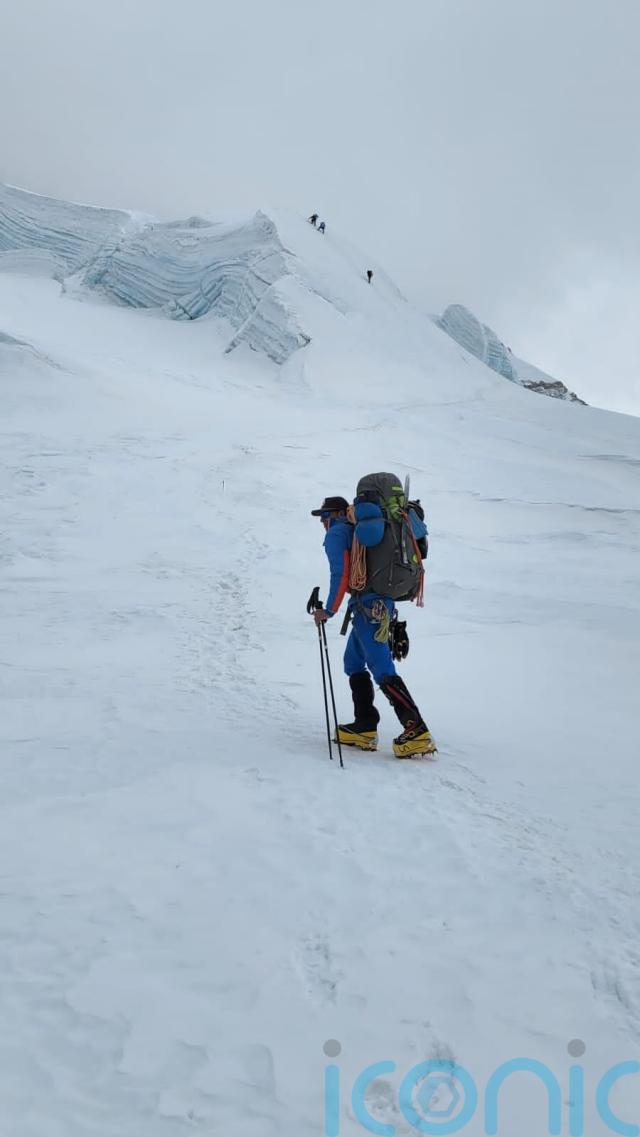
“That is where I got the thin air experience, the death zone experience, and also figuring out that it’s completely another sport, starting in that zone,” Karl said of his last attempt.
“It’s so hard, and this is what makes Everest very, very, very hard. Of course, from the viewpoint of someone technical, it’s not a technical mountain at all… But your body has to struggle with the lack of oxygen.
“For me, the most challenging thing is to go down, because you will be facing all these hallucinations, you will be facing all this tiredness where you sleep while you’re walking.
“This is what makes Everest very tough – because there is no taller mountain than Everest, so there will be no other mountain where you will be spending more time in the death zone than Everest.”
On Everest, he said, the biggest hazard is clear: “It’s the fatigue.”
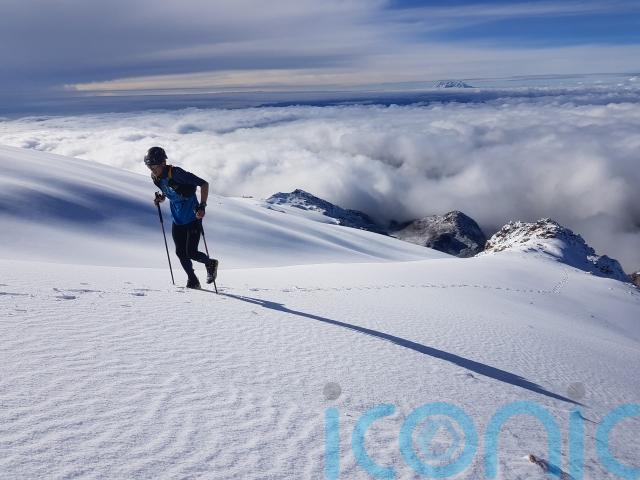
Karl is now in training for his Everest attempt, and he will spend two-and-a-half weeks working on altitude optimisation and training his body for hypoxia, as well as for climbing through extreme fatigue. He will climb the same Andes mountain two or three times in the same day to train for the gruelling speed run up Everest, honing the physical and mental fortitude needed for his attempt.
“You will be on no other mountain for so many hours, pushing so hard – so for feeling that, you cannot train every day for two hours. It’s not the same,” he explained.
“So what we do is, on this training camp, we train the fatigue. We train for 40 hours, pushing what the body is going through on Everest.
“Of course, we will not have the same altitude, but we will have this muscle tiredness, we’ll have this mental tiredness…
“For me, this is the most challenging thing in mountaineering, when you are climbing a mountain like Everest, and you reach Camp Four, and you are completely wasted. You have to look up and say: ‘Hey, I still have to go up there’, and fight mentally.”
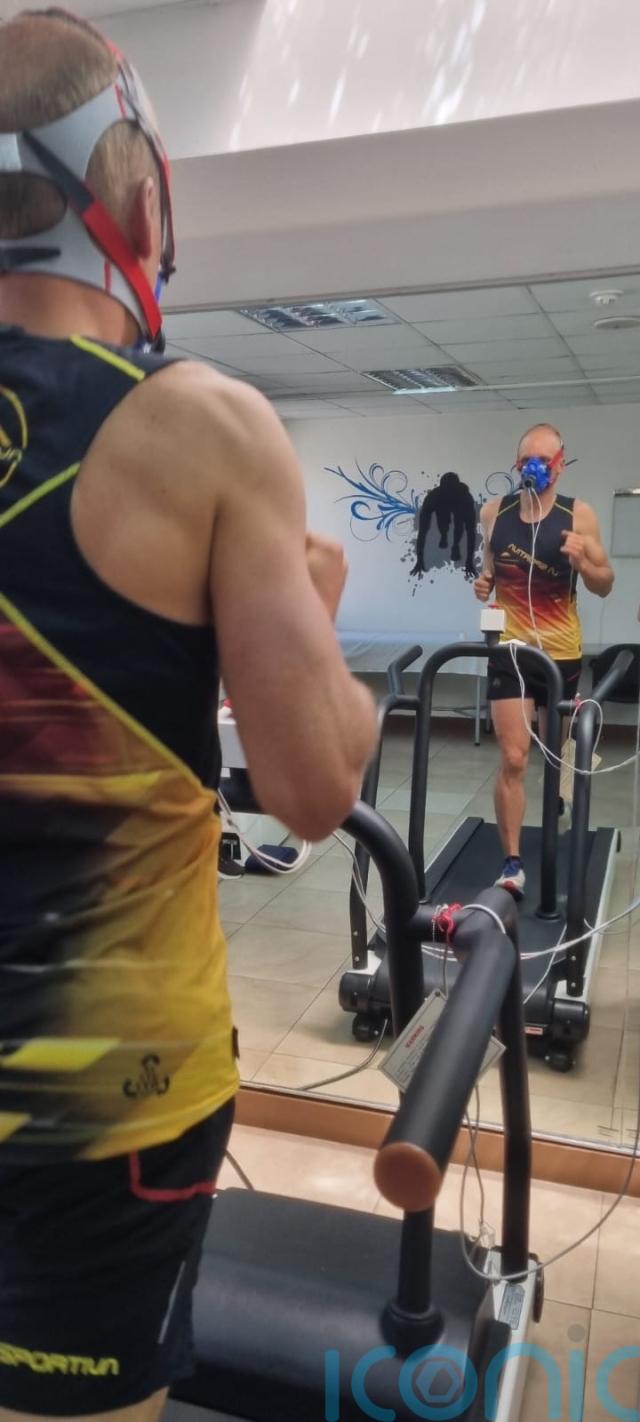
The most important thing, Karl reiterated, is to be mentally prepared for Everest. You cannot know what you will face on the mountain, but you can know you are strong enough to think clearly and deal with it – even if that means abandoning the attempt or turning back if conditions become extremely unsafe.
“You’re starting to get frustrated, and you’ve invested so many years for this, and the mountain does not want me – and this is where you start to play poker,” he said.
“And for me, playing poker has to be like: Be calm, and wait for my day, and never, never, never push things too hard.
“If I cannot control it, it’s just the way it is. This is just a mountain, and you have to return healthy back home.”
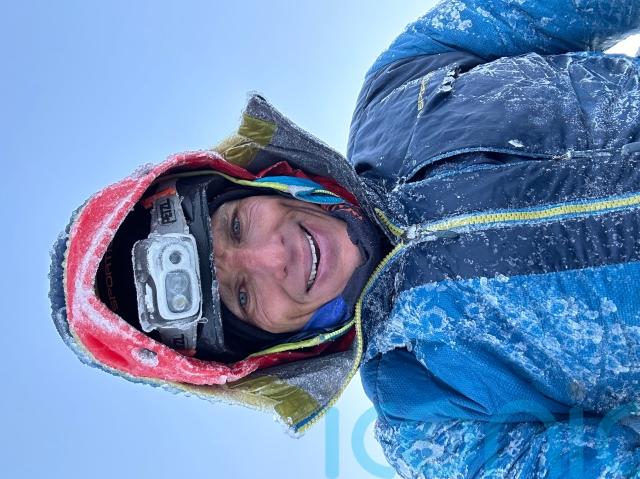
On top of all the other challenges, the traffic on Everest will pose a barrier to Karl. Every year, thousands of climbers and Sherpas are on the mountain, crowding the fixed lines and attempting their own summit push. Karl needs a clear window of 48 hours for his attempt, for the weather conditions to be perfect – so he has to stay fit at base camp while he waits for his moment to strike.
Karl’s FKT attempt on Everest is unique, in that he is trying to set the record for climbing up, and back down, without supplemental oxygen. Records have been set by climbers who skied back down the mountain, and in 1998, Kaji Sherpa climbed and descended Everest in 20 hours and 24 minutes, but he used bottled oxygen during parts of his descent.
So, there is no time to beat – just to do it.
“From my point of view, I have just to focus on doing it without thinking about a time to beat,” Karl said.
“But of course, the point here is to do it in a single push. I would love to do it in less than 24 hours.”

Subscribe or register today to discover more from DonegalLive.ie
Buy the e-paper of the Donegal Democrat, Donegal People's Press, Donegal Post and Inish Times here for instant access to Donegal's premier news titles.
Keep up with the latest news from Donegal with our daily newsletter featuring the most important stories of the day delivered to your inbox every evening at 5pm.

This publication supports the work of the Press Council of Ireland and Office of the Press Ombudsman, and our staff operate within the Code of Practice of the Press Council. You can obtain a copy of the Code, or contact the Council, at www.presscouncil.ie, Lo-call 1800 208 080 or email: info@presscouncil.ie.