Search


07 Mar 2026
Search
07 Mar 2026

Please allow ads as they help fund our trusted local news content.
Kindly add us to your ad blocker whitelist.
If you want further access to Ireland's best local journalism, consider contributing and/or subscribing to our free daily Newsletter .
Support our mission and join our community now.
To continue reading this article, you can subscribe for as little as €0.50 per week which will also give you access to all of our premium content and archived articles!
Alternatively, you can pay €0.50 per article, capped at €1 per day.
Thank you for supporting Ireland's best local journalism!


There was an “absence of strategic leadership, oversight and central co-ordination” when Scotland was hit by a snowstorm that left hundreds of drivers stranded 15 years ago, newly-published papers have revealed.
The cabinet papers from the winter of 2010 told how “many” people had been left in a “potentially vulnerable position” as blizzards hit the country on December 6 that year.
With heavy snowfall that day causing widespread disruption, hundreds of drivers were stuck in their vehicles on the M8 motorway between Glasgow and Edinburgh.
Days afterwards, then transport minister Stewart Stevenson resigned, saying he “could have done much more to ensure that members of the public who were caught up in a difficult and frightening set of circumstances were better informed of the situation”.
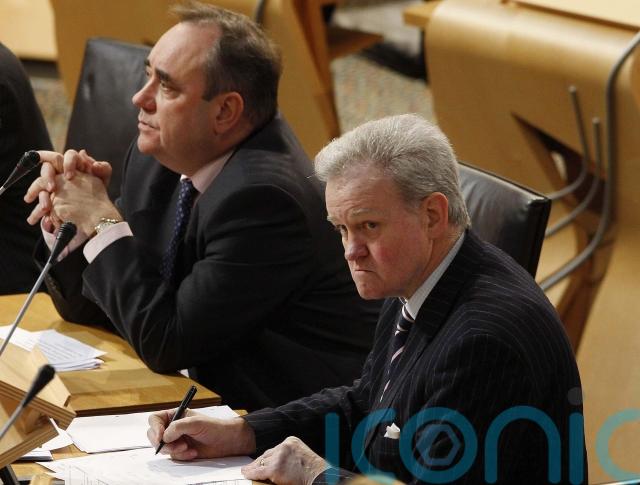
Cabinet papers from December 2010 concluded: “There had been an absence of strategic leadership, oversight and central co-ordination on Sunday December 5 and Monday December 6.”
The papers, which have been made public after 15 years, said there had been “insufficient early co-ordination” between the police, Transport Scotland’s control centre and transport operating companies when the severe weather struck.
These said “the flow of information for decision makers had not been sufficiently rapid”, adding the cabinet sub committee in charge of the response “had not been apprised of the true gravity of the situation when it met on the afternoon of Monday December 6”.
On that date, the papers said the “snowfall had been heavier than forecast and had fallen over the central belt during the rush hour”.
This had “severe effects on all forms of transport”, it noted, leading to “the closure of major sections of the trunk road network”, while local roads in “many areas” became “impassable” because of the wintry conditions.
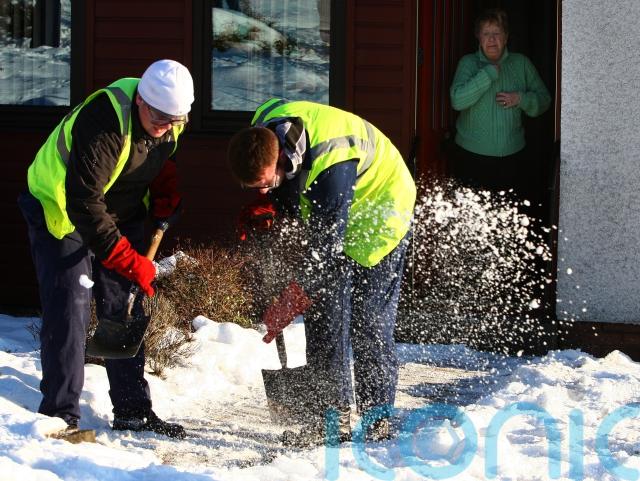
The paper stated the difficulties on December 6 had been “compounded” as many people had returned to work or school that day after bad weather caused difficulties the previous week.
This meant people were “faced with a difficult or impossible return journey later on Monday”, with the papers saying as a result “many” people had been left in a “potentially vulnerable position”.
The papers were published along with Cabinet documents which revealed ministers had considered if a salt mine could be reopened after supplies ran out following severe winter weather earlier in 2010.
Temperatures plunged to as low as minus 22.3C in Scotland in January 2010, with heavy snow covering much of the country.
The papers show that by April that year, there were “currently no surface stocks of salt remaining”.
The papers, from the Cabinet Sub Committee of the Scottish Government Resilience Room, warned restocking supplies of salt for later in the year could “prove challenging”.
It added that “consideration was being given to whether the Lochallan salt mine could be reopened”.
The matter was aired as the supply of salt was described as being “fundamental” when “responding to a severe weather incident”.

Subscribe or register today to discover more from DonegalLive.ie
Buy the e-paper of the Donegal Democrat, Donegal People's Press, Donegal Post and Inish Times here for instant access to Donegal's premier news titles.
Keep up with the latest news from Donegal with our daily newsletter featuring the most important stories of the day delivered to your inbox every evening at 5pm.

This publication supports the work of the Press Council of Ireland and Office of the Press Ombudsman, and our staff operate within the Code of Practice of the Press Council. You can obtain a copy of the Code, or contact the Council, at www.presscouncil.ie, Lo-call 1800 208 080 or email: info@presscouncil.ie.