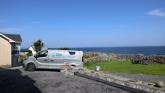
The special Roads Policing Operation, which began at 7am last Thursday, will continue until 7am on Wednesday March 18
Search


18 Mar 2026

Please allow ads as they help fund our trusted local news content.
Kindly add us to your ad blocker whitelist.
If you want further access to Ireland's best local journalism, consider contributing and/or subscribing to our free daily Newsletter .
Support our mission and join our community now.
To continue reading this article, you can subscribe for as little as €0.50 per week which will also give you access to all of our premium content and archived articles!
Alternatively, you can pay €0.50 per article, capped at €1 per day.
Thank you for supporting Ireland's best local journalism!


Scotland’s public body for the country’s historic environment has urged visitors to take the “slow road” when exploring the nation in a bid to encourage longer stays and responsible tourism.
Historic Environment Scotland (HES) has launched three maps to help visitors who want to see Scotland’s well-known and lesser-known historic sites.
The three maps each take around four days to complete, and were launched as part of a campaign to ensure tourists spend more time in the areas they explore.
The lowlands map includes Dumfries, Biggar, Peebles, Melrose, Galashiels and Tweedbank.
Its coastal map covers St Andrews, Arbroath, Fraserburgh, Banff, Huntly and Elgin, and HES’ islands map covers the Isles of Lewis and Harris.
Each map includes areas traversable by public transport and bicycle.
Angela Giancola, responsible tourism co-ordinator at HES, said: “Scotland’s historic places belong to all of us, and they face real pressures from the impact of a changing climate, increased visitor footfall, and the passage of time.
“Responsible tourism is about recognising the impact we can have on our shared heritage and choosing to make that impact a positive one.
“By taking the slow road – travelling thoughtfully and spending more time in local communities – visitors can help protect the heritage, and support the people and places, that make Scotland so special.”

Subscribe or register today to discover more from DonegalLive.ie
Buy the e-paper of the Donegal Democrat, Donegal People's Press, Donegal Post and Inish Times here for instant access to Donegal's premier news titles.
Keep up with the latest news from Donegal with our daily newsletter featuring the most important stories of the day delivered to your inbox every evening at 5pm.

This publication supports the work of the Press Council of Ireland and Office of the Press Ombudsman, and our staff operate within the Code of Practice of the Press Council. You can obtain a copy of the Code, or contact the Council, at www.presscouncil.ie, Lo-call 1800 208 080 or email: info@presscouncil.ie.