Search


22 Apr 2026
Search
22 Apr 2026

Please allow ads as they help fund our trusted local news content.
Kindly add us to your ad blocker whitelist.
If you want further access to Ireland's best local journalism, consider contributing and/or subscribing to our free daily Newsletter .
Support our mission and join our community now.
To continue reading this article, you can subscribe for as little as €0.50 per week which will also give you access to all of our premium content and archived articles!
Alternatively, you can pay €0.50 per article, capped at €1 per day.
Thank you for supporting Ireland's best local journalism!


The mother of chart-topping grime artists Skepta and Jme, Ify Adenuga, who survived the Nigerian Civil War as a child, has spoken about leaving a gift to Unicef in her will as her “heart bleeds” for children in Gaza and Sudan.
Now 69, Ify remembers when the Nigerian Civil War, also known as the Biafran War, broke out in 1967.
As an Igbo child living in Lagos, her ethnicity put her and her family in the centre of the conflict that began as secessionists fought to establish the state of Biafra, predominantly inhabited by Igbo people, in eastern Nigeria.
Born in Lagos to a civil servant father and seamstress mother, “life was good” for Ify until the outbreak of war. In 1967 she and her family were “packed like sardines into an articulated lorry” alongside other Igbo families and taken far away from home into the then-independent state of Biafra to the east.
After travelling for “two or three days” Ify and her family arrived in the place that would be ‘home’ for three years, and there they were stuck with limited access to food and water.
Surviving the war, she said, was largely down to the work of Unicef – the United Nations Children’s Fund – which worked tirelessly to deliver vital aid to communities affected by the conflict.
Now, some 60 years later, Ify is heartbroken to see history repeating itself in conflicts around the world, including in Gaza and Sudan, and she has pledged to not only donate to the charity in her lifetime, but to leave a donation in her will for it to continue its lifesaving work.
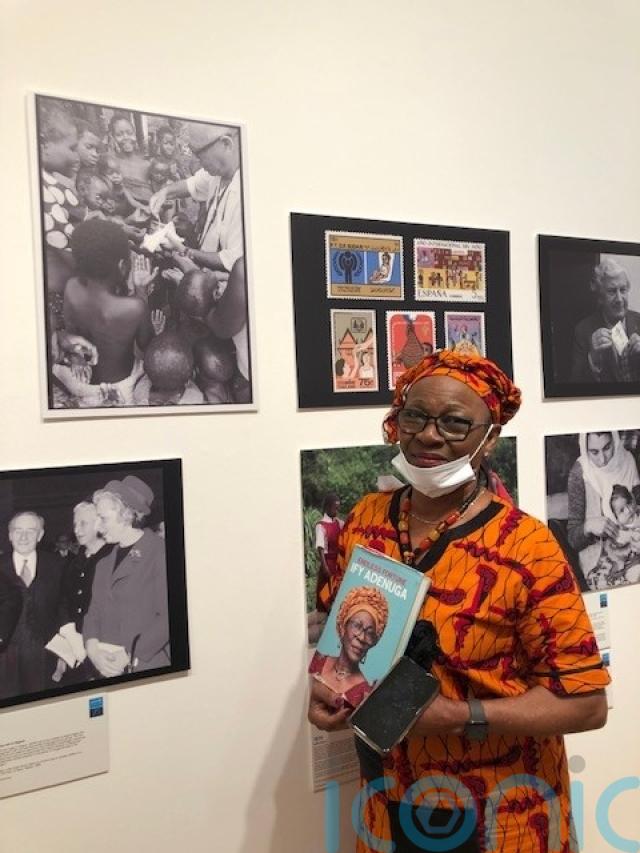
“It was mayhem, because there was nothing, absolutely nothing,” Ify told PA Real Life of the famine she experienced during the Nigerian Civil War.
“That’s why, when I see all this in Sudan and Gaza now, my heart bleeds.
“There was nothing to eat, nothing to drink, and we just went into the forest, grabbed anything we saw, anything growing wild, berries, potato, or something looking like potato. We killed the snakes – anything we could find we brought home to cook, to eat.”
Thousands of people died every day in Biafra from starvation, during a famine caused by a naval blockade imposed by the Nigerian government.
Ify lost five siblings, including four infant siblings, and she recalls her sister dying in her lap of malnutrition.
“All I was thinking of at the time, for those three years was ‘When am I going to get out of this place?’” she remembered.
“I just wanted to grow wings and fly out of the misery and hardship. But I had the responsibility of my siblings to look after, for my parents, because they relied heavily on me while they were busy looking for something for us to eat.”
Food such as powdered milk and oatmeal would be delivered weekly by aid charities, and she and her family worked tirelessly to scavenge whatever they could to supplement the vital donations in order to survive.
“If not for Unicef, the Red Cross, we would have all perished, to be honest with you,” she said.
“Because for the majority of us, that was the only food we had for the whole week. Apart from anything else we dug out from the forest, what they gave us was our main meal every week. It was nice of them, good of them.”
When the war ended in 1970, Ify and her remaining family were able to return home and she could resume her schooling. In 1980, she emigrated to London, where she met her husband Joseph Sr at the bingo club where they both worked.
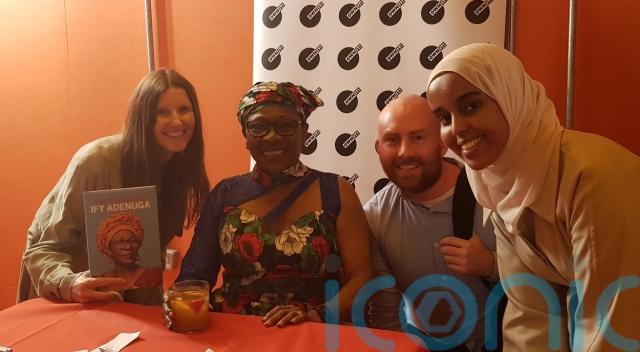
Living on an estate in Tottenham, north London, the couple had four children: Joseph Junior, known to the world as Skepta, and Jamie, or Jme, who both pioneered the grime music genre; Julie, a broadcaster and radio DJ; and Jason, an illustrator, animator and graphic designer.
It is fair to say she has led an incredible life, raising a family that has contributed so much to British culture, but she maintains that without the aid she received as a little girl living amid war in Nigeria none of that would have happened.
“If they didn’t come to my place, then, maybe I would have been nobody today,” she said.
“I don’t think I would have had this life that I have now.”
What breaks Ify’s heart now, she said, is watching children around the world suffer similar fates in modern-day warzones.
“Today, when I see all these food crises in Gaza, my heart bleeds. I can relate to that… This was me nearly 60 years ago, for crying out loud,” she said.
“Children are getting punished for nothing. They haven’t got a clue.
“All they were thinking of is going to school, coming home, hugging their mum and their dad, being happy. Because I remember I used to be very happy… But as soon as that war came, it’s like all my lights dimmed. All I’m seeing is horrible things.”
Now, Ify is an outspoken advocate for the work that Unicef and other aid charities do around the world, providing vital nutrition support, access to sanitation, education, vaccination and more to children in crisis around the world, whether that is war, natural disaster or poverty.
“I love Unicef (because) no matter where it is, so long as there are children there, they will be there,” Ify said.
“No matter what it takes them, they want to be there… So me gifting to Unicef is my own way of saying ‘Whatever you’re doing, I am by you’.”
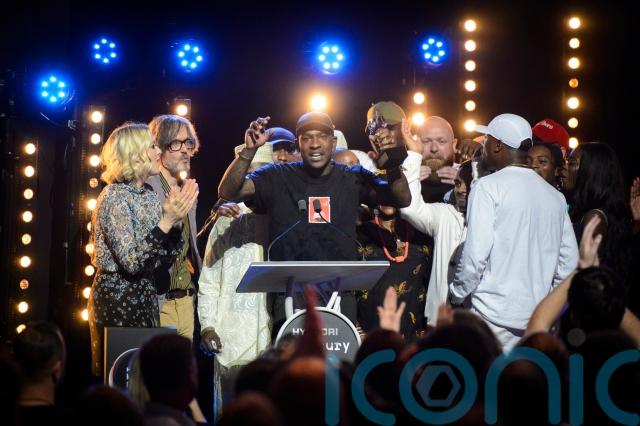
While Ify regularly donates to aid charities, she has also included a donation Univef in her will so she can continue to support them even when she is no longer here.
According to The Legacy Giving Report 2025 by Smee & Ford and Legacy Futures, every day more than 100 people across the UK leave a gift to charity in their will, raising £4.5 billion for good causes in 2024 alone, and through Remember A Charity, people can choose where to donate their money to in their will and ensure their donation has meaningful impact.
Lucinda Frostick, director of Remember A Charity said: “Charities are woven into our lives in so many ways, whether that’s because they’ve helped us directly or simply that we can see the difference they are making in our communities and far beyond.
“The drive to give back and to leave the world even a little better is a powerful concept for us all.
“And it sits at the heart of a growing movement of people from all walks of life who, like Ify, have chosen to remember the good causes they care about in their wills.
“Across the UK, we’re seeing more and more people choosing to donate in this way, taking care of charities alongside their loved ones and helping to fund vital services for future generations.
“The collective impact of these donations can be transformative, giving organisations like Unicef the ability to respond wherever beneficiaries need them most.”
To find out more about how to leave a charitable gift in your will, visit RememberACharity.org.uk

Subscribe or register today to discover more from DonegalLive.ie
Buy the e-paper of the Donegal Democrat, Donegal People's Press, Donegal Post and Inish Times here for instant access to Donegal's premier news titles.
Keep up with the latest news from Donegal with our daily newsletter featuring the most important stories of the day delivered to your inbox every evening at 5pm.

This publication supports the work of the Press Council of Ireland and Office of the Press Ombudsman, and our staff operate within the Code of Practice of the Press Council. You can obtain a copy of the Code, or contact the Council, at www.presscouncil.ie, Lo-call 1800 208 080 or email: info@presscouncil.ie.