Search


22 Apr 2026
Search
22 Apr 2026

Please allow ads as they help fund our trusted local news content.
Kindly add us to your ad blocker whitelist.
If you want further access to Ireland's best local journalism, consider contributing and/or subscribing to our free daily Newsletter .
Support our mission and join our community now.
To continue reading this article, you can subscribe for as little as €0.50 per week which will also give you access to all of our premium content and archived articles!
Alternatively, you can pay €0.50 per article, capped at €1 per day.
Thank you for supporting Ireland's best local journalism!


The Sandie Peggie vs NHS Fife employment tribunal judgment does not appear to have “properly taken into account” the Supreme Court ruling on sex, a legal expert has said.
Michael Foran, an associate professor at Oxford University’s Faculty of Law, said the 312-page ruling by employment judge Alexander Kemp “looks like more confusion” for employers waiting for expected guidance from the Equality and Human Rights Commission.
The Supreme Court ruled in April in For Women Scotland’s legal battle with Scottish ministers that the legal definition of “woman” and “sex” in the Equality Act 2010 refer to a biological woman and biological sex.
Professor Foran said the decision of the employment tribunal – which upheld Ms Peggie’s claim of harassment but dismissed allegations of discrimination, indirect discrimination and victimisation – is “fundamentally incompatible” with the Supreme Court ruling.
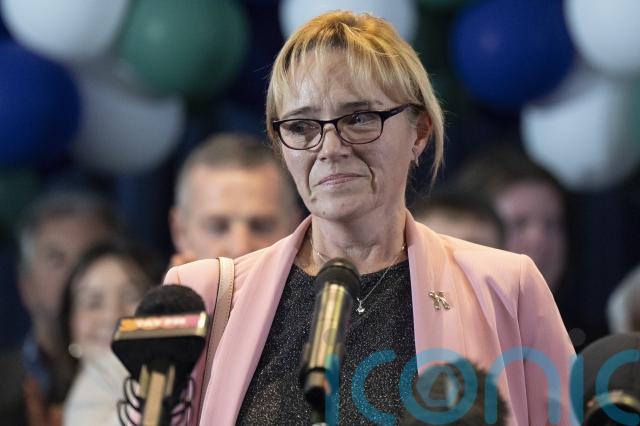
Veteran nurse Ms Peggie was suspended by NHS Fife after complaining about having to share a changing room with transgender medic Dr Beth Upton at Victoria Hospital in Kirkcaldy on Christmas Eve 2023.
She was placed on special leave after Dr Upton made an allegation of bullying and harassment, and cited concerns about patient care.
Ms Peggie had lodged a claim against NHS Fife and Dr Upton, citing the Equality Act 2010, including sexual harassment, harassment related to a protected belief, indirect discrimination, and victimisation, and hearings took place in Dundee in February and July.
The judgment has already been criticised by Ms Peggie’s supporters for an error which led to a correction being issued on Thursday.
Ms Peggie announced on Thursday that she plans to appeal against the tribunal’s decision, assisted by Ben Cooper KC.
Prof Foran warned the judgment is being used to “muddy the waters” by campaigners who disagree with the Supreme Court decision in April.
The academic said recent policy changes by the Women’s Institute and Girl Guiding Association show organisations are increasingly seeking independent legal advice on the issue, and he warned inaction from other organisations waiting for EHRC guidance to be approved risk acting unlawfully.
Prof Foran said: “I think there’s a lot that warrants a more senior court looking at the reasoning and looking at those issues.”
He said if necessary, an appeal could ultimately be raised at Scotland’s highest court, the Court of Session.
He said an employment appeal tribunal “will provide definitive, authoritative, application of the Supreme Court decision, up and until there’s an appeal to the Court of Session if there is one”.
He added the current decision “is not binding” and if the employment appeal tribunal “accurately applies the Supreme Court decision to the case in front of it, then it will be lawful and compatible with the Supreme Court”.
Commenting on the tribunal judgment published on Monday, Prof Foran said: “I don’t think this decision has properly taken into account the Supreme Court judgment.
“What the employment tribunal basically says is that you can’t have blanket rules. It says that you have to do this case-by-case assessment. The Supreme Court says one of the reasons why sex has to mean biological sex is so that you can have blanket rules.
“So they’re just incompatible. They’re saying contradictory things.”
He said the outcome of the tribunal had created a “recipe for confusion” with people who disagree with the Supreme Court decision “saying that this (tribunal) decision shows us that the Supreme Court judgment doesn’t mean what it very clearly says”.
However he said organisations who are indecisive about seeking legal advice are “being confronted with a kind of landscape that is very confusing”, and “this decision just looks like more confusion on top of that”.
He said: “Some duty bearers have sought independent legal advice, and as a result have changed their policies. We saw this with the Women’s Institute and with Girl Guiding, and there are other examples where this has happened.”
Prof Foran said other organisations are “afraid” to change their policies, cannot afford legal advice, or “don’t want to change… because they don’t agree with the legal position following For Women Scotland”.
He added: “The reality is that they are either acting lawfully or unlawfully right now, and the Equality and Human Rights Commission has said people should not wait for this code to be approved by Parliament before they change their policies.
“A major Supreme Court decision has clarified the law in a particular area.”

Subscribe or register today to discover more from DonegalLive.ie
Buy the e-paper of the Donegal Democrat, Donegal People's Press, Donegal Post and Inish Times here for instant access to Donegal's premier news titles.
Keep up with the latest news from Donegal with our daily newsletter featuring the most important stories of the day delivered to your inbox every evening at 5pm.

This publication supports the work of the Press Council of Ireland and Office of the Press Ombudsman, and our staff operate within the Code of Practice of the Press Council. You can obtain a copy of the Code, or contact the Council, at www.presscouncil.ie, Lo-call 1800 208 080 or email: info@presscouncil.ie.