Search


07 Mar 2026
Search
07 Mar 2026

Please allow ads as they help fund our trusted local news content.
Kindly add us to your ad blocker whitelist.
If you want further access to Ireland's best local journalism, consider contributing and/or subscribing to our free daily Newsletter .
Support our mission and join our community now.
To continue reading this article, you can subscribe for as little as €0.50 per week which will also give you access to all of our premium content and archived articles!
Alternatively, you can pay €0.50 per article, capped at €1 per day.
Thank you for supporting Ireland's best local journalism!


Dogs fed on premium, meat-rich pet food can have a bigger dietary carbon footprint than their owners, a new study has found.
Scientists from the Universities of Edinburgh and Exeter calculated the carbon footprint of almost 1,000 commercially available dog foods, based on emissions generated during the production of ingredients.
Their sample included a selection of dry, wet and raw foods, including plant-based and grain-free options.
The researchers found “striking” differences in the environmental impact of different foods, with those with the highest impact generating up to 65 times more emissions than the lowest.
Wet, raw and meat-rich products were found to generate substantially more emissions than dry dog food.
Meanwhile, dry foods marketed as “grain-free” tended to have a higher carbon footprint than non-grain-free options.
The researchers said using large amounts of prime meat – which could otherwise be eaten by humans – pushes up emissions, while the use of nutritious, low-demand cuts can have a lower climate impact.
They also said plant-based dog foods are likely to reduce emissions, but cautioned that only a small number of such foods were available in the study.
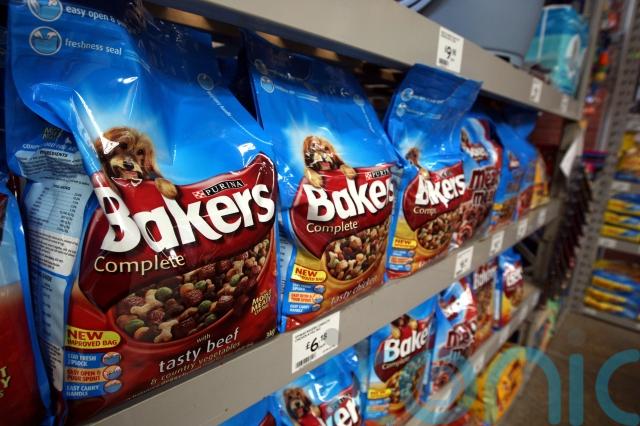
Overall the researchers estimated that the production of ingredients used in UK dog food contributes about 1% of the country’s total greenhouse gas emissions.
They added that if all the dogs in the world were were given the same food as dogs in the UK, this could generate greenhouse gas emissions equivalent to over half of those from burning jet fuel in commercial flights each year.
The study’s principal investigator, John Harvey, from the University of Edinburgh, said: “As a veterinary surgeon working on environmental sustainability, I regularly see owners torn between ideals of dogs as meat‑eating ‘wolves’ and their wish to reduce environmental harm.
“Our research shows just how large and variable the climate impact of dog food really is.”
The researchers called for greater transparency and clearer labelling of dog food ingredients, to help owners make informed choices as pet ownership continues to rise.
They said dog owners looking to reduce their carbon footprint without switching to a different food type should check the labels, and aim for foods with a lower prime meat content.
Mr Harvey went on: “It’s important for owners to know that choosing grain-free, wet or raw foods can result in higher impacts compared to standard dry kibble foods.
“The pet food industry should make sure meat cuts used are of the types not typically eaten by humans, and that labelling is clear.
“These steps can help us have healthy, well-fed dogs with a smaller pawprint on the planet.”
The study, funded by the Biotechnology and Biological Sciences Research Council (BBSRC), is published in the Journal of Cleaner Production.

Subscribe or register today to discover more from DonegalLive.ie
Buy the e-paper of the Donegal Democrat, Donegal People's Press, Donegal Post and Inish Times here for instant access to Donegal's premier news titles.
Keep up with the latest news from Donegal with our daily newsletter featuring the most important stories of the day delivered to your inbox every evening at 5pm.

This publication supports the work of the Press Council of Ireland and Office of the Press Ombudsman, and our staff operate within the Code of Practice of the Press Council. You can obtain a copy of the Code, or contact the Council, at www.presscouncil.ie, Lo-call 1800 208 080 or email: info@presscouncil.ie.