
The special Roads Policing Operation, which began at 7am last Thursday, will continue until 7am on Wednesday March 18
Search


17 Mar 2026

Please allow ads as they help fund our trusted local news content.
Kindly add us to your ad blocker whitelist.
If you want further access to Ireland's best local journalism, consider contributing and/or subscribing to our free daily Newsletter .
Support our mission and join our community now.
To continue reading this article, you can subscribe for as little as €0.50 per week which will also give you access to all of our premium content and archived articles!
Alternatively, you can pay €0.50 per article, capped at €1 per day.
Thank you for supporting Ireland's best local journalism!


The UK should follow more of the European Union’s rules to boost trade and cut prices, Rachel Reeves has claimed.
The Chancellor warned the UK risked being “stranded” between rival trading blocs unless it sought a closer relationship with Brussels.
She said the UK would still diverge from the EU’s regulations in some areas but they would be “the exception, not the norm”.
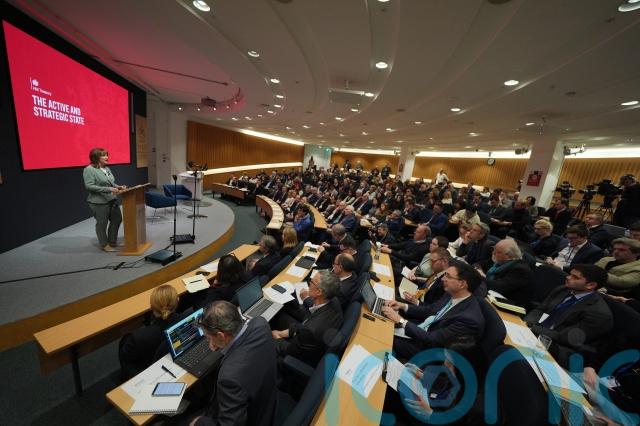
The Chancellor, delivering the annual Mais Lecture at the Bayes Business School in London, put greater economic co-operation with Europe at the centre of her plan to kickstart the UK’s weak growth.
“The prize is considerable,” Ms Reeves said, claiming closer alignment would help bring down prices and inflation.
Brexit had created “profound uncertainty” and left the UK facing the risk of being “stranded between powerful trading blocs as globalisation retreats”, she warned.
“Our fate as a country is inescapably bound with that of Europe,” the Chancellor added.
Setting out the “deep damage” of Brexit, Ms Reeves said it had hit gross domestic product (GDP) – a measure of the size of the economy – by up to 8% and contributed to higher prices for businesses and consumers.
She insisted she was not trying to “turn back the clock” on Brexit but to build a “new and stable future relationship” with Brussels.
“Where it is in our national interest to align with EU regulation, we should be prepared to do so, including in further areas of the single market,” the Chancellor said.
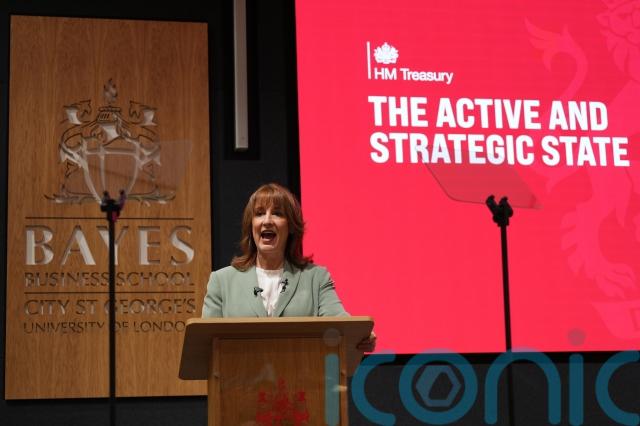
“A decision to align should be taken where it would mean higher growth and investment, more jobs and consumer benefits, where the future direction of policy is stable and compatible with the UK’s values and objectives and where the UK’s economy and national security and resilience are preserved or enhanced.
“When those principles are satisfied, alignment should be forward-looking and durable, providing the certainty that businesses on both sides need to invest and grow.
“Now, there are areas in which regulatory autonomy may be necessary for sectors with unique characteristics or strategic importance for the UK, but that should be the exception, not the norm.”
Ms Reeves acknowledged she would have to “make and win the political argument”, with Brexit supporters viewing the ability to diverge from Brussels as one of the key benefits of the UK’s exit from the EU.
She said: “The truth is this: Britain’s future prosperity will not be built in isolation, but through partnerships with those who share our interests, share our values and share our ambitions.
“And no partnership is more important than that between the UK and our European neighbours.”
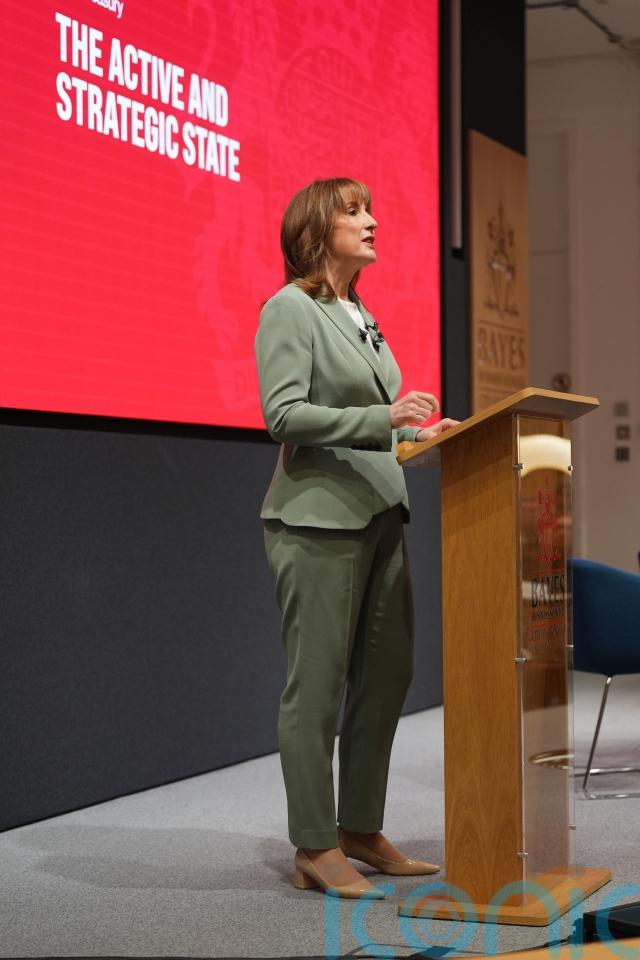
Closer alignment with Brussels “is the right course for our country, a course chosen as a sovereign nation, a course chosen in our national interest”.
Ms Reeves also set out plans to increase regional economic growth, including by giving local elected leaders greater spending powers, with proposals to hand them a share of income tax and other national levies to invest in their areas.
“What most distinguishes Britain from our closest peers is the relative underperformance of our major cities outside of London compared to their European counterparts,” she said.
“There are huge gains to be made if we can only close that gap, if we back Manchester and Liverpool and Leeds to match and overtake Stuttgart, Turin and Lyon.”
Ms Reeves said a plan for future fiscal devolution, setting out proposals to give regional leaders control of a share of national taxes, would be published along with the budget later this year.
The Chancellor also set out “city investment funds” backed by £2.3 billion of funding, focused on northern England and the West Midlands, giving regional leaders control of “long-term, self-sustaining capital” to invest, with a commitment to the retention of business rates.
Ms Reeves also promised action to support artificial intelligence (AI) and other advanced technologies.
A £500 million sovereign AI unit is intended to help AI firms grow and stay in the UK, an AI adoption summit will be held in June and a new AI Economics Institute will examine the impact of the technology on jobs.
Up to £2 billion will be spent over the next decade on quantum technology.
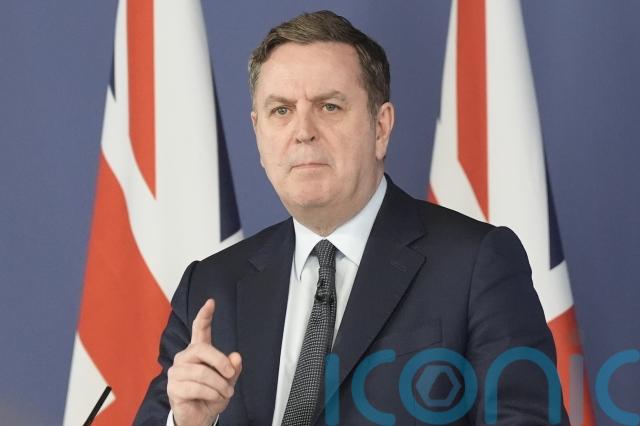
Shadow chancellor Sir Mel Stride claimed the focus on Brexit was an attempt to distract from the damage done by Labour in office.
He said: “Rachel Reeves wants to blame everybody else but herself for her dreadful management of the economy.
“After £66 billion in tax rises, growth has stalled, business confidence has collapsed, inflation is higher and unemployment is rising.
“But instead of owning the damage she’s done, Reeves is dragging us back into the old Brexit arguments.
“The Chancellor is utterly deluded and gaslighting the public to cover her own failures.”
Naomi Smith, chief executive at Best for Britain – which campaigns for closer UK-EU ties, welcomed the Chancellor’s “overdue shift in tone”.
She said: “While alignment on food, drink and energy are excellent first steps, they barely move the growth needle, because the real boon for the UK and the EU comes from deeper co-operation across the board: aligning all industrial and service sectors would claw back half of the GDP the OBR calculates the UK lost since Brexit.”

Subscribe or register today to discover more from DonegalLive.ie
Buy the e-paper of the Donegal Democrat, Donegal People's Press, Donegal Post and Inish Times here for instant access to Donegal's premier news titles.
Keep up with the latest news from Donegal with our daily newsletter featuring the most important stories of the day delivered to your inbox every evening at 5pm.

This publication supports the work of the Press Council of Ireland and Office of the Press Ombudsman, and our staff operate within the Code of Practice of the Press Council. You can obtain a copy of the Code, or contact the Council, at www.presscouncil.ie, Lo-call 1800 208 080 or email: info@presscouncil.ie.